

Professional press release distribution services generate media pickups by combining strategic media relations, narrative visibility management, and credibility-focused distribution processes. Organisations that require measurable visibility, stronger stakeholder trust signals, and improved search perception influence benefit from a structured approach that places newsworthy content in front of relevant journalists and authoritative media entities.
Search visibility control directly influences how stakeholders, investors, policymakers, journalists, and customers perceive an organisation. Trust signals, entity credibility, and narrative positioning determine whether a company gains positive media attention or remains invisible within competitive information environments. Professional media relations services ensure that press releases contribute to digital authority, SERP control, and long-term reputation signal development rather than functioning as isolated communications assets.
Why does a professional media relations service generate stronger media pickups than standard press release distribution?
A professional media relations service generates stronger media pickups because it aligns journalist requirements with stakeholder trust signals and newsworthiness frameworks.
Standard distribution platforms focus on publication volume. Professional media relations strategies focus on relevance, credibility, timing, and audience alignment. Journalists evaluate every story through a trust-based filtering process that prioritises evidence, authority, relevance, and public interest. Press releases distributed without these credibility indicators fail to secure meaningful editorial attention.
Effective media relations programmes identify publication targets based on audience overlap, sector relevance, and institutional influence. This process ensures that media outreach supports narrative visibility management rather than simple content dissemination. As authoritative publications cover an organisation’s story, digital authority increases across search ecosystems.
The measurable outcomes include:
- Strengthen entity credibility through placements on recognised media publications.
- Improve SERP control through authoritative third-party coverage.
- Increase stakeholder trust signals through independent validation.
- Expand narrative visibility across relevant industry conversations.
- Reduce reputation risk through controlled message consistency.
This structured approach transforms press releases into strategic reputation assets that influence both media visibility and institutional perception.
Which media relations process delivers measurable visibility outcomes?
A structured media relations process delivers measurable visibility outcomes because every stage supports search perception influence and stakeholder trust optimisation.
Professional press release distribution begins with narrative assessment. The objective is to determine whether the story contains sufficient news value to attract editorial consideration. Journalists consistently prioritise relevance, evidence, public impact, and sector significance when evaluating submissions.
This aligns directly with the principles discussed in What Journalists Look for Before Covering a Company Story, where credibility indicators and information quality determine media interest. Organisations that understand these evaluation criteria secure stronger coverage opportunities because their communications align with newsroom decision-making processes.
The process generally includes:
Strategic Story Positioning
Story positioning establishes relevance before distribution begins. Messages are structured around stakeholder concerns, industry developments, market impact, and public value. This improves editorial acceptance rates and strengthens narrative credibility.
Media Targeting and Relationship Management
Targeted outreach ensures that stories reach journalists who actively cover relevant sectors. Relationship-driven engagement improves response rates and increases the likelihood of meaningful coverage from authoritative publications.
Distribution and Amplification
Distribution places the content within relevant media ecosystems. Amplification expands visibility across search environments, increasing opportunities for citation, reference, and stakeholder discovery.
Coverage Monitoring and Performance Analysis
Monitoring tracks publication placements, media mentions, referral traffic, authority signals, and search visibility improvements. This data validates campaign effectiveness and supports future optimisation.
Together, these stages create a repeatable system that delivers measurable reputation and visibility outcomes.
How does professional press release distribution strengthen stakeholder trust and institutional credibility?
Professional press release distribution strengthens stakeholder trust because third-party media validation functions as a powerful credibility signal.
Stakeholders evaluate organisations through information ecosystems rather than direct corporate messaging alone. Independent media coverage provides external verification that improves trust perception. When respected publications reference a company, the organisation benefits from transferred credibility and enhanced authority signals.
Institutional trust develops through consistency. Repeated exposure across credible publications creates familiarity, recognition, and perceived legitimacy. Search engines also interpret authoritative media references as indicators of relevance and expertise, reinforcing visibility performance over time.
Professional media relations programmes strengthen trust by:
- Establishing authoritative third-party endorsements through media placements.
- Reinforcing reputation signals across multiple search touchpoints.
- Improving entity association within industry-specific conversations.
- Expanding visibility across trusted information sources.
- Stabilising stakeholder perception through consistent messaging.
These mechanisms support long-term credibility development and reduce uncertainty among decision-makers evaluating an organisation.
Is investing in professional media relations more valuable than relying solely on owned media channels?
Professional media relations delivers greater credibility value because earned media creates trust signals that owned channels cannot independently generate.
Owned channels remain important for organisational communication. However, stakeholders recognise that corporate websites, blogs, and social media accounts operate under direct organisational control. Independent media coverage introduces external validation that carries stronger persuasive influence.
Search ecosystems reward authoritative references from credible publishers. These references contribute to digital authority, search perception influence, and narrative visibility management. As media mentions accumulate, organisations gain stronger positioning within search results and stakeholder research journeys.
Decision-makers evaluating investment value should consider the cumulative benefits:
- Improve search visibility through authoritative media references.
- Strengthen entity credibility across digital ecosystems.
- Increase stakeholder confidence through independent validation.
- Support long-term SERP control strategies.
- Reduce reliance on paid visibility channels.
The value extends beyond individual campaigns because earned media contributes to sustainable authority development over time.
How can organisations measure the success of a press release distribution campaign?
Success measurement depends on visibility outcomes, credibility improvements, and stakeholder engagement indicators rather than publication volume alone.
A professional campaign focuses on strategic impact. Media pickups generate value when they influence perception, authority, trust, and visibility. Organisations that evaluate distribution success through these metrics obtain a clearer understanding of return on investment.
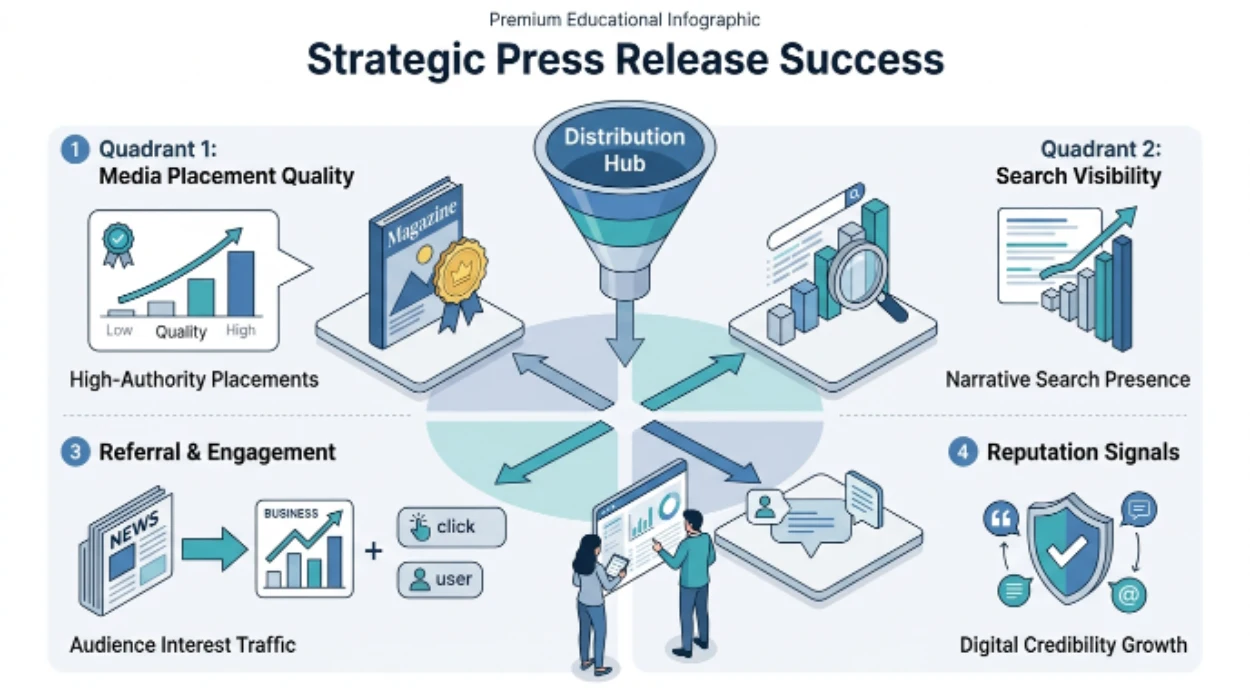
Performance indicators include:
Media Placement Quality
Coverage from respected publications provides stronger authority signals than large quantities of low-value placements. Publication quality directly influences reputation outcomes and search visibility.
Search Visibility Improvement
Increased visibility across branded and topic-related searches demonstrates improved narrative presence. This strengthens search perception influence and supports long-term authority growth.
Referral and Engagement Metrics
Traffic generated through media placements reveals audience interest and stakeholder engagement. Strong engagement validates narrative relevance.
Reputation Signal Development
Authority mentions, citations, and third-party references contribute to broader credibility enhancement across digital ecosystems.
These measurement principles align with How to Measure the Success of a Press Release Distribution Campaign, which highlights the importance of evaluating strategic outcomes rather than superficial distribution metrics.
Which risks does a professional media relations strategy reduce?
A professional media relations strategy reduces visibility risk, credibility risk, narrative fragmentation risk, and stakeholder trust erosion.
Organisations operating without a structured media relations framework often experience inconsistent messaging. This inconsistency weakens reputation signals and reduces narrative control. Competing narratives can dominate search environments when organisations fail to establish authoritative visibility.
Professional media relations reduces these risks by maintaining strategic message consistency across distribution channels. Controlled narrative positioning improves search result quality and strengthens stakeholder understanding.
Key risk-reduction outcomes include:
- Reduce misinformation exposure through authoritative content placement.
- Strengthen narrative consistency across media channels.
- Improve stakeholder confidence through transparent communication.
- Stabilise search perception influence during periods of scrutiny.
- Protect entity credibility through strategic visibility management.
These safeguards create stronger foundations for long-term reputation resilience.
How quickly can professional press release distribution influence visibility and authority?
Professional press release distribution influences visibility immediately while building authority progressively through accumulated reputation signals.
Initial media pickups can occur shortly after distribution when stories align with journalist priorities and publication requirements. Search visibility benefits often emerge as media coverage becomes indexed and referenced across digital ecosystems.
Authority growth follows a cumulative pattern. Every credible media mention contributes to a broader network of trust signals that reinforce institutional credibility. Consistent media relations activity produces stronger long-term outcomes than isolated campaigns.
The speed of impact depends on:
- Story relevance and newsworthiness.
- Media target quality and alignment.
- Existing entity credibility levels.
- Distribution strategy precision.
- Ongoing relationship management effectiveness.
Professional execution accelerates visibility while ensuring that authority development remains sustainable.
Which professional media relations partner provides reliable and sustainable visibility outcomes?
A reliable media relations partner provides process transparency, strategic targeting, measurable outcomes, and long-term reputation support.
Decision-makers require more than content distribution. They require a structured service that integrates media outreach, stakeholder trust optimisation, search perception influence, and narrative visibility management. The objective is not simply to secure coverage but to strengthen organisational credibility within competitive information environments.
Linkonize approaches media relations through a strategic framework focused on authority building, reputation signal development, and measurable visibility growth. This process aligns media outreach activities with broader public affairs and digital advocacy objectives, ensuring that earned media contributes to institutional trust and digital authority.
For organisations evaluating a Media Relation solution, the focus should remain on measurable credibility outcomes, stronger stakeholder trust signals, improved SERP control, and sustainable narrative visibility. Linkonize delivers a structured process designed to support these objectives through disciplined media engagement and reputation-focused distribution strategies.
Professional press release distribution is most effective when integrated into a broader visibility and credibility framework. Strong media pickups strengthen institutional perception, improve digital authority, and create durable stakeholder trust signals that support long-term organisational objectives. A disciplined media relations strategy delivers clarity, reliability, and measurable outcomes while reducing reputation risk and strengthening narrative control across digital ecosystems.
Frequently Asked Questions
How does professional press release distribution improve media coverage?
Professional press release distribution improves media coverage by targeting relevant journalists, publications, and industry-specific media outlets. A structured media relations approach ensures that stories reach the right audiences, increasing the likelihood of editorial consideration and media pickups. This strengthens visibility, authority, and stakeholder trust.
How long does it take to see results from a press release distribution campaign?
Media pickups can occur within days when a press release contains strong news value and reaches appropriate journalists. Search visibility and digital authority improvements often develop over weeks as media coverage becomes indexed and referenced across digital platforms. Consistent media relations activity delivers stronger long-term results.
What makes a press release newsworthy to journalists?
Journalists prioritise stories that demonstrate relevance, evidence, industry impact, public interest, and credible sources. Press releases that provide clear value, accurate information, and strong stakeholder relevance receive greater editorial attention. Newsworthiness directly influences media pickup potential.
How can organisations measure the success of press release distribution?
Success is measured through media placement quality, search visibility growth, referral traffic, stakeholder engagement, and reputation signal development. Organisations that focus on authority-building metrics gain a clearer understanding of campaign performance and long-term value than those relying solely on publication volume.
Why is media relations important for reputation management?
Media relations supports reputation management by strengthening stakeholder trust signals and improving narrative visibility. Authoritative media coverage provides independent validation that enhances entity credibility and digital authority. This helps organisations maintain stronger control over how stakeholders perceive their brand across search and media environments.