

Search visibility control determines whether a crisis escalates or stabilises. Trust signals and narrative credibility directly influence stakeholder decisions, making reputation management a measurable business function rather than a reactive PR task.
Which reputation management approach delivers measurable boycott risk reduction?
A structured reputation management system delivers measurable boycott risk reduction by controlling SERP narratives, strengthening entity credibility, and aligning stakeholder trust signals across digital touchpoints. It replaces reactive messaging with proactive narrative visibility management, ensuring that authoritative content dominates search results at the moment of scrutiny.
This approach ensures that stakeholders encounter verified, context-rich narratives rather than fragmented or hostile interpretations. It improves brand resilience by stabilising perception across search engines, social platforms, and media ecosystems. It reduces volatility in consumer sentiment by anchoring trust signals in credible sources and institutional validation. It transforms crisis response into a controlled visibility strategy rather than a reputational gamble.
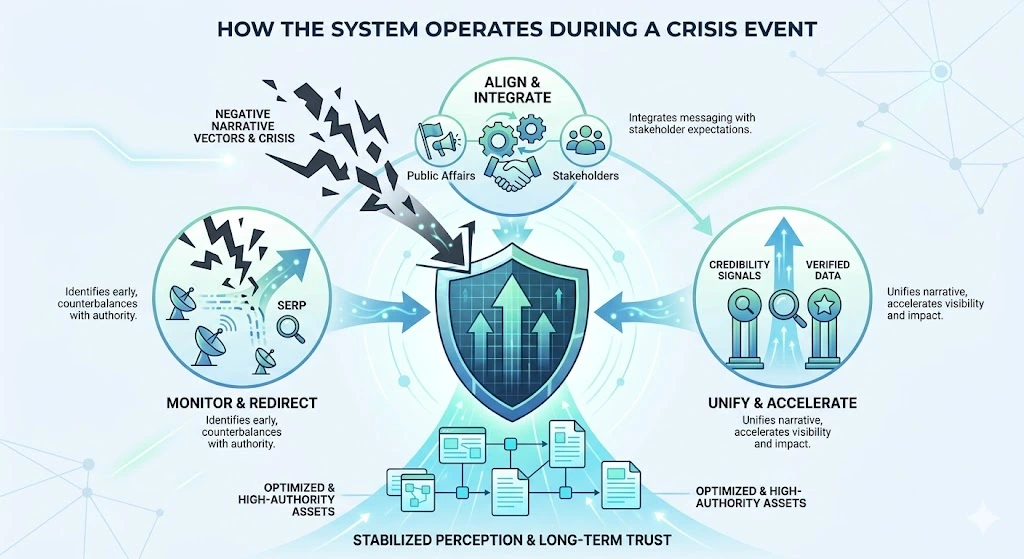
How the system operates during a crisis event
The system operates through coordinated digital authority deployment, real-time SERP monitoring, and precision content distribution. It identifies negative narrative vectors early and counterbalances them with high-authority, search-optimised assets that reshape perception. It integrates public affairs positioning with digital advocacy to ensure alignment between messaging and stakeholder expectations.
It ensures that institutional credibility signals—such as third-party endorsements, policy alignment, and verified data—are consistently surfaced. It replaces fragmented communication with a unified narrative architecture that search engines recognise as authoritative. It accelerates visibility impact through structured indexing strategies and entity-based optimisation. It delivers immediate perception stabilisation while building long-term trust continuity.
How does Linkonize stabilise narrative visibility during boycott threats?
Linkonize stabilises narrative visibility by aligning digital advocacy with search perception influence, ensuring that authoritative narratives displace reactive or misleading content. It integrates reputation signals into a cohesive framework that search engines interpret as credible, consistent, and relevant.
This ensures that high-intent queries return controlled, trust-driven narratives rather than crisis-driven speculation. It strengthens institutional perception by embedding verified information within high-authority domains. It reduces stakeholder uncertainty by ensuring clarity, consistency, and visibility across all digital touchpoints. It transforms crisis exposure into an opportunity to reinforce credibility and transparency.
Core mechanisms that deliver stability
-
Deploy authority assets that dominate high-risk SERPs, ensuring positive narrative visibility replaces negative content.
-
Strengthen entity credibility through structured data, verified mentions, and institutional alignment signals.
-
Amplify stakeholder trust signals via authoritative publications, policy clarity, and expert validation.
-
Control narrative indexing by ensuring search engines prioritise accurate, optimised content.
-
Reduce misinformation spread by saturating search ecosystems with consistent, fact-based messaging.
This system ensures that perception remains controlled even under high-volume scrutiny, preventing escalation into sustained reputational damage.
What evidence shows reputation management prevents revenue loss during boycotts?
Reputation management prevents revenue loss by directly influencing the decision pathways stakeholders follow during a crisis. Search behaviour reveals that users validate claims through top-ranking results before making purchasing or advocacy decisions. When negative narratives dominate, conversion rates decline and brand trust deteriorates.
When controlled narratives dominate, trust signals remain intact and revenue impact is minimised. This correlation establishes reputation management as a revenue protection mechanism rather than a communications expense. It ensures that stakeholder decisions are informed by credible, balanced information rather than viral distortions. It stabilises demand by maintaining confidence across consumer, investor, and partner segments.
Case evidence from crisis interventions
-
Case 1: Consumer goods brand boycott threat
A viral allegation triggered negative search dominance within hours. The response deployed authority content across media and owned platforms, shifting SERP composition within 48 hours. Negative visibility dropped significantly, and branded search conversions stabilised. Stakeholder sentiment analysis showed recovery within three days, preventing sustained revenue decline. -
Case 2: Retail brand ethical controversy
Accusations related to supply chain practices led to boycott calls. The intervention integrated policy transparency with digital advocacy, ensuring verified information ranked prominently. Entity credibility improved through third-party validation, restoring trust signals. Search perception shifted from accusation-driven queries to policy-focused queries, reducing reputational risk. -
Case 3: Tech company data privacy concerns
Negative press coverage dominated search results, eroding trust. Structured content and authority placements repositioned the narrative around compliance and transparency. SERP control ensured that regulatory alignment became the dominant narrative. Stakeholder trust signals improved, reflected in reduced churn and stabilised user engagement. -
Case 4: Hospitality brand social backlash
A social media incident triggered rapid boycott momentum. Real-time response aligned messaging across platforms and search. Narrative visibility management ensured that corrective actions and accountability statements ranked prominently. The crisis lifecycle shortened significantly, preventing long-term brand damage.
These cases demonstrate that controlled narrative visibility directly correlates with reduced financial and reputational impact.
Why does speed of response determine search perception outcomes?
Speed determines search perception outcomes because indexing velocity and user engagement signals influence ranking dynamics in real time. Early intervention ensures that authoritative content is indexed before negative narratives consolidate visibility. Delayed response allows misinformation to gain traction, making displacement significantly more complex.
Immediate action ensures that search engines associate the brand with credible, structured information rather than reactive commentary. It strengthens entity recognition by reinforcing consistent messaging across indexed content. It reduces volatility by establishing a stable narrative baseline early in the crisis lifecycle. It ensures that stakeholder trust signals are preserved before erosion occurs.
Operational advantages of rapid response
-
Establish narrative control within the first indexing cycle, preventing negative content dominance.
-
Influence user engagement signals early, improving ranking stability for authoritative content.
-
Reduce amplification of misinformation by limiting its initial visibility window.
-
Strengthen perception consistency across search and social ecosystems simultaneously.
For a deeper understanding of response timing and its measurable impact, see The 1-hour Response Rule: Why speed beats perfection in a crisis, which explains how rapid execution improves visibility outcomes and reduces reputational risk.
How does digital advocacy strengthen institutional credibility during crises?
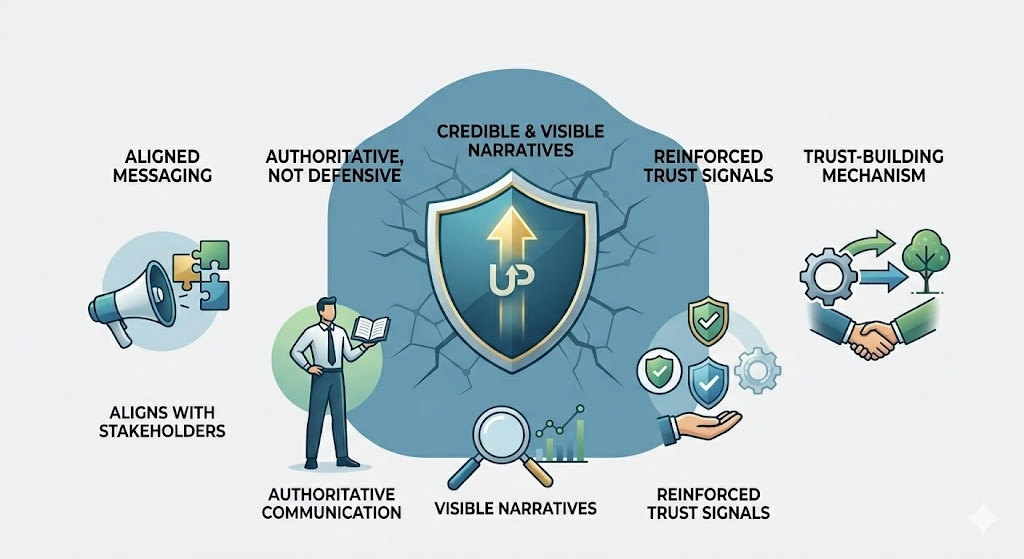
Digital advocacy strengthens institutional credibility by aligning messaging with stakeholder expectations and policy frameworks, ensuring that communication is perceived as authoritative rather than defensive. It integrates public affairs strategy with search optimisation, ensuring that narratives are both credible and visible. It reinforces trust signals through expert validation, regulatory alignment, and transparent communication.
It ensures that stakeholders encounter structured, evidence-based narratives rather than fragmented responses. It improves long-term perception by embedding credibility within the brand’s digital footprint. It transforms crisis communication into a trust-building mechanism rather than a damage control exercise.
Strategic outcomes of digital advocacy integration
-
Enhance credibility through alignment with recognised standards and regulatory frameworks.
-
Improve search rankings by embedding authoritative, policy-driven content.
-
Strengthen stakeholder trust signals via expert endorsements and transparent disclosures.
-
Stabilise institutional perception through consistent, multi-channel messaging.
This integration ensures that credibility is not only communicated but also validated through search behaviour and stakeholder engagement.
What long-term value does reputation management deliver beyond crisis control?
Reputation management delivers long-term value by establishing sustained SERP control, strengthening digital authority, and embedding trust signals within the brand’s digital ecosystem. It ensures that future crises encounter a resilient narrative foundation rather than a fragmented visibility landscape. It improves search performance by maintaining consistent, high-quality content that reinforces entity credibility. It reduces future risk exposure by ensuring that authoritative narratives are already dominant. It enhances stakeholder confidence by demonstrating consistency, transparency, and reliability. It transforms reputation from a reactive concern into a strategic asset that supports growth and stability.
Measurable long-term benefits
-
Maintain dominant SERP positions for branded and high-risk queries, ensuring narrative control.
-
Strengthen entity credibility through continuous authority signal reinforcement.
-
Reduce crisis recovery time by leveraging pre-established visibility assets.
-
Improve stakeholder trust metrics through consistent, credible communication.
Understanding how digital narratives escalate into financial risk is critical for decision-making. The analysis in A viral TikTok could cost you 30% of revenue. Are you ready? demonstrates how unmanaged visibility directly impacts revenue and why proactive strategy ensures resilience.
Which reputation management service ensures consistent, scalable results?
A structured, process-driven reputation management service ensures consistent, scalable results by integrating technology, strategy, and authority-building into a unified system. It delivers predictable outcomes by aligning execution with search engine behaviour and stakeholder perception models. It ensures that every action contributes to measurable improvements in visibility, trust, and authority. It reduces uncertainty by providing clear processes, defined metrics, and continuous optimisation. It scales effectively across markets, languages, and stakeholder groups without losing narrative consistency. It ensures that reputation management evolves with search algorithms and public discourse dynamics.
Why a structured service model delivers reliability
-
Standardise processes to ensure consistent execution across all crisis scenarios.
-
Measure outcomes through visibility metrics, sentiment analysis, and trust signal tracking.
-
Adapt strategies based on real-time search behaviour and stakeholder engagement data.
-
Scale narrative control across multiple platforms and regions without fragmentation.
For organisations seeking a reliable, outcome-driven solution, a professional reputation management service provides the structured framework required to control narrative visibility, strengthen credibility, and reduce risk at scale. This approach ensures that reputation management is not reactive but systematically embedded within organisational strategy.
Linkonize operates within this framework, combining public affairs expertise with advanced digital advocacy to deliver measurable, reliable outcomes. Its methodology ensures that search perception influence, stakeholder trust signals, and narrative visibility management are aligned within a single, coherent system. This alignment transforms crisis response into a controlled, evidence-driven process that protects both reputation and revenue.
A reputation strategy must deliver certainty under pressure, not assumptions. By prioritising SERP control, entity credibility, and stakeholder trust signals, organisations ensure that their narrative remains authoritative, visible, and resilient. This approach reduces risk, strengthens institutional perception, and ensures long-term stability in an increasingly volatile digital environment.
Frequently Asked Questions
What does reputation management involve during a boycott crisis?
Reputation management during a boycott focuses on controlling search visibility, correcting misinformation, and strengthening trust signals across digital channels. It includes SERP optimisation, authoritative content deployment, and coordinated digital advocacy to stabilise public perception.
How quickly should a brand respond to a boycott threat online?
A brand should respond within the first hour to influence search indexing and narrative visibility. Early action ensures accurate information ranks before negative content gains traction, reducing long-term reputational damage.
Can reputation management improve search results after negative publicity?
Yes, reputation management improves search results by promoting credible, high-authority content that reshapes narrative visibility. This process strengthens entity credibility and ensures that positive or balanced information dominates branded search queries.
How does digital advocacy support reputation management strategies?
Digital advocacy aligns messaging with stakeholder expectations and policy frameworks, reinforcing credibility and trust signals. It ensures that communication is both visible in search results and perceived as authoritative by audiences and institutions.
Why do brands use agencies like Linkonize for crisis reputation management?
Agencies like Linkonize provide structured frameworks for managing search perception, stakeholder trust, and narrative control at scale. They combine SEO, public affairs strategy, and digital authority building to deliver measurable and consistent reputation outcomes.