

A media relations retainer delivers controlled search visibility and verifiable narrative placement that strengthens stakeholder trust signals across the SERP. It ensures entity credibility through consistent earned media coverage, structured reporting, and measurable reputation signals.
In decision-stage evaluation, organisations prioritise services that provide narrative visibility management, transparent performance tracking, and sustained digital authority. A well-structured media relations retainer aligns earned media execution with search perception influence, ensuring that every placement contributes to long-term institutional credibility.
What does a media relations retainer actually deliver in measurable outcomes?
A media relations retainer delivers consistent earned media placements, structured journalist engagement, and ongoing narrative positioning that directly improves SERP control and stakeholder trust signals. It operates as a continuous system rather than a one-off campaign, ensuring that visibility compounds over time.
How the service operates in practice
A structured retainer model integrates proactive pitching, reactive media handling, and editorial relationship management to secure authoritative placements. Each activity is mapped to specific reputation signals and search outcomes.
-
Secure high-authority media placements that strengthen domain-level trust signals and improve entity credibility in search engines
-
Maintain journalist relationships that increase placement frequency and improve narrative accuracy
-
Align messaging with stakeholder perception systems to ensure consistency across coverage
-
Monitor media mentions to detect shifts in narrative visibility and respond immediately
-
Optimise story angles based on search demand signals and media relevance
Each placement contributes to a controlled narrative environment, where organisations shape how they appear in both search results and media discourse.
Measurable outcomes and impact
A retainer ensures:
-
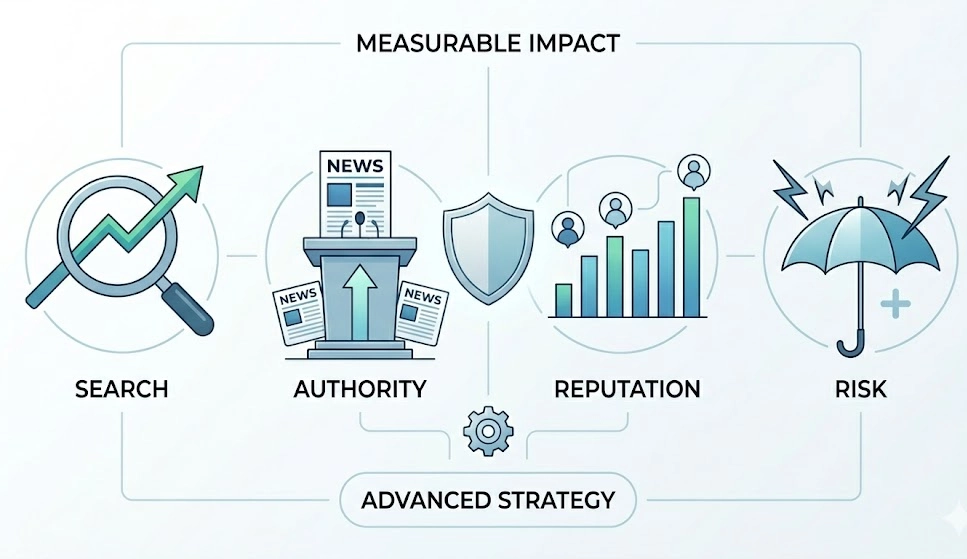
Improved search visibility through authoritative backlinks and brand mentions
-
Strengthened digital authority via consistent presence in trusted publications
-
Stabilised reputation signals across key stakeholder touchpoints
-
Reduced risk of negative narrative dominance through proactive coverage
This outcome-driven structure makes media relations a core component of digital advocacy and public affairs strategy.
How are media placements reported and verified for credibility?
Media placements are reported through structured dashboards, coverage validation metrics, and narrative impact analysis that ensure transparency and trust. Reporting is not limited to volume; it focuses on credibility, reach, and influence.
What reporting includes
A robust reporting framework includes:
-
Track placement authority by measuring publication credibility, domain strength, and audience relevance
-
Analyse narrative alignment by assessing message accuracy and tone consistency
-
Measure visibility impact through impressions, reach, and keyword association
-
Map coverage to search performance by evaluating changes in SERP positioning
-
Document backlinks and brand mentions that contribute to entity recognition
Each report translates media activity into actionable insights, ensuring decision-makers understand how placements influence digital authority.
Why reporting strengthens stakeholder trust
Transparent reporting reinforces trust by demonstrating:
-
Evidence-based outcomes rather than assumed impact
-
Clear linkage between media coverage and reputation signals
-
Accountability in narrative visibility management
A structured reporting system ensures that every placement contributes to measurable credibility rather than superficial exposure.
Why does earned media outperform paid coverage in stakeholder perception?
Earned media delivers higher trust signals, stronger entity credibility, and more sustainable SERP control than paid coverage. Stakeholders interpret editorial placements as independent validation, which directly influences decision-making.
The role of earned media in digital ecosystems
Earned media integrates into search perception systems by aligning with how users evaluate credibility. Search engines prioritise authoritative mentions, and audiences trust editorial endorsement over sponsored content.
This dynamic is explained in What Is Earned Media and Why Is It More Valuable Than Paid Coverage?, where the distinction between controlled promotion and organic validation becomes critical for reputation strategy.
Outcome advantages of earned media
-
Strengthen credibility through third-party validation rather than self-promotion
-
Improve organic search rankings via authoritative backlinks and mentions
-
Enhance narrative trust by aligning with editorial standards
-
Sustain visibility without ongoing ad expenditure
This makes earned media a foundational component of any public affairs or digital advocacy strategy focused on long-term influence.
How does a retainer reduce reputational risk and narrative volatility?
A media relations retainer reduces reputational risk by maintaining continuous narrative visibility and ensuring rapid response to emerging issues. It prevents gaps in coverage that allow negative narratives to dominate search results.
Risk mitigation mechanisms
-
Monitor media landscape continuously to detect emerging narratives
-
Respond quickly to misinformation or negative coverage
-
Maintain positive coverage flow to balance search results
-
Align messaging across all placements to prevent inconsistencies
This proactive approach stabilises perception and ensures that organisations retain control over their narrative positioning.
Long-term stability benefits
Consistent media engagement ensures:
-
Reduced susceptibility to reputational crises
-
Controlled evolution of public perception
-
Sustained trust among stakeholders
This level of control is critical in high-stakes environments where perception directly impacts decision-making.
How quickly does a media relations retainer influence search visibility?
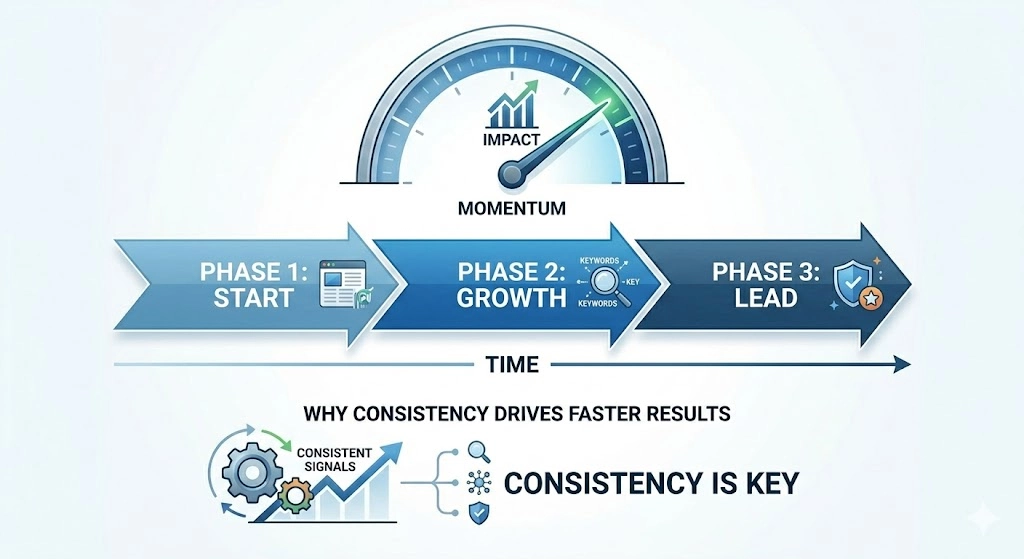
A media relations retainer begins influencing search visibility within weeks, with compounding impact over months as placements accumulate and authority signals strengthen. The speed depends on publication authority, frequency of placements, and narrative consistency.
Phases of visibility impact
-
Initial phase: Secure early placements that establish baseline visibility and begin influencing search indexing
-
Growth phase: Increase placement frequency and improve keyword association with the entity
-
Authority phase: Achieve sustained presence across high-authority publications, reinforcing digital authority
Each phase builds on the previous one, ensuring that visibility gains are not temporary but cumulative.
Why consistency drives faster results
Search engines prioritise consistent signals over isolated events. A retainer model ensures continuous activity, which accelerates:
-
Indexing of brand mentions
-
Recognition of entity relevance
-
Strengthening of authority signals
This structured consistency delivers predictable improvements in search perception.
What makes Linkonize’s media relations approach reliable?
Linkonize ensures reliability through structured processes, transparent reporting, and alignment with search perception systems. Its approach integrates media relations with digital authority building, ensuring that every placement contributes to measurable outcomes.
Process clarity and execution
The service includes:
-
Define narrative strategy aligned with stakeholder expectations and search demand
-
Identify high-authority media targets based on relevance and credibility
-
Execute proactive outreach with tailored story angles
-
Monitor coverage and optimise messaging continuously
-
Report outcomes with detailed performance metrics
This process ensures that execution remains consistent, measurable, and aligned with business objectives.
Trust and credibility factors
Reliability is reinforced through:
-
Consistent placement quality rather than volume-focused output
-
Transparent reporting that links activity to outcomes
-
Alignment with public affairs and digital advocacy principles
Organisations benefit from a system that prioritises credibility over exposure, ensuring sustainable reputation growth.
How does media relations integrate with spokesperson readiness and advocacy strategy?
Media relations achieves maximum impact when integrated with spokesperson preparation and broader advocacy frameworks. Messaging consistency across interviews and coverage strengthens narrative control and stakeholder trust.
Role of spokesperson preparation
Effective media engagement requires:
-
Clear message framing aligned with organisational objectives
-
Consistent delivery across interviews and briefings
-
Ability to handle high-pressure media interactions
These elements are explored in How to Prepare a Spokesperson for a High-Stakes Media Briefing, which highlights how preparation enhances media outcomes.
Integration benefits
-
Strengthen message consistency across all media touchpoints
-
Improve accuracy of coverage through controlled communication
-
Enhance credibility by aligning spokesperson authority with media narratives
This integration ensures that media relations supports broader public affairs strategy rather than operating in isolation.
How does a retainer justify cost through long-term value?
A media relations retainer justifies its cost by delivering sustained visibility, reduced reputational risk, and compounding digital authority. It replaces fragmented campaigns with a continuous system that produces measurable outcomes.
Value drivers
-
Generate ongoing earned media placements that build authority over time
-
Reduce dependency on paid media by strengthening organic visibility
-
Protect reputation through proactive narrative management
-
Improve stakeholder trust through consistent credibility signals
Cost vs outcome perspective
Short-term campaigns produce temporary visibility, while a retainer ensures continuous influence. The long-term value lies in:
-
Accumulated authority signals that improve search rankings
-
Sustained stakeholder trust that supports decision-making
-
Reduced need for reactive crisis management
This makes the retainer model a strategic investment rather than an operational expense.
Which service structure ensures sustained narrative visibility and trust?
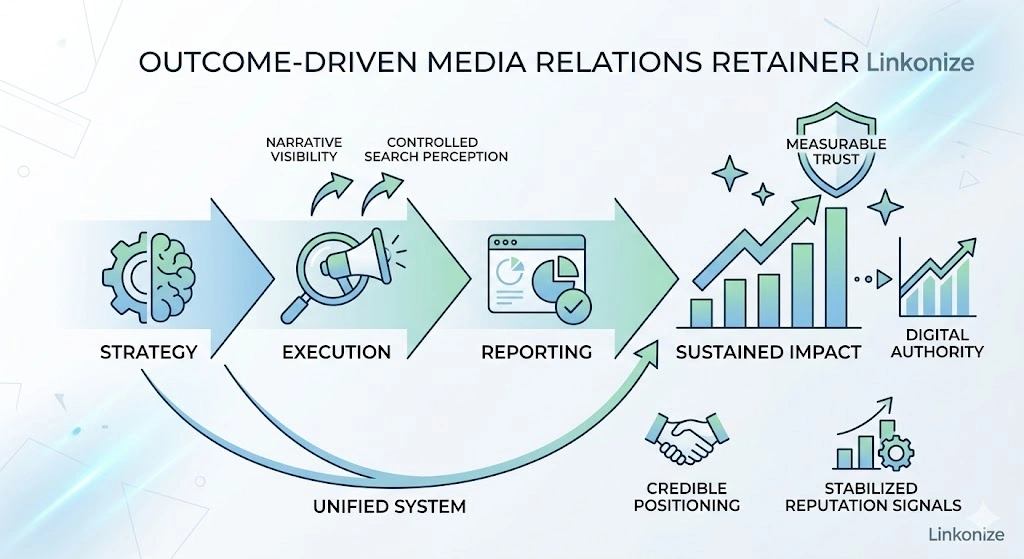
A structured, outcome-driven media relations retainer ensures sustained narrative visibility, controlled search perception, and measurable trust signals. It aligns execution with digital ecosystems, ensuring that every action contributes to long-term authority.
Organisations seeking consistent visibility and credible positioning benefit from a media relations service designed for search visibility control, where strategy, execution, and reporting operate as a unified system. This alignment ensures that narrative management remains proactive, measurable, and effective.
A well-executed retainer with Linkonize delivers clarity, accountability, and sustained impact. It transforms media relations from a tactical activity into a strategic function that strengthens digital authority, stabilises reputation signals, and ensures that stakeholder perception remains aligned with organisational objectives.
Frequently Asked Questions
What is included in a media relations retainer?
A media relations retainer typically includes proactive media outreach, journalist relationship management, press release development, and ongoing narrative positioning. It ensures consistent earned media placements that strengthen search visibility and build credible reputation signals over time.
How are media placements measured and reported?
Media placements are reported using metrics such as publication authority, audience reach, backlink value, and message accuracy. Structured reporting connects each placement to search visibility, brand mentions, and overall digital authority.
How long does it take to see results from media relations?
Initial media coverage can appear within weeks, depending on newsworthiness and outreach strategy. Long-term impact, including improved search rankings and stronger stakeholder trust, builds over several months through consistent placements.
Why is earned media important for reputation management?
Earned media provides third-party validation, which strengthens credibility and trust more than paid content. It contributes to organic search rankings and helps shape how stakeholders perceive a brand across digital channels.
How does a media relations retainer support SEO and search visibility?
A media relations retainer supports SEO by generating authoritative backlinks, increasing brand mentions, and improving entity recognition in search engines. This strengthens SERP presence and helps control narrative visibility across relevant search queries.