

Choosing the right PR distribution company directly determines how effectively your brand controls search visibility, media exposure, and stakeholder perception. A strong distribution partner ensures your narrative reaches authoritative publications, strengthens trust signals, and improves digital authority across search ecosystems.
Media visibility influences how investors, customers, regulators, journalists, and industry stakeholders evaluate organisational credibility. Strategic media distribution supports narrative visibility management, strengthens entity credibility, and creates measurable search perception influence that reinforces long-term reputation signals.
Which PR Distribution Company Delivers the Strongest Media Reach Outcomes?
The best PR distribution company delivers targeted media placement, audience relevance, and measurable authority-building outcomes rather than simply distributing content to a large database.
Media reach depends on distribution precision. A company that focuses exclusively on volume creates visibility without influence. Effective PR distribution ensures news reaches journalists, publications, industry platforms, and digital channels that contribute directly to reputation signals and stakeholder trust signals. Search engines increasingly assess entity credibility through authoritative mentions, citation consistency, and media references across trusted domains.
A high-performing PR distribution process strengthens digital authority by ensuring media coverage appears within relevant information ecosystems. This improves brand discoverability while supporting SERP control through positive and authoritative content placement. Strong media visibility creates an environment where stakeholders encounter credible information repeatedly during evaluation and decision-making processes.
For organisations seeking sustainable reputation growth, media relations activity must contribute to long-term narrative visibility management rather than short-term exposure metrics.
How Does Media Relations Improve Search Visibility and Stakeholder Trust?
Media relations improves search visibility by generating authoritative third-party validation that strengthens entity credibility and institutional trust.
Search engines evaluate brand authority using external trust signals. Media coverage from reputable publications functions as a credibility indicator that reinforces digital authority. Every relevant mention contributes to search perception influence by increasing the volume of trustworthy information associated with an organisation.
Professional media relations programmes deliver outcomes through:
- Secure authoritative media placements that strengthen reputation signals across search ecosystems.
- Generate trusted third-party endorsements that improve stakeholder trust signals.
- Increase branded search visibility that supports SERP control and narrative positioning.
- Expand digital authority through credible publication references.
- Strengthen entity credibility through consistent media validation.
These mechanisms create measurable visibility improvements while reducing reputational vulnerability. Stakeholders increasingly verify information through search before making decisions. Strong media visibility ensures those searches reveal authoritative narratives rather than fragmented or incomplete information.
Organisations working with experienced providers such as Linkonize often prioritise media relations because it creates a direct connection between public visibility, stakeholder trust, and digital authority growth.
Which Evaluation Criteria Identify a Reliable PR Distribution Company?
The most reliable PR distribution companies demonstrate audience targeting capability, media relevance, reporting transparency, and proven authority-building processes.
Decision-makers frequently focus on distribution scale while overlooking outcome quality. Reach alone does not strengthen institutional credibility. Relevant placement within trusted media environments produces the reputation signals that influence stakeholder perception.
When evaluating providers, decision-makers should examine:
- Assess publication quality to ensure placements support digital authority.
- Review targeting methodology to confirm audience relevance.
- Verify reporting frameworks that measure visibility and authority outcomes.
- Examine media relationships that improve publication acceptance rates.
- Analyse distribution strategy alignment with business objectives.
Transparency remains essential throughout the process. Reliable providers clearly define distribution pathways, reporting metrics, expected visibility outcomes, and authority-building objectives. This reduces operational uncertainty and improves confidence in campaign performance.
The strongest providers position media relations as part of a wider reputation ecosystem where media exposure supports narrative visibility management, search authority, and stakeholder trust development simultaneously.
How Does PR Distribution Influence Narrative Visibility Management?
PR distribution influences narrative visibility management by determining where, when, and how stakeholders encounter organisational information.
Every organisation competes within a digital information environment shaped by search behaviour. Stakeholders evaluate brands through search results, media coverage, social discussion, and third-party references. Distribution strategy determines which narratives gain prominence across these channels.
Strategic distribution ensures positive, factual, and authoritative information achieves consistent visibility. This improves SERP control by increasing the presence of trustworthy content within search results. Greater visibility across respected media outlets also strengthens search perception influence because stakeholders repeatedly encounter aligned messaging.
Narrative visibility management produces measurable benefits:
- Increase authoritative content visibility across high-trust channels.
- Strengthen message consistency across stakeholder touchpoints.
- Reduce negative narrative prominence through expanded positive coverage.
- Improve search result diversity with credible information assets.
- Reinforce institutional trust through repeated validation.
Effective distribution therefore functions as a reputation stabilisation mechanism rather than a simple publicity activity.
Is Local, National, or International Distribution the Right Choice?
The right distribution level depends on stakeholder geography, organisational objectives, and authority-building requirements.
Local distribution delivers visibility within specific communities, regional markets, and location-based stakeholder groups. It supports local credibility and strengthens regional reputation signals where proximity influences trust.
National distribution expands authority across broader audiences. It improves institutional recognition, increases digital authority, and supports stakeholder engagement at scale. National placements frequently contribute stronger reputation signals due to larger audience reach and publication authority.
International distribution supports organisations operating across multiple jurisdictions. It enhances global entity credibility and strengthens visibility within international stakeholder ecosystems.
Decision-makers evaluating scope often benefit from understanding Choosing Between Local, National and International PR Distribution because distribution geography directly affects visibility outcomes, authority development, and stakeholder relevance.
The most effective strategy aligns distribution scale with organisational priorities rather than pursuing the widest possible reach. Precision consistently delivers stronger trust outcomes than indiscriminate exposure.
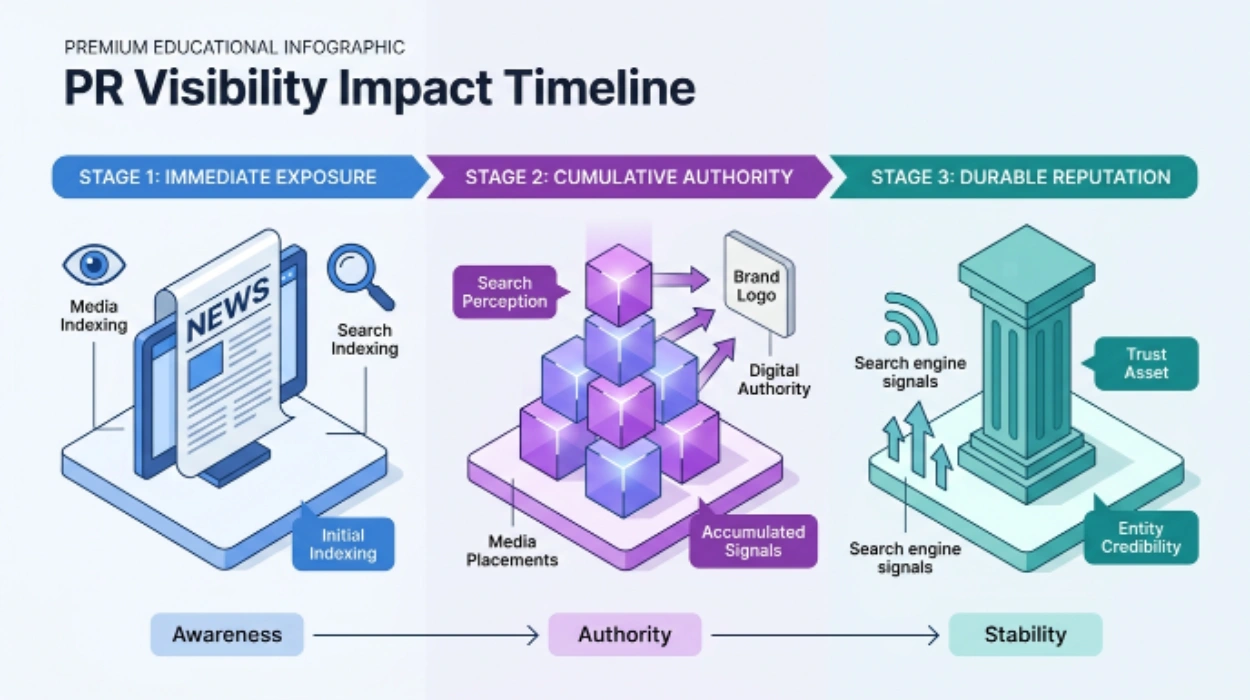
How Quickly Does PR Distribution Produce Visibility Impact?
PR distribution produces immediate exposure opportunities while delivering cumulative authority benefits over time.
Initial visibility often occurs as media placements are published and indexed. Stakeholders searching for brand information gain access to new authoritative content, strengthening search perception influence from the outset.
Long-term impact develops through content accumulation. Every authoritative mention contributes to entity credibility and digital authority. Search engines interpret these signals collectively, increasing confidence in organisational relevance and trustworthiness.
Visibility development generally progresses through three stages:
- Establish initial awareness through media publication.
- Strengthen authority through repeated credible references.
- Stabilise stakeholder perception through ongoing narrative visibility management.
This progression creates durable value because authority compounds over time. Unlike temporary promotional activity, strategic media relations generate long-lasting reputation assets that continue supporting search visibility and trust development.
Does Investing in Professional Media Relations Deliver Long-Term Value?
Professional media relations delivers long-term value because it creates reusable trust assets that continue influencing stakeholder decisions.
Media coverage remains discoverable long after publication. Authoritative mentions contribute ongoing reputation signals that strengthen search visibility and stakeholder confidence. Each placement functions as an independent trust indicator supporting organisational credibility.
Long-term value emerges through:
- Build cumulative authority through trusted media references.
- Strengthen stakeholder confidence through third-party validation.
- Improve organic search visibility through authoritative citations.
- Reduce reputational risk through controlled narrative positioning.
- Support future communications with established credibility foundations.
This makes media relations a strategic investment rather than a transactional marketing expense. Organisations gain assets that improve digital authority and support stakeholder engagement across multiple decision cycles.
Businesses evaluating providers often research Why Media Visibility Matters for Brand Trust and Authority because understanding visibility dynamics clarifies the connection between media exposure and long-term reputation outcomes.
Which Risks Does a High-Quality PR Distribution Company Reduce?
A high-quality PR distribution company reduces visibility risk, credibility risk, and narrative fragmentation risk.
Poor distribution creates inconsistent media exposure and weak authority signals. Stakeholders encounter incomplete information, reducing confidence and weakening trust signals. Search engines receive fewer credibility indicators, limiting digital authority development.
Professional distribution reduces these challenges by maintaining consistency across publication channels and ensuring authoritative narrative placement. This strengthens SERP control while improving stakeholder confidence.
Risk reduction occurs through:
- Ensure consistent messaging across media ecosystems.
- Strengthen entity credibility through authoritative publication alignment.
- Improve visibility quality through targeted distribution.
- Reduce narrative fragmentation through coordinated communications.
- Stabilise reputation signals across stakeholder touchpoints.
These outcomes improve organisational resilience while strengthening public credibility within increasingly competitive digital environments.
Why Is Media Relations the Most Effective Service for Sustained Visibility Growth?
Media relations remains the most effective service for sustained visibility growth because it combines authority building, stakeholder trust development, and search perception influence within a single strategic framework.
Unlike short-term promotional tactics, media relations creates independent credibility signals through trusted third-party sources. These signals strengthen digital authority, improve narrative visibility management, and support long-term SERP control.
A structured media relations programme ensures organisations consistently generate authoritative visibility assets that support stakeholder confidence. This process creates measurable improvements in discoverability, trustworthiness, and institutional reputation.
Linkonize approaches media relations through a framework focused on authority growth, stakeholder trust signals, and reputation sustainability. This alignment between visibility strategy and credibility development creates outcomes that extend beyond media exposure and contribute directly to long-term organisational perception.
Selecting a PR distribution company is ultimately a decision about trust, authority, and visibility control. Organisations that prioritise relevance, credibility, and strategic distribution gain stronger reputation signals, improved digital authority, and greater stakeholder confidence. A structured media relations approach delivers measurable visibility outcomes, reduces perception risk, and establishes a reliable foundation for sustainable reputation growth. Linkonize provides a clear, process-driven approach that supports narrative visibility management, strengthens entity credibility, and helps organisations maintain trusted positions within competitive information ecosystems.
Frequently Asked Questions
How do I choose the best PR distribution company for my business?
The best PR distribution company aligns media outreach with your target audience, industry relevance, and visibility objectives. It focuses on securing coverage in credible publications that strengthen reputation signals, digital authority, and stakeholder trust rather than simply maximising distribution volume.
What is the difference between PR distribution and media relations?
PR distribution focuses on distributing news content across media networks, while media relations focuses on building relationships with journalists and securing editorial coverage. Media relations delivers stronger entity credibility and stakeholder trust signals because it generates third-party validation from trusted media sources.
How does PR distribution improve search visibility?
PR distribution improves search visibility by increasing authoritative brand mentions across trusted publications. These mentions strengthen digital authority, support SERP control, and contribute to search perception influence by providing search engines with credible reputation signals.
How long does it take to see results from PR distribution?
Initial visibility often appears when media coverage is published and indexed by search engines. Long-term authority growth develops through consistent media placements that strengthen reputation signals, improve narrative visibility management, and reinforce stakeholder trust over time.
Why is media visibility important for brand credibility?
Media visibility creates independent trust signals that stakeholders use when evaluating organisations. Consistent coverage in reputable publications strengthens entity credibility, improves public perception, and supports informed decision-making by ensuring authoritative information remains visible across digital channels.