

Search visibility control determines how stakeholders, journalists, policymakers, investors, and customers perceive an organisation before any direct engagement occurs. A structured media relations strategy strengthens trust signals, improves narrative credibility, and ensures positive reputation signals appear prominently across digital ecosystems.
In competitive information environments, entity credibility and narrative visibility management directly influence stakeholder decision-making. Organisations that secure consistent media coverage establish stronger digital authority, improve search perception influence, and reduce reputational risk through verified third-party validation.
Which media relations strategy delivers the strongest media visibility outcomes?
A structured PR distribution strategy delivers the strongest media visibility outcomes because it combines content distribution, media amplification, and reputation signal generation into a unified process.
Media relations extends beyond publication placement. Effective campaigns ensure that organisational narratives appear across authoritative news environments where stakeholders actively seek validation signals. Search engines interpret reputable media mentions as external credibility indicators, strengthening entity recognition and supporting broader digital authority objectives.
When organisations secure coverage through authoritative media channels, they create an ecosystem of trust signals that influence both human audiences and search algorithms. Positive media visibility contributes to SERP control by increasing the prominence of favourable content while strengthening institutional credibility across search results.
A professional Media Relations strategy creates measurable outcomes through:
- Strengthening entity credibility through third-party editorial validation.
- Improving narrative visibility management across trusted media environments.
- Increasing stakeholder trust signals through independent publication coverage.
- Supporting search perception influence through authoritative mentions.
- Reducing reputation risk through controlled message distribution.
These outcomes generate long-term value because media coverage remains discoverable within search ecosystems, contributing to sustained visibility and reputation reinforcement long after initial publication.
Why does PR distribution outperform isolated publicity efforts?
PR distribution outperforms isolated publicity efforts because it creates predictable visibility frameworks rather than relying on individual media opportunities.
Unstructured publicity often produces inconsistent results. Coverage appears sporadically, narrative positioning varies between publications, and stakeholder trust signals remain fragmented. A coordinated distribution strategy ensures message consistency, publication alignment, and controlled reputation signal generation.
Media relations campaigns establish a clear pathway between organisational objectives and public visibility. Every distribution activity supports narrative visibility management, ensuring stakeholders encounter aligned messaging across multiple digital touchpoints.
Search engines reward consistency. When identical entity associations appear across credible publications, digital authority strengthens and institutional relevance becomes clearer. This process improves search perception influence by reinforcing the relationship between an organisation and its preferred narratives.
Organisations evaluating visibility investments often examine short-term exposure. However, decision-makers benefit more from cumulative authority development. Consistent media presence strengthens entity recognition, improves stakeholder confidence, and contributes to long-term reputation resilience.
How do guaranteed media visibility campaigns improve stakeholder trust?
Guaranteed media visibility campaigns improve stakeholder trust because they provide independent validation through recognised media channels.
Trust formation follows identifiable digital patterns. Before engaging with an organisation, stakeholders frequently review search results, news coverage, executive visibility, and external commentary. Media placements contribute powerful reputation signals within this evaluation process.
Coverage in reputable publications functions as an external endorsement mechanism. Stakeholders interpret editorial visibility as evidence of legitimacy, expertise, and operational credibility. This perception strengthens confidence during procurement, investment, partnership, and public engagement decisions.
Media relations programmes create trust advantages by:
- Demonstrating expertise through publication-based validation.
- Reinforcing institutional credibility through editorial exposure.
- Expanding narrative reach into trusted information environments.
- Improving stakeholder confidence through visible authority signals.
- Strengthening reputation signals across branded search results.
The cumulative effect extends beyond awareness. It establishes a framework of credibility that supports future stakeholder interactions and improves conversion outcomes across multiple audiences.
Which approach delivers better results: PR distribution or direct journalist outreach?
PR distribution delivers broader visibility outcomes, while journalist outreach delivers deeper relationship-driven opportunities. The most effective strategy integrates both methods within a coordinated media relations framework.
Decision-makers frequently compare distribution campaigns with outreach initiatives. This comparison reflects a common evaluation process addressed in PR Distribution vs Direct Journalist Outreach: Which Delivers Better Results? Understanding the distinction helps organisations allocate resources effectively while maximising media impact.
PR distribution focuses on scalable visibility. Content reaches extensive media networks, increasing opportunities for publication, citation, and search visibility. Journalist outreach focuses on personalised engagement designed to secure tailored editorial opportunities.
From a reputation strategy perspective, distribution campaigns generate stronger visibility coverage because they increase publication frequency and amplify reputation signals across a broader ecosystem. Outreach campaigns strengthen relationship capital and support higher-value editorial placements.
The strongest results emerge when distribution creates baseline visibility while outreach secures premium editorial opportunities. Together, these mechanisms improve digital authority, strengthen search perception influence, and enhance stakeholder trust signals.
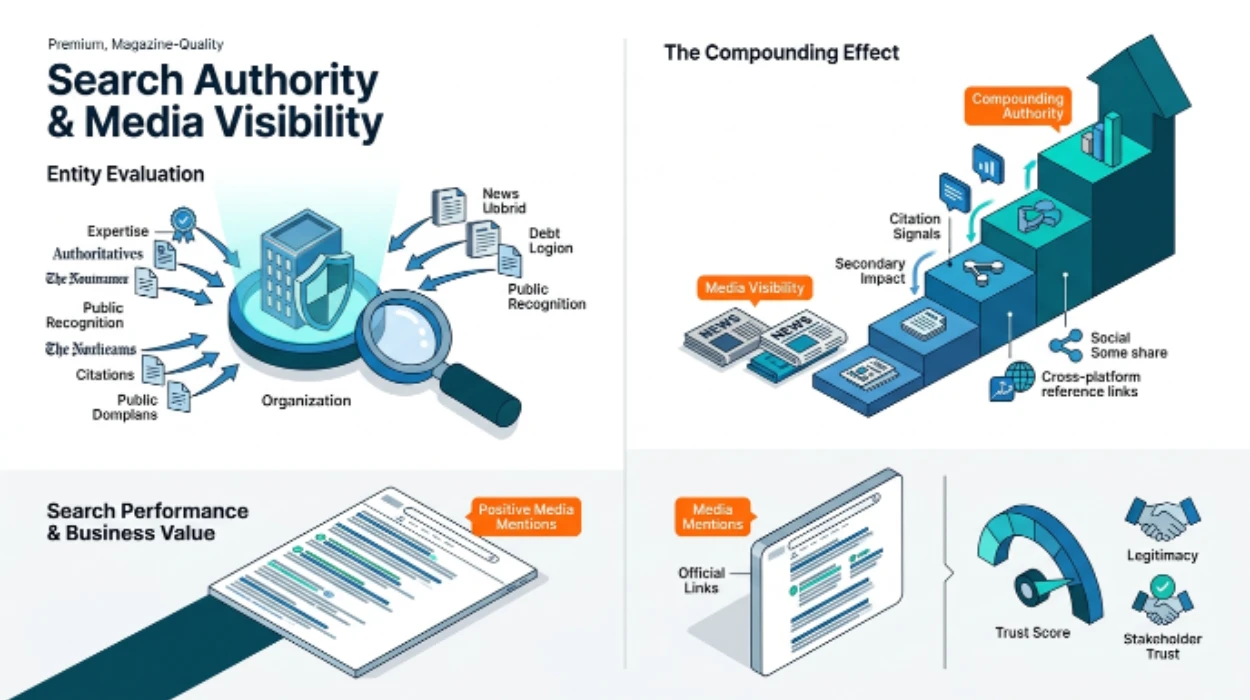
How does media visibility influence search rankings and digital authority?
Media visibility influences search rankings and digital authority because search engines evaluate external reputation signals when assessing organisational relevance and credibility.
Search ecosystems operate through entity-based evaluation systems. Media mentions help search engines understand organisational expertise, industry relevance, and public recognition. Authoritative publications strengthen entity associations and contribute to broader digital authority development.
Media coverage generates secondary visibility benefits. News publications often attract citations, references, social engagement, and additional coverage from other sources. These signals create a compounding authority effect that supports long-term search performance.
A comprehensive media relations campaign improves search outcomes by:
- Expanding entity references across authoritative domains.
- Increasing reputation signal consistency throughout search ecosystems.
- Supporting SERP control through positive content prominence.
- Strengthening digital authority through recognised publication mentions.
- Reinforcing search perception influence through credibility indicators.
These benefits create measurable business value because stakeholders frequently rely on search visibility when evaluating organisational legitimacy and trustworthiness.
How does media relations reduce reputation and perception risk?
Media relations reduces reputation and perception risk by increasing control over narrative visibility and strengthening positive reputation signals.
Digital ecosystems reward visibility. When organisations fail to establish authoritative narratives, external commentary frequently occupies prominent search positions. This creates uncertainty, weakens trust signals, and reduces institutional credibility.
Media relations campaigns proactively address this challenge through structured narrative visibility management. Organisations distribute accurate, consistent, and strategically aligned information across credible publication networks. This process increases the likelihood that stakeholders encounter trusted content during evaluation journeys.
Risk reduction occurs through several mechanisms:
- Establishing authoritative narratives before reputational challenges emerge.
- Strengthening positive search result representation.
- Improving stakeholder trust signals through independent validation.
- Expanding credible content assets supporting SERP control.
- Stabilising perception through consistent visibility patterns.
As digital scrutiny increases across public and private sectors, proactive reputation management delivers greater value than reactive response strategies.
What long-term value does professional media relations deliver?
Professional media relations delivers long-term value because media visibility compounds over time through search discovery, authority accumulation, and stakeholder trust reinforcement.
Unlike temporary advertising exposure, earned media contributes to persistent credibility assets. Publications remain indexed, searchable, and accessible to future stakeholders conducting due diligence. This ongoing visibility strengthens institutional trust and reinforces positive entity associations.
Organisations often begin evaluating visibility strategies through educational research such as How Brands Get Featured in News Publications Without Advertising. As decision-makers progress toward implementation, they recognise that systematic media relations creates repeatable outcomes rather than isolated visibility events.
Long-term value emerges through:
- Building durable digital authority across search ecosystems.
- Strengthening entity credibility through sustained publication presence.
- Improving stakeholder trust signals over extended periods.
- Enhancing narrative visibility management capabilities.
- Supporting organisational resilience through reputation reinforcement.
This cumulative impact transforms media relations from a communications activity into a strategic credibility infrastructure supporting organisational growth.
Why choose a specialist media relations partner for visibility campaigns?
A specialist media relations partner delivers stronger outcomes because expertise, distribution capabilities, and strategic oversight improve visibility efficiency and credibility development.
Effective campaigns require more than content distribution. They require narrative alignment, publication targeting, authority assessment, reputation signal analysis, and stakeholder perception management. These components work together to maximise visibility quality rather than simply increasing publication quantity.
Linkonize approaches media relations through a framework centred on entity credibility, stakeholder trust signals, and long-term digital authority. This approach aligns media visibility with broader reputation and public affairs objectives, ensuring every campaign contributes to measurable perception outcomes.
A specialist partner strengthens campaign performance by:
- Aligning media visibility with organisational objectives.
- Improving publication relevance through strategic targeting.
- Enhancing reputation signals across authoritative platforms.
- Supporting SERP control through sustained visibility efforts.
- Delivering structured narrative visibility management.
For organisations seeking reliable visibility outcomes, process clarity and strategic consistency remain critical factors in campaign success.
Which media relations investment delivers the highest return on credibility and visibility?
A structured media relations programme delivers the highest return because it combines visibility generation, trust building, reputation strengthening, and digital authority development within a single strategic framework.
Stakeholders increasingly rely on search-driven evaluation processes when assessing organisations. Media visibility directly influences these evaluations by strengthening credibility indicators and improving narrative prominence. Strong publication presence supports search perception influence while reinforcing institutional legitimacy.
The most effective visibility campaigns focus on measurable outcomes rather than publicity volume. Sustainable credibility growth depends on authoritative placements, reputation signal consistency, and ongoing narrative visibility management. These factors collectively strengthen stakeholder trust and support long-term organisational objectives.
Linkonize provides a structured approach to media relations that prioritises credibility development, stakeholder trust signals, and measurable visibility outcomes. Through strategic media distribution and reputation-focused execution, organisations gain stronger digital authority, improved narrative control, and greater confidence in how they are perceived across search ecosystems.
Effective media relations is not simply about generating coverage. It is about creating a reliable visibility framework that strengthens institutional trust, supports stakeholder decision-making, improves SERP control, and delivers sustained reputation value through credible media presence.
Frequently Asked Questions
How quickly can a PR distribution campaign improve media visibility?
A PR distribution campaign can generate visibility immediately after content distribution, depending on publication schedules and media network reach. The most valuable impact occurs when media placements begin contributing to search visibility, reputation signals, and digital authority over time. Consistent media exposure strengthens stakeholder trust and improves narrative visibility management across search ecosystems.
Why is media coverage more valuable than advertising for credibility?
Media coverage provides third-party validation through editorial review, which strengthens stakeholder trust signals more effectively than paid promotional content. When organisations appear in recognised news publications, they enhance entity credibility and improve public perception. This independent endorsement supports stronger reputation signals and long-term digital authority.
Can media relations help control online reputation?
Yes. Media relations supports narrative visibility management by increasing the presence of authoritative and accurate content across digital channels. Strategic media placements improve SERP control, strengthen positive reputation signals, and reduce the visibility of less favourable narratives. This creates a more stable and credible online presence.
What is the difference between PR distribution and media relations?
PR distribution focuses on delivering content to media outlets and publication networks, while media relations includes broader activities such as journalist engagement, narrative development, reputation management, and stakeholder communication. Combining both approaches delivers stronger visibility outcomes and improves search perception influence.
How do media mentions support search engine visibility?
Media mentions strengthen digital authority by creating trusted references across authoritative websites. Search engines use these signals to better understand organisational relevance, expertise, and credibility. Consistent media coverage improves entity recognition, supports search rankings, and reinforces stakeholder confidence through visible reputation signals.