

PR distribution and traditional advertising differ in how visibility, credibility, and audience perception are generated across digital ecosystems. PR distribution focuses on information dissemination through media and content networks, while traditional advertising relies on paid placement to secure audience attention.
Online reputation refers to the collective perception of an entity across search engines, media environments, digital publications, and stakeholder-facing platforms. Public affairs refers to the management and interpretation of relationships between institutions, stakeholders, policy environments, and public discourse. Digital advocacy is the structured dissemination of information, narratives, and evidence to influence awareness, understanding, and institutional perception within digital ecosystems.
What is the difference between PR distribution and traditional advertising?
The fundamental difference between PR distribution and traditional advertising is the source of visibility and the type of trust signal generated. PR distribution is the dissemination of information through media, publishing, and content syndication ecosystems. Traditional advertising is the placement of paid messages within controlled promotional environments. Each mechanism creates a distinct form of audience interpretation and digital visibility.
PR distribution defines visibility through publication, indexing, citation, and narrative propagation. Search engines evaluate these signals as part of broader content ecosystems. News publications, media references, and content citations contribute to entity perception and contextual relevance. The visibility generated through PR distribution becomes part of the searchable information environment surrounding an organisation, institution, or public figure.
Traditional advertising defines visibility through purchased placement. The message remains controlled by the advertiser and appears within designated advertising inventory. Search engines, audiences, and media systems recognise the content as paid communication. This distinction influences how trust, authority, and credibility are interpreted across digital channels.
From a reputation perspective, PR distribution contributes to information architecture, while advertising contributes to promotional exposure. Both influence awareness, but they operate through different credibility frameworks and visibility mechanisms.
How does PR distribution work within digital ecosystems?
PR distribution works by transferring information into content ecosystems that support discovery, indexing, referencing, and interpretation. The process creates searchable information assets that become part of the digital footprint associated with an entity.
Information enters digital ecosystems through publication platforms, media websites, content networks, and news archives. Search engines crawl these sources and evaluate relevance, freshness, topical consistency, and entity relationships. Content indexing enables information to appear in search results, knowledge repositories, and thematic content clusters.
How does content indexing influence perception?
Content indexing refers to the process through which search engines discover, process, and store information for retrieval. Indexed content becomes available for SERP evaluation and future ranking opportunities. Information that remains accessible across multiple authoritative sources contributes to visibility persistence.
Indexed media content expands the amount of information available about an entity. Search engines analyse contextual relationships between topics, entities, references, and publications. This evaluation influences how reputation signals are interpreted within search ecosystems.
How does narrative distribution affect visibility?
Narrative distribution refers to the spread of information across interconnected publishing environments. When information appears consistently across relevant sources, search systems gain additional contextual data regarding topics, entities, and subject matter expertise.
Narrative influence emerges through repetition, contextual relevance, and information consistency. Search visibility increases when content contributes meaningful topical coverage that aligns with recognised subject areas. The resulting information environment shapes stakeholder understanding and entity perception.
How does traditional advertising generate visibility?
Traditional advertising generates visibility through direct payment for audience exposure. The placement appears because advertising inventory has been purchased rather than because content has been selected for publication or editorial distribution.
Advertising ecosystems operate through media buying frameworks. Publishers allocate designated spaces for promotional content, while advertisers define audience targeting criteria. Visibility is secured through expenditure rather than publication value or informational relevance.
This model creates immediate exposure but produces a different category of reputation signal. Search engines classify advertising content differently from editorial content because the underlying publication mechanism differs. Paid visibility and informational visibility therefore occupy separate positions within digital trust architecture.
The distinction becomes particularly important when evaluating authority formation. Authority emerges through recognised expertise, contextual relevance, and external validation. Advertising demonstrates investment in exposure, while PR distribution demonstrates participation within information ecosystems. These signals contribute differently to stakeholder interpretation.
Why do trust signals differ between PR distribution and advertising?
Trust signals differ because audiences and algorithms evaluate information according to source characteristics, publication context, and perceived independence. Trust is not generated solely by visibility; it is generated through interpretation of information quality and credibility indicators.
PR distribution contributes trust signals through publication environments that operate independently from the entity being discussed. Media references, content citations, and informational coverage provide contextual evidence that expands digital authority. Search engines analyse these relationships as part of broader credibility assessments.
Advertising operates within a declared promotional framework. The source of communication remains explicit and transparent. Audiences recognise the information as advertiser-controlled content. This transparency supports awareness objectives but generates different trust characteristics compared with editorially distributed information.
Stakeholder trust develops when information appears consistent across multiple credible sources. Reputation systems rely on corroboration, contextual relevance, and information accessibility. PR distribution and advertising therefore contribute different forms of credibility within online trust architecture.
How do search engines evaluate PR distribution and traditional advertising?
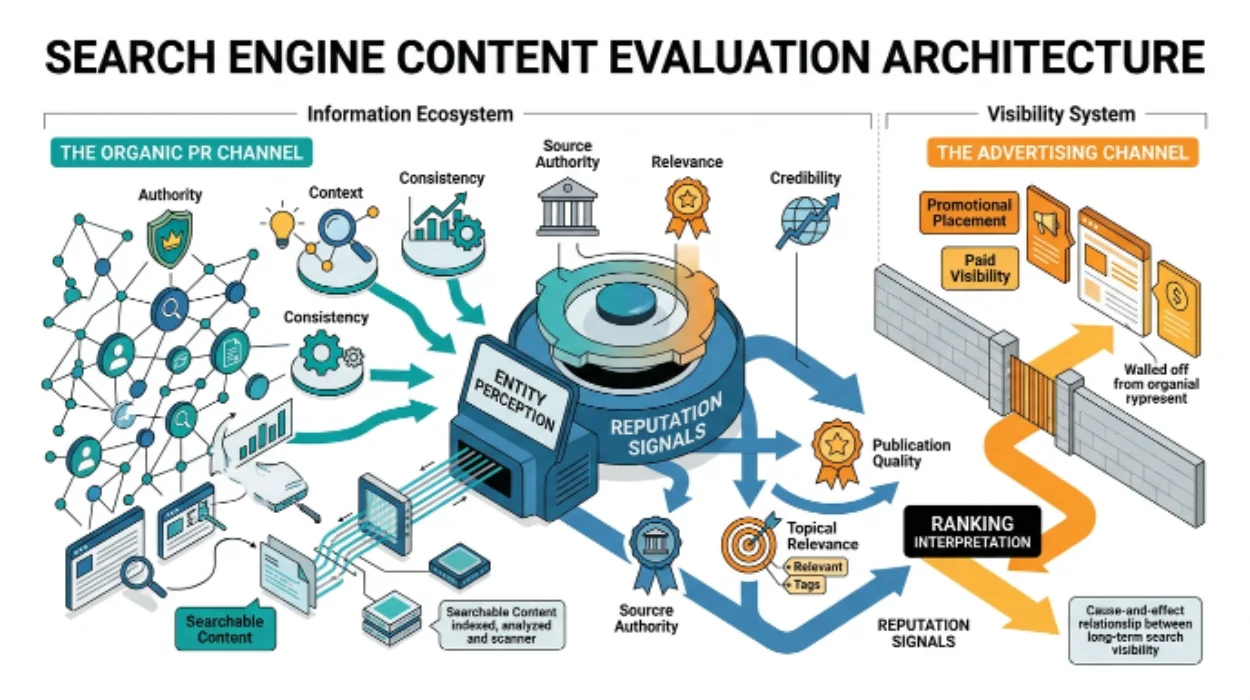
Search engines evaluate PR distribution and traditional advertising according to content type, source authority, relevance, and informational value. The evaluation process focuses on understanding the role each content asset plays within the wider information ecosystem.
PR distribution contributes searchable content that can be indexed, analysed, and connected to related topics. Search systems assess publication quality, entity associations, semantic relevance, and information consistency. These factors contribute to content ranking dynamics and long-term search visibility.
Advertising content exists within separate evaluation frameworks. Paid placements generate visibility through advertising systems rather than organic ranking mechanisms. Search engines distinguish between promotional placement and organic retrieval to preserve result quality and user trust.
What role does entity perception play in search evaluation?
Entity perception refers to how search systems interpret the identity, relevance, expertise, and credibility of a person, institution, or organisation. Search engines build entity understanding through relationships between content sources, references, topics, and contextual signals.
PR distribution contributes information that expands entity understanding. Published content creates additional contextual references that help search systems define topical associations. Strong entity perception supports clearer interpretation of institutional expertise and relevance.
What role do reputation signals play in ranking systems?
Reputation signals refer to observable indicators that contribute to credibility evaluation. These signals include authoritative references, publication consistency, topical relevance, and information quality.
Search systems analyse reputation signals as part of broader SERP evaluation processes. The objective is to determine which information sources provide the most reliable and relevant answers. PR distribution contributes informational signals, while advertising contributes visibility signals. The distinction influences ranking interpretation and search visibility outcomes.
How do digital narratives shape public perception?
Digital narratives shape public perception by organising information into patterns that audiences and algorithms can interpret. A narrative is not a promotional statement; it is the collective representation of information across content ecosystems.
Narrative influence emerges through consistency, accessibility, and contextual reinforcement. Search results, news publications, industry references, and informational content collectively form the narrative environment surrounding an entity. Stakeholders evaluate available information when forming judgements about credibility and relevance.
PR distribution contributes to narrative formation by introducing information into discoverable ecosystems. The published content becomes part of the searchable record associated with an institution or organisation. Search engines subsequently analyse this information alongside existing content.
Traditional advertising contributes narrative exposure but does not occupy the same informational role. The content remains within promotional environments rather than editorial information ecosystems. This distinction affects how narratives develop and how authority signals accumulate over time.
How does institutional credibility develop across online environments?
Institutional credibility develops through the interaction of visibility, consistency, authority, and information accessibility. Credibility is a cumulative outcome of how information is presented, distributed, interpreted, and validated.
Digital ecosystems evaluate institutions through multiple layers of evidence. Search engines analyse indexed content, publication sources, entity associations, and topical relevance. Stakeholders analyse similar information through search results, media coverage, and publicly available content.
PR distribution contributes to institutional credibility by increasing the amount of discoverable information connected to an entity. Information availability supports transparency, contextual understanding, and knowledge accessibility. These factors contribute to stronger credibility frameworks.
Advertising contributes awareness and message visibility. However, awareness alone does not define institutional credibility. Credibility develops through the broader information environment and the reputation signals available for independent evaluation.
Why does stakeholder trust depend on content ecosystems?
Stakeholder trust depends on content ecosystems because perception is formed through information exposure rather than isolated communication events. Stakeholders encounter information across search engines, media platforms, publications, and digital archives.
Content ecosystems create the environment in which credibility assessments occur. Search results provide information retrieval pathways. Media publications provide contextual analysis. Knowledge repositories provide reference material. Together, these assets influence stakeholder interpretation.
Trust emerges when information remains consistent across interconnected sources. Search visibility supports discoverability, while authority signals support credibility evaluation. PR distribution contributes to this process by expanding information availability across relevant publishing environments.
Advertising contributes exposure within designated promotional contexts. Stakeholders recognise the communication objective and interpret the information accordingly. As a result, trust formation follows different pathways depending on whether visibility originates from informational distribution or paid promotion.
How do PR distribution and advertising contribute to long-term digital authority?
PR distribution and advertising contribute to digital authority through distinct mechanisms. Digital authority refers to recognised relevance, expertise, and credibility within online information environments.
PR distribution contributes authority through publication, indexing, referencing, and contextual association. These elements become part of searchable ecosystems and support ongoing discovery. Search engines evaluate these signals when interpreting entity relevance and expertise.
Advertising contributes authority indirectly through visibility and awareness generation. Increased exposure can improve recognition, but authority itself depends on broader credibility signals. Search systems evaluate authority through evidence-based relationships rather than promotional expenditure alone.
Long-term digital authority develops through cumulative information presence. Content indexing, reputation signals, entity perception, and stakeholder trust collectively define authority outcomes. PR distribution participates directly in these informational processes, while advertising operates primarily within exposure frameworks.
What does the distinction mean for modern reputation systems?
The distinction means that PR distribution and traditional advertising serve different functions within contemporary reputation systems. One mechanism expands information availability through publishing ecosystems, while the other secures audience exposure through paid placement.
Modern reputation systems rely on search visibility, content indexing, authority evaluation, and stakeholder interpretation. Search engines analyse informational relevance. Stakeholders analyse credibility indicators. Media ecosystems analyse contextual significance. Each layer contributes to overall entity perception.
PR distribution influences how information enters searchable ecosystems and becomes part of digital narratives. Traditional advertising influences how promotional messages reach intended audiences. Understanding this distinction provides a clearer framework for analysing visibility, credibility, and institutional perception across digital environments.
Within broader discussions of visibility and information persistence, the topic of How Often Should Brands Distribute Press Releases for Consistent Visibility? expands the analysis by examining publication frequency as a factor in content indexing, narrative continuity, and search visibility.
Conclusion
PR distribution and traditional advertising represent two distinct mechanisms for creating visibility within digital ecosystems. PR distribution contributes informational assets that support content indexing, entity perception, reputation signals, and narrative influence. Traditional advertising contributes paid exposure through controlled promotional placements.
Search engines, stakeholders, and media systems evaluate these mechanisms differently because each generates a different category of trust and authority signal. Institutional credibility develops through information accessibility, contextual relevance, and reputation evaluation across interconnected content environments. Understanding the distinction provides a clearer view of how digital authority, stakeholder trust, and online reputation are formed and interpreted within modern search ecosystems.