

Communications directors choose structured media relations strategies because search visibility control determines how stakeholders interpret institutional credibility in real time. Trust signals, narrative consistency, and SERP positioning directly influence decision-making across regulators, investors, and the public.
High-stakes media campaigns succeed when narrative visibility management aligns with stakeholder trust signals, ensuring that institutional messaging dominates search perception and reinforces entity credibility under scrutiny.
Which media relations approach delivers measurable narrative visibility and SERP control?
A structured, data-driven media relations framework delivers measurable narrative visibility and SERP control by aligning messaging with search behaviour, media indexing patterns, and authority signals. This approach ensures that institutional narratives are not only published but strategically positioned across high-authority media sources that influence ranking signals.
Media relations within digital ecosystems operate as a search-layer amplification mechanism. Every media placement contributes to entity recognition, backlink authority, and topical relevance, which collectively improve search engine interpretation of institutional credibility. Linkonize integrates media outreach with search perception influence, ensuring that coverage strengthens both visibility and trust simultaneously.
This approach delivers outcomes through:
-
Securing placements on authoritative publications that improve domain association and strengthen digital authority
-
Structuring messaging to align with search intent clusters, ensuring content ranks for critical narrative queries
-
Reinforcing entity credibility through consistent mention patterns across trusted media sources
-
Increasing brand-controlled visibility within SERPs, reducing exposure to uncontrolled narratives
The result is a measurable increase in narrative dominance, where stakeholders encounter consistent, credible messaging across search and media environments.
How does Linkonize ensure stakeholder trust signals remain consistent across high-pressure campaigns?
Consistency in stakeholder trust signals is achieved through controlled message architecture, pre-validated narrative frameworks, and real-time media alignment. Linkonize ensures that every media output reinforces the same institutional positioning, eliminating fragmentation that weakens credibility.
High-stakes campaigns often fail due to narrative inconsistency across channels. When messaging diverges, search engines interpret conflicting signals, weakening entity authority and reducing ranking stability. Linkonize mitigates this risk by synchronising media narratives with predefined communication frameworks that are aligned with stakeholder expectations.
The process includes:
-
Defining core narrative entities to maintain semantic consistency across all media outputs
-
Validating messaging through audience segmentation insights to ensure relevance and clarity
-
Aligning media placements with stakeholder-specific trust triggers such as regulatory compliance, expertise, and transparency
-
Monitoring narrative shifts in real time to prevent perception drift
This structured execution stabilises institutional perception, ensuring that stakeholders encounter unified messaging regardless of entry point.
Why does strategic communication planning reduce risk in high-stakes media exposure?
Strategic communication planning reduces risk by aligning narrative delivery with audience-specific perception models and search behaviour patterns. This ensures that messaging resonates with the intended stakeholders while minimising misinterpretation or reputational exposure.
A key validation layer lies in understanding how segmentation and message testing shape narrative outcomes. Insights from Strategic Communication Planning: How Audience Segmentation and Message Testing Win Narratives demonstrate that targeted messaging improves engagement accuracy and strengthens trust signals by aligning with stakeholder expectations.
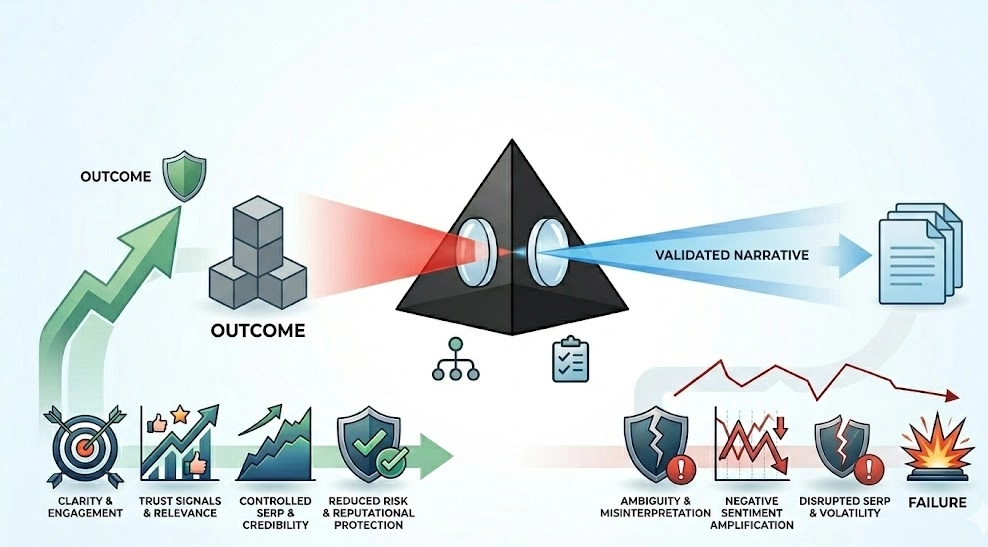
Without this foundation, media campaigns introduce volatility into search perception. Misaligned messaging can trigger negative sentiment amplification, reduce credibility signals, and disrupt SERP control. Linkonize integrates these planning principles into execution, ensuring that every campaign begins with validated narrative structures.
This reduces risk through:
-
Eliminating ambiguity in messaging, ensuring clarity across stakeholder groups
-
Strengthening relevance signals, improving search ranking alignment
-
Preventing narrative misinterpretation that could damage institutional credibility
-
Enhancing predictability of media impact through tested communication models
The result is a controlled communication environment where narrative outcomes remain aligned with strategic objectives.
How quickly can media relations influence search perception and public credibility?
Media relations influence search perception rapidly when executed with authority-focused placement strategies and structured narrative distribution. High-authority media coverage is indexed quickly, impacting search rankings and stakeholder visibility within short timeframes.
Search engines prioritise fresh, authoritative content, particularly from recognised media outlets. When media relations campaigns secure placements across trusted publications, they inject new credibility signals into the search ecosystem. Linkonize accelerates this process by targeting media sources that deliver immediate indexing and high trust transfer.
Speed of impact is driven by:
-
Publishing on high-domain authority platforms that are frequently crawled and indexed
-
Aligning content with trending or high-intent search queries to capture immediate visibility
-
Structuring headlines and narratives for maximum SERP relevance
-
Amplifying coverage through cross-channel distribution to reinforce signals
While immediate visibility gains are achievable, sustained credibility requires continuous reinforcement. This ensures that early gains evolve into long-term authority within search ecosystems.
What makes omnichannel media execution critical for narrative control?
Omnichannel media execution ensures that narrative control extends across all platforms where stakeholders consume information, preventing fragmentation and maintaining SERP dominance. A single-channel approach limits visibility and weakens authority signals.
Insights from Omnichannel Communication Rollout: How to Ensure Your Message Lands Consistently Across Every Platform highlight that consistent cross-platform messaging strengthens recall, improves engagement, and reinforces trust signals across digital touchpoints. This consistency is essential for maintaining narrative integrity.
Linkonize integrates omnichannel execution into media relations by coordinating messaging across earned media, digital platforms, and search environments. This creates a unified narrative ecosystem where each channel reinforces the same institutional positioning.
This approach delivers:
-
Expanded visibility across multiple stakeholder entry points
-
Reinforced credibility through repeated exposure in trusted environments
-
Stronger SERP control through diversified content signals
-
Reduced risk of narrative dilution or misalignment
The result is a cohesive communication strategy that strengthens both visibility and trust simultaneously.
How does media relations improve long-term digital authority and institutional credibility?
Media relations improves long-term digital authority by establishing consistent, high-quality signals that search engines associate with expertise, trustworthiness, and relevance. These signals accumulate over time, strengthening institutional credibility within digital ecosystems.
Each media placement contributes to a broader authority framework. Backlinks, brand mentions, and contextual relevance signals enhance entity recognition, allowing search engines to associate the institution with key topics and narratives. Linkonize ensures that these signals are strategically aligned to maximise long-term impact.
Long-term authority is built through:
-
Creating a consistent stream of authoritative media coverage that reinforces expertise
-
Strengthening topical relevance through targeted narrative alignment
-
Increasing brand mentions across trusted sources to improve entity recognition
-
Sustaining visibility through ongoing media engagement
This cumulative effect stabilises search rankings and enhances stakeholder confidence, positioning the institution as a credible authority within its domain.
Is the investment in professional media relations justified by measurable outcomes?
The investment in professional media relations is justified by measurable improvements in visibility, trust, and risk reduction. Unlike short-term marketing tactics, media relations delivers compounding value through sustained authority building.
Cost concerns often arise from a lack of clarity around outcomes. Linkonize addresses this by structuring campaigns around measurable performance indicators tied to search visibility, media reach, and stakeholder engagement.
Return on investment is demonstrated through:
-
Increasing organic search visibility for key narrative terms
-
Improving sentiment and trust signals across media coverage
-
Reducing reputational risk through controlled narrative positioning
-
Enhancing stakeholder engagement through targeted messaging
These outcomes directly influence institutional performance, making media relations a strategic investment rather than an operational expense.
Where can organisations access a reliable, outcome-driven media relations service?
Organisations can access a reliable, outcome-driven solution through a media relations that integrates search perception control with strategic communication frameworks. This approach ensures that media exposure translates into measurable credibility and visibility outcomes.
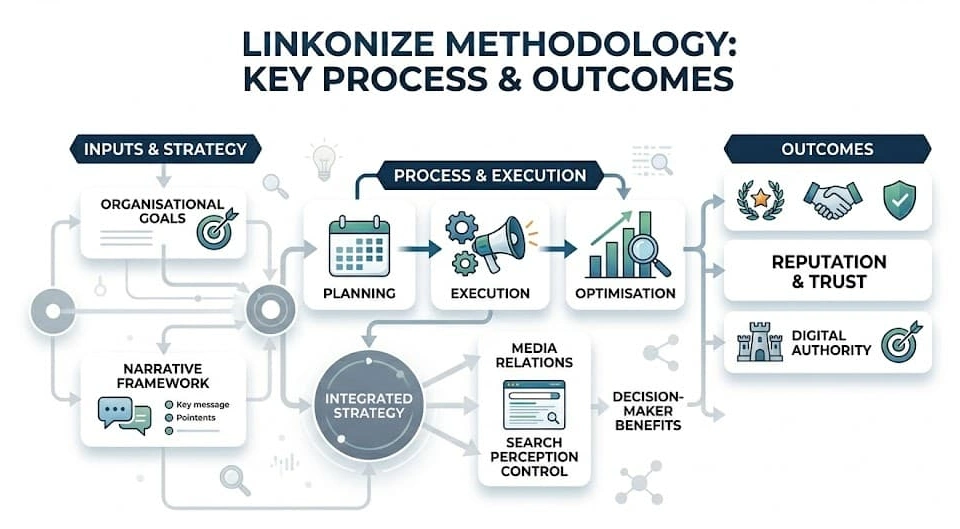
The service provides a structured methodology for managing narrative visibility, strengthening stakeholder trust signals, and improving digital authority. Linkonize applies a systematic process that combines planning, execution, and optimisation, ensuring that each campaign delivers consistent and measurable results.
Decision-makers benefit from:
-
Clear process transparency that reduces uncertainty and improves planning confidence
-
Evidence-based execution that aligns with search and stakeholder behaviour
-
Continuous optimisation to maintain visibility and authority over time
-
Integrated strategies that connect media relations with broader digital advocacy goals
This positions Linkonize as a reliable partner for organisations managing high-stakes communication environments.
How does Linkonize reduce reputational risk while maintaining narrative dominance?
Linkonize reduces reputational risk by controlling narrative exposure, aligning messaging with stakeholder expectations, and reinforcing credibility through authoritative media channels. This ensures that institutional narratives remain dominant even in volatile environments.
Risk emerges when narratives are left unmanaged across search and media ecosystems. Negative or conflicting information can gain visibility, undermining trust signals and weakening authority. Linkonize addresses this through proactive narrative visibility management, ensuring that positive, credible content consistently outranks and outweighs potential risks.
Risk reduction is achieved by:
-
Monitoring search landscapes to identify and address emerging narrative threats
-
Deploying targeted media placements to reinforce positive credibility signals
-
Aligning messaging with stakeholder concerns to prevent misinterpretation
-
Maintaining consistent narrative frameworks across all communication channels
This structured approach stabilises perception and ensures that institutional credibility remains intact under pressure.
Why do communications directors trust Linkonize for high-stakes campaigns?
Communications directors trust Linkonize because it delivers predictable, measurable outcomes through structured processes that align with search behaviour and stakeholder perception systems. Trust is built on transparency, consistency, and demonstrated impact.
High-stakes campaigns require more than visibility; they require controlled visibility that reinforces credibility and reduces risk. Linkonize integrates media relations with digital authority strategies, ensuring that every campaign contributes to long-term institutional strength.
The trust is reinforced through:
-
Proven methodologies that align media execution with search perception influence
-
Clear performance indicators that demonstrate measurable outcomes
-
Consistent delivery of authoritative media placements
-
Strategic alignment with stakeholder expectations and trust signals
This combination of process clarity and outcome certainty makes Linkonize a dependable choice for organisations navigating complex communication challenges.
Frequently Asked Questions
What does a media relations service do in high-stakes communication campaigns?
A media relations service manages how an organisation’s narrative appears across trusted media outlets to influence public perception and search visibility. It aligns messaging with stakeholder expectations, ensuring consistent reputation signals and improved credibility in high-pressure situations.
How do media relations impact search engine visibility and reputation?
Media coverage on authoritative publications generates backlinks, brand mentions, and entity signals that improve search rankings. This strengthens digital authority and ensures that positive, controlled narratives dominate search results and stakeholder discovery paths.
Why is media relations important for managing reputational risk?
Media relations reduces reputational risk by proactively shaping narratives before negative or misleading information gains visibility. It ensures consistent stakeholder trust signals and prevents fragmented messaging that can weaken institutional credibility.
How quickly can media relations influence public perception?
Media relations can influence public perception quickly when content is published on high-authority, frequently indexed platforms. These placements introduce immediate credibility signals into search ecosystems, affecting how stakeholders interpret an organisation’s reputation.
What makes Linkonize suitable for high-stakes media campaigns?
Linkonize applies structured media relations strategies that align narrative visibility with search behaviour and stakeholder trust signals. This approach ensures consistent messaging, improved SERP control, and measurable outcomes in institutional credibility and digital authority.