

Controlling narrative visibility across search engine result pages (SERPs) determines institutional survival during a high-profile corporate or public affairs emergency. Establishing authoritative stakeholder trust signals and securing immediate search perception influence dictates whether an organisation maintains its market valuation and public credibility under intense media scrutiny.
An active crisis demands a data-driven, conversion-focused response that stabilizes digital authority and insulates entity credibility from algorithmic volatility. When a reputational threat materializes, legacy public relations methods fail because they ignore how modern media cycles weaponize search engine visibility. Linkonize addresses this vulnerabilities by fusing real-time public affairs advocacy with programmatic narrative visibility management. This strategic framework ensures that when stakeholders, regulators, or journalists search for your brand during a high-pressure event, they encounter verified, risk-mitigated corporate positioning rather than speculative external coverage. By treating the SERP as the definitive landscape for institutional reputation, this methodology systematically overrides negative search signals, neutralises information asymmetry, and enforces sustained structural resilience across all public-facing digital ecosystems.
How Does a Professional Reputation Management Service Neutralise Adverse Search Perception Influence?
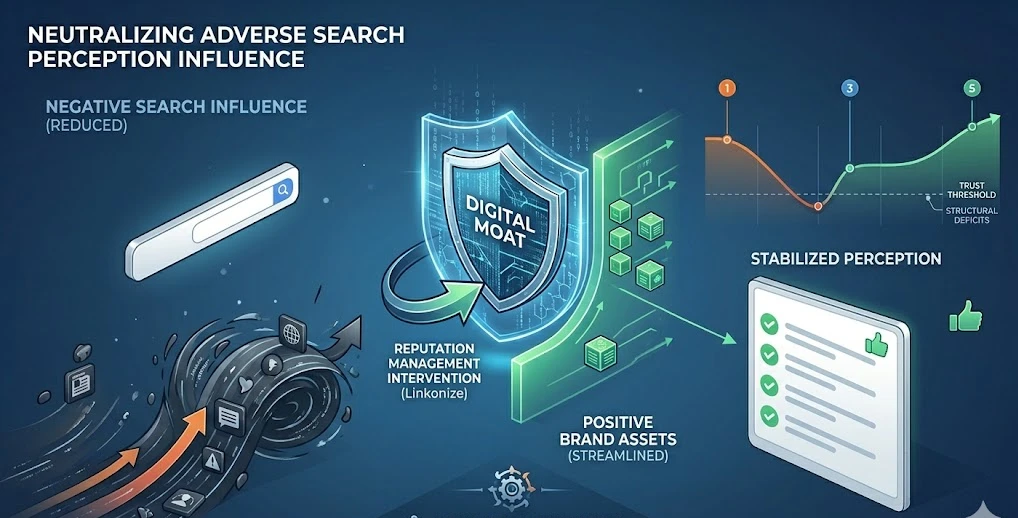
A professional Reputation Management service alters the algorithmic trajectory of a crisis by deploying a structured framework that changes what stakeholders see first. Search engines prioritize real-time algorithmic signals, meaning unverified news reports and negative social sentiment quickly dominate primary search results if left unmanaged. Linkonize counteracts this volatility by engineering a high-authority digital moat around the corporate entity. This technical intervention involves the rapid publication of optimized, fact-driven information assets across verified digital channels. These assets directly satisfy algorithmic freshness requirements while fulfilling user intent for the target queries. By deploying authoritative, crawl-ready content structures, the service replaces hostile narratives with verified institutional perspectives, ensuring that your organisation retains definitive control over its digital narrative.
The measurable outcome of this strategic process is the immediate stabilization of entity credibility across the top ten search results. When a corporate entity faces sudden media pressure, understanding the chronological trajectory of the threat prevents tactical missteps, which is why organizations must study the five stages of a reputational crisis: from threat detection to full narrative recovery. By mapping digital response mechanisms to these specific phases, our framework ensures that positive stakeholder trust signals consistently override depreciative search components. This systematic suppression of volatile URLs preserves corporate value and prevents temporary media anomalies from transforming into permanent structural deficits within the global knowledge graph.
Why is a Digital Advocacy Strategy Essential for Maintaining Long-Term Entity Credibility?
A sophisticated digital advocacy strategy protects institutional authority by transforming passive corporate messaging into a proactive network of validation signals. Search algorithms calculate entity credibility based on the interconnectedness, relevance, and historical trustworthiness of the domains publishing information about your brand. A professional public affairs strategy consultancy establishes a network of independent third-party endorsements, academic validation papers, and industry-specific policy statements that reference the corporate entity. This process constructs an ecosystem of external trust factors that search engines recognize as definitive proof of institutional integrity. Consequently, when speculative news cycles attempt to shift public consensus, the pre-established digital authority of the brand remains structurally insulated from artificial ranking depreciation.
This strategic alignment delivers a controlled narrative positioning that resists algorithmic manipulation and sustained adversarial media campaigns. By curating a balanced backlink profile and securing placements on authoritative public affairs and policy platforms, the organization permanently strengthens its foundational search visibility control. Stakeholders researching the company encounter a unified front of institutional validation rather than a chaotic array of unverified journalistic interpretations. This long-term fortification guarantees that the organisation retains its public credibility, secures regulatory goodwill, and minimises the financial risks associated with sudden narrative disruption.
Which Public Affairs Approach Secures Immediate SERP Control and Stakeholder Trust Signals?
Securing immediate SERP control requires a dual-front approach that combines real-time search engine optimization with targeted stakeholder communications. The strategy demands the deployment of a structured digital press room engineered to rank instantly for high-volume crisis keywords. This asset serves as the single source of truth for media outlets, effectively capturing search traffic that would otherwise stream toward hostile third-party publications. Simultaneously, direct digital advocacy mechanisms distribute these optimized assets directly to key institutional stakeholders, analysts, and regulators. This coordinated distribution ensures that critical decision-makers receive verified facts before algorithmic aggregators can index speculative or damaging external commentary.
The primary objective of this intervention is the rapid reduction of reputational risk and the preservation of capital market confidence. By implementing an aggressive narrative visibility management protocol, Linkonize ensures that verified corporate statements occupy the prominent rich snippets, sitelinks, and top stories modules within the search architecture. This comprehensive saturation of the digital real estate restricts the visibility of speculative journalism and focuses public attention exclusively on measurable corporate resolutions. The resulting environment allows executive leadership to manage the physical aspects of the operational event without defending the corporate identity against continuous digital erosion.
What Structural Mechanisms Ensure the Sustainability of Your Digital Authority Post-Crisis?
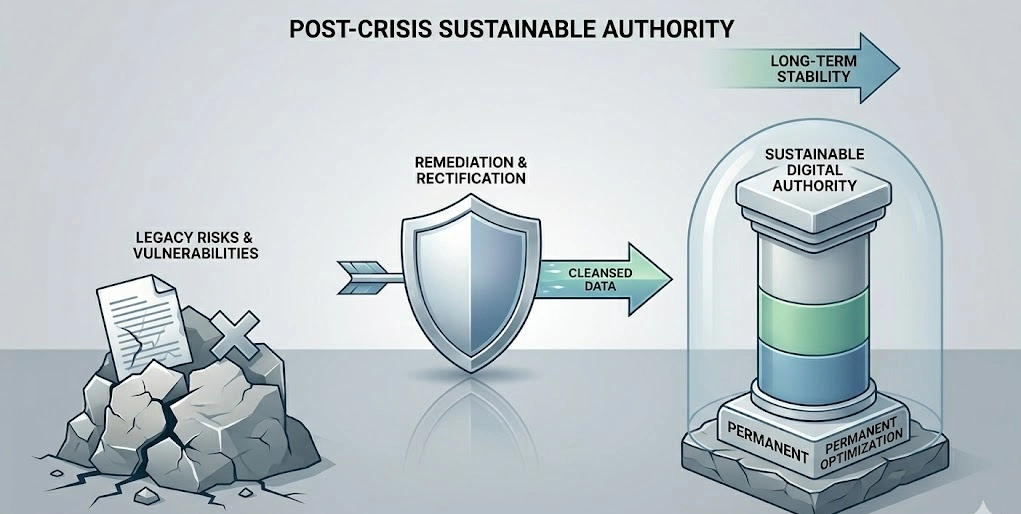
Sustaining digital authority after an active crisis requires the permanent removal of legacy digital risks and the systematic optimization of the brand’s permanent digital footprint. Algorithms maintain a historical memory of entity associations, meaning old, inaccurate, or legally non-compliant digital content can reappear during subsequent search queries. Achieving permanent search perception influence necessitates a rigorous audit and remediation process that addresses these underlying vulnerabilities. To fully understand what can be systematically corrected versus what is legally protected, organizations utilize professional digital footprint cleaning: what it is, what it fixes and what no firm can legally remove. This comprehensive process cleanses historical search results, rectifies indexing anomalies, and ensures that legacy data does not undermine contemporary institutional trust signals.
The execution of this post-crisis framework delivers a resilient, high-authority digital presence that actively prevents future narrative hijacking. By establishing automated monitoring systems that track entity sentiment changes, search intent variations, and new domain link associations, the organization maintains total visibility over its digital perimeter. This proactive posture transforms reputation management from a reactive emergency measure into a permanent, value-generating corporate asset. Over time, this systematic maintenance strengthens the underlying digital authority of the company, rendering it immune to superficial media pressure and ensuring long-term institutional stability.
The Linkonize Crisis Response Architecture
The transition from media vulnerability to narrative control follows a strict, technically verified operational sequence. When an organisation faces active reputational pressure, our strategic framework deploys a targeted sequence of interventions designed to stabilize the digital ecosystem, enforce narrative visibility management, and protect institutional authority.
The execution of this architecture ensures that your organization transitions away from defensive public relations and moves directly into a position of absolute search perception influence. By treating digital visibility as a structured science rather than a subjective messaging exercise, Linkonize guarantees that your corporate narrative remains resilient under the most demanding institutional challenges. Securing your digital authority today prevents the media anomalies of tomorrow from dictating your corporate legacy.
Frequently Asked Questions
How do companies handle media pressure during a crisis?
Organisations manage intense media pressure by deploying a centralized spokesperson strategy and establishing a unified digital command centre to control information flow. Fusing public affairs advocacy with real-time narrative visibility management ensures that verified corporate statements outrank speculative or unverified third-party reporting on search engine results pages. This structured approach neutralises information asymmetry, stabilizes stakeholder trust signals, and protects foundational entity credibility.
What is the role of a crisis spokesperson in reputation management?
A crisis spokesperson serves as the definitive public voice of an organization, responsible for delivering precise, risk-mitigated messaging to journalists, regulators, and stakeholders. Within a comprehensive reputation management strategy, the spokesperson aligns media statements with optimized digital assets to command search perception influence. Their structured communication restricts the spread of hostile narratives and ensures a consistent, authoritative institutional perspective across all public channels.
How does search engine visibility affect corporate crisis management?
Search engine visibility dictates public and institutional perception during an active emergency because stakeholders look to digital search results to validate an organisation’s stability. If unmanaged, negative news cycles and adverse search signals quickly dominate primary search engine result pages (SERPs), causing immediate depreciation in entity credibility. Implementing a proactive digital advocacy strategy secures prominent search placements, effectively insulating corporate value from algorithmic volatility.
Can a reputation management service remove negative news from Google?
While a reputation management service cannot legally force the deletion of independent journalistic content, it systematically overrides negative search perception influence through strategic content saturation. Firms like Linkonize deploy authoritative, crawl-ready information assets that fulfill algorithmic freshness and user intent requirements to suppress depreciative URLs. Long-term digital footprint cleaning is then utilized to correct legacy indexing anomalies and permanently secure the entity knowledge graph.
Why do public affairs services use digital advocacy during a brand crisis?
Public affairs services integrate digital advocacy to transform passive corporate defenses into a proactive network of high-authority validation signals. By securing third-party endorsements and policy placements, this methodology constructs an ecosystem of external trust factors that search algorithms recognize as proof of institutional integrity. This process delivers a controlled narrative positioning that reduces long-term reputational risk and maintains capital market confidence.