

Strategic media partnership services deliver measurable audience growth, stronger brand awareness, and greater control over how organisations are discovered and perceived online.
In a digital environment shaped by search visibility control, stakeholder trust signals, and narrative credibility, media relations services ensure that organisations strengthen digital authority, improve reputation signals, and influence search perception through trusted publisher ecosystems.
Why do strategic media partnership services deliver stronger brand visibility outcomes?
Strategic media partnership services deliver sustained visibility because they place organisational narratives within authoritative publishing environments that already possess established audience trust. Unlike isolated promotional activity, media relations programmes connect brand messaging with credible media entities that influence search behaviour and stakeholder perception. This process strengthens entity credibility across digital ecosystems while improving the consistency of reputation signals associated with a brand. Search engines interpret authoritative mentions, contextual relevance, and publisher trust as indicators of legitimacy. As a result, organisations gain stronger SERP control and enhanced narrative visibility management across relevant search journeys.
Media partnerships function through structured relationship development with publishers, industry platforms, sector publications, and recognised information sources. These placements generate trusted third-party validation rather than self-published claims. Stakeholders evaluating a brand often rely on external references to assess credibility, expertise, and reliability. When authoritative publications consistently reinforce key organisational messages, public perception becomes more stable and predictable. This stability reduces uncertainty during decision-making and improves overall trust formation.
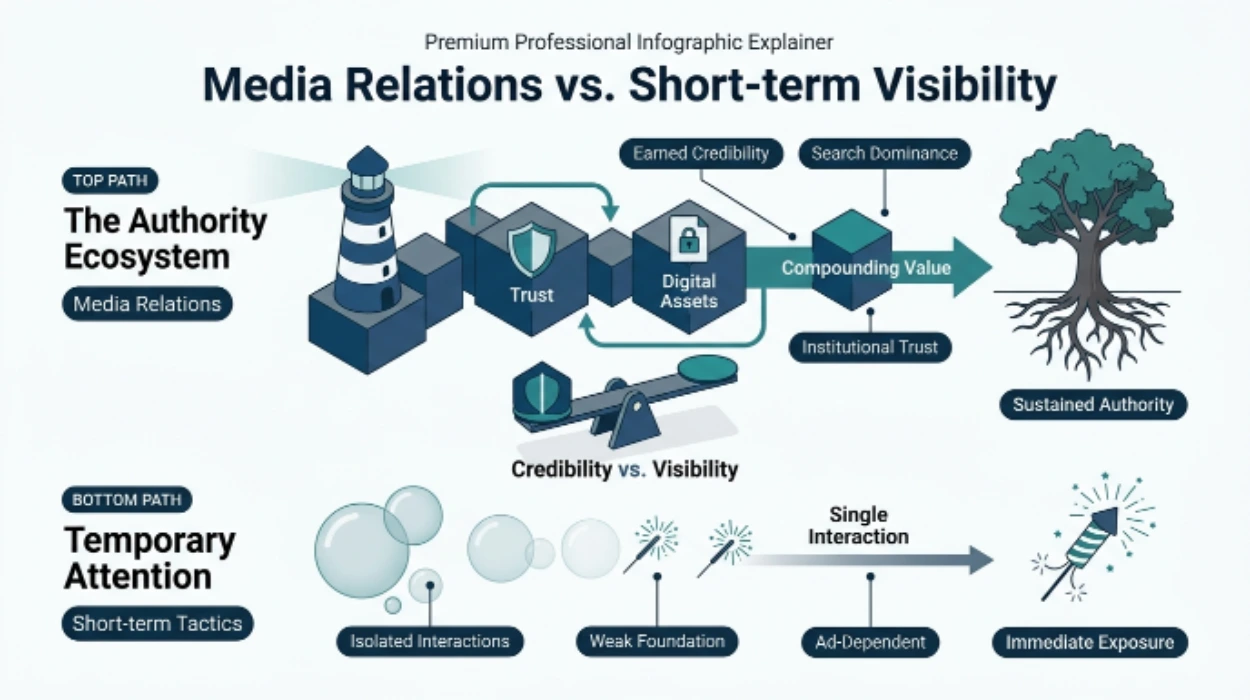
The long-term value of strategic media relations extends beyond immediate exposure. Publisher partnerships create durable digital assets that continue influencing search results, stakeholder research behaviour, and institutional perception over time. Each credible media mention contributes to a broader authority framework that strengthens search perception influence. This creates cumulative visibility gains rather than temporary traffic spikes. Organisations seeking sustainable growth benefit from an approach that continuously reinforces credibility while expanding audience reach.
What measurable outcomes do media partnerships create?
Strategic media partnership programmes produce outcomes that directly support commercial and reputational objectives:
- Increase branded search visibility through authoritative publisher citations and contextual mentions.
- Strengthen stakeholder trust signals through third-party validation from recognised media entities.
- Improve entity credibility through consistent association with trusted information sources.
- Expand audience reach through access to established publisher communities and readership networks.
- Enhance SERP control by increasing the presence of positive and relevant brand narratives.
These outcomes support both awareness objectives and long-term reputation resilience.
Which organisations benefit most from professional media relation services?
Organisations operating within competitive markets benefit significantly from professional media relation services because visibility alone no longer determines influence. Stakeholders evaluate credibility, expertise, and institutional reliability before making decisions. Media partnerships ensure that decision-makers encounter trustworthy narratives during research processes. This improves confidence and reduces perceived risk. Stronger narrative visibility management supports both customer acquisition and stakeholder engagement objectives.
Public affairs teams benefit because media partnerships reinforce policy narratives and institutional positioning through credible channels. When organisations seek to influence public discourse, authoritative media exposure strengthens legitimacy and improves message acceptance. Consistent media visibility also supports broader advocacy goals by ensuring that stakeholders repeatedly encounter aligned narratives. This repetition improves message retention and strengthens perception stability. Strategic visibility therefore becomes a core component of influence management.
Corporate brands benefit through enhanced digital authority and reputation signal development. Search users frequently evaluate organisations through media references before engaging with products, services, or initiatives. A structured media relations programme ensures that positive and accurate information appears throughout these evaluation journeys. The result is improved search perception influence and stronger trust formation. Organisations gain a more resilient reputation framework capable of supporting long-term growth objectives.
How does media relation improve stakeholder trust and institutional credibility?
Media relation improves stakeholder trust by creating independent validation mechanisms that reinforce organisational claims. Trust develops when stakeholders encounter consistent information across multiple credible sources. Publisher partnerships provide these trust signals through editorial environments recognised for reliability and authority. As trusted media entities reference an organisation, stakeholder confidence increases because credibility is externally reinforced. This process strengthens institutional reputation and improves overall perception quality.
Entity credibility plays a critical role in modern digital ecosystems. Search engines increasingly evaluate relationships between organisations, topics, and trusted sources. Media coverage contributes to these relationships by creating verifiable associations between brands and recognised authorities. This improves digital authority while supporting stronger search visibility. Stakeholders researching an organisation encounter evidence of legitimacy through multiple trusted touchpoints. The result is greater confidence during evaluation and purchasing processes.
Trust also improves because media relations introduce transparency into communication strategies. Stakeholders often distrust purely promotional messaging because it lacks independent verification. Media partnerships reduce this concern by placing organisational narratives within environments governed by editorial standards. This strengthens reputation signals and improves message acceptance. Consequently, organisations establish stronger foundations for long-term stakeholder relationships and public credibility.
Is media relation more effective than short-term visibility tactics?
Yes. Media relation delivers sustainable authority development while short-term visibility tactics focus primarily on immediate exposure. Visibility without credibility creates weak reputation foundations because stakeholders continue searching for evidence of trustworthiness. Strategic media partnerships address both visibility and credibility simultaneously. This dual impact strengthens long-term search performance and improves stakeholder confidence. Organisations gain enduring value rather than temporary attention.
Short-term tactics often generate isolated interactions that disappear once campaign activity ends. Media partnerships create lasting digital assets that remain discoverable through search engines and publisher archives. These assets continue contributing to digital authority and narrative visibility management long after publication. As a result, organisations maintain stronger online presence without relying exclusively on continuous advertising expenditure. The visibility generated becomes part of a broader authority ecosystem.
Decision-makers comparing communication strategies frequently evaluate long-term return on investment. Media relations programmes consistently support reputation development, stakeholder trust, and search perception influence. This integrated value proposition improves cost efficiency over time because earned credibility compounds. Organisations achieve stronger outcomes through reputation-driven visibility rather than purely transactional exposure strategies.
When assessing alternatives, stakeholders often compare Media Partnerships vs Influencer Marketing: Which Is More Effective? because both approaches aim to increase reach. However, publisher authority contributes directly to reputation signals, institutional credibility, and search visibility, making media partnerships particularly valuable for organisations seeking sustained authority rather than temporary attention.
How does strategic media partnership activity influence search rankings and SERP control?
Strategic media partnership activity influences search visibility by strengthening the signals search engines associate with authority and relevance. Trusted publisher references contribute contextual validation that reinforces organisational expertise within specific subject areas. These references help search systems understand entity relationships and credibility patterns. Improved entity credibility supports stronger discoverability across relevant search journeys. This creates measurable improvements in search perception influence.
Narrative visibility management depends on controlling which information stakeholders encounter during evaluation processes. Media partnerships contribute to SERP control by increasing the presence of authoritative and positive content linked to organisational objectives. As more credible sources reinforce aligned messaging, search users encounter greater consistency across results. This reduces the visibility of competing narratives that weaken trust or create confusion. Organisations therefore gain greater influence over digital perception environments.
Search behaviour demonstrates that stakeholders rarely rely on a single source before making decisions. They evaluate multiple results, compare viewpoints, and seek validation from trusted publishers. Strategic media relations ensure that these validation points exist throughout the research journey. The outcome is stronger authority, improved trust formation, and more predictable perception outcomes. Search visibility becomes aligned with broader reputation objectives rather than functioning as an isolated marketing metric.
What process ensures reliable audience growth through media partnerships?
Reliable audience growth depends on a structured process that aligns visibility objectives with stakeholder expectations. Effective media relation services begin with audience analysis, publisher mapping, and narrative positioning. This ensures that media placements reach relevant audiences rather than generating unfocused exposure. Precision improves efficiency and strengthens engagement quality. Visibility becomes connected to strategic outcomes instead of vanity metrics.
A professional process typically includes:
- Identify priority audience segments to align media outreach with stakeholder interests.
- Map authoritative publishers to maximise trust signal acquisition and relevance.
- Develop narrative frameworks that strengthen entity credibility and message consistency.
- Secure editorial placements that reinforce digital authority and search perception influence.
- Measure visibility outcomes through authority indicators, engagement metrics, and reputation signals.
Each stage contributes to a coherent visibility strategy that improves audience acquisition and reputation performance simultaneously. Process clarity reduces uncertainty while ensuring that every activity supports measurable objectives. Organisations benefit from predictable execution rather than fragmented outreach efforts.
This structured approach is central to the service delivery methodology employed by Linkonize, where media relations activities are aligned with search visibility objectives, reputation development goals, and stakeholder trust optimisation requirements. The focus remains on creating measurable authority rather than pursuing exposure for its own sake.
Does the investment in media relation services justify the long-term value?
Yes. The value of media relation services extends far beyond immediate media coverage because the outputs continue generating influence over time. Authoritative publisher mentions contribute to ongoing search visibility, stronger reputation signals, and enhanced stakeholder trust. Unlike short-lived promotional campaigns, these assets remain accessible throughout future research journeys. This creates compounding returns that strengthen long-term visibility performance.
Risk reduction represents another significant value driver. Organisations operating without structured narrative visibility management face greater exposure to inconsistent messaging, weakened credibility, and fragmented reputation signals. Media relations programmes address these risks by establishing stronger authority frameworks. Stakeholders encounter clearer and more consistent information across trusted environments. This improves confidence while reducing perception volatility.
Long-term value also emerges through stronger institutional credibility. Credibility influences customer acquisition, stakeholder engagement, partnership development, and public trust. Media partnerships contribute directly to this credibility by reinforcing expertise through recognised sources. As authority accumulates, organisations gain a stronger competitive position within their sector. The investment therefore supports both visibility and resilience objectives simultaneously.
Stakeholders evaluating media relations often begin by researching How Brands Expand Their Reach Through Publisher Partnerships to understand the mechanics behind authority-driven growth. This knowledge reinforces why strategic publisher relationships remain central to sustainable visibility and reputation development.
Which media relation partner provides reliable and measurable outcomes?
The most reliable media relation partner combines process transparency, strategic planning, publisher expertise, and measurable outcome tracking. Organisations require clear visibility into how media placements contribute to authority development, stakeholder trust, and search perception influence. Reliable providers focus on sustainable credibility building rather than isolated publicity activity. This ensures that visibility gains support broader business and reputation objectives.
Evaluation criteria should prioritise methodology, consistency, and outcome alignment. Effective partners demonstrate how media relations influence digital authority, narrative visibility management, and reputation signal development. They provide structured frameworks that connect activity with measurable performance indicators. This clarity reduces decision risk and improves confidence in the investment. Organisations gain assurance that communication efforts support strategic goals.
Linkonize positions media relation services within a broader framework of authority development, stakeholder trust optimisation, and reputation strengthening. By aligning publisher partnerships with search visibility objectives and narrative management priorities, the organisation supports sustainable audience growth while reinforcing institutional credibility. This integrated approach ensures that media visibility contributes directly to long-term trust and authority outcomes.
Strategic media partnership services remain one of the most reliable methods for improving audience growth, strengthening brand awareness, and enhancing digital authority. Through trusted publisher relationships, organisations gain stronger reputation signals, improved entity credibility, greater SERP control, and more effective search perception influence. The process delivers measurable visibility while reducing reputation risk and supporting stakeholder trust formation. For organisations seeking dependable and sustainable outcomes, a structured media relation strategy provides the clarity, credibility, and authority necessary to compete effectively in modern digital ecosystems.
Frequently Asked Questions
How long does it take to see results from media relation services?
Media relation services typically begin generating visibility improvements shortly after authoritative media placements are secured. Search visibility, reputation signals, and stakeholder trust signals strengthen progressively as media coverage accumulates across trusted publications. Long-term benefits continue to grow because publisher mentions remain discoverable and contribute to digital authority over time.
Why are media partnerships important for brand awareness?
Media partnerships place brand messaging within trusted publishing environments that already have established audiences and credibility. This increases exposure while strengthening entity credibility and reputation signals. As stakeholders encounter a brand through authoritative sources, awareness improves alongside trust and perceived legitimacy.
How do media relations support search visibility?
Media relations support search visibility by generating authoritative mentions and references from credible publishers. These signals help strengthen digital authority, improve entity recognition, and enhance narrative visibility management. The result is stronger search perception influence and increased visibility across relevant search queries.
What is the difference between media relations and traditional advertising?
Traditional advertising relies on paid placements controlled by the advertiser, while media relations focuses on earning visibility through trusted third-party publications. Media relations strengthens stakeholder trust signals because coverage appears within independent editorial environments. This creates stronger credibility and more sustainable reputation benefits than promotional messaging alone.
How do strategic media partnerships reduce reputation risk?
Strategic media partnerships improve narrative visibility management by ensuring accurate and credible information appears across trusted media sources. Consistent publisher coverage strengthens reputation signals and supports greater SERP control. This reduces the impact of conflicting narratives and helps maintain stable stakeholder perception over time.