
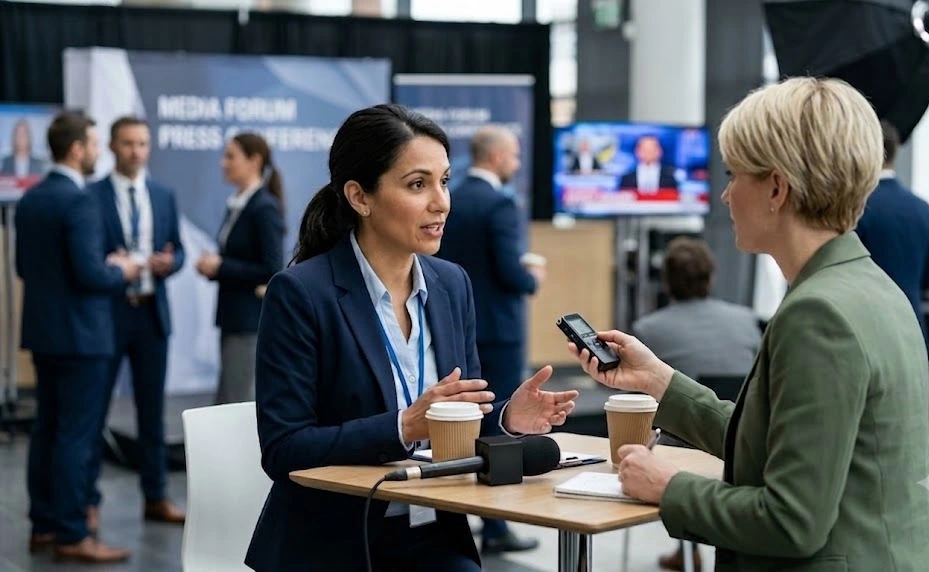
A media tour is a structured sequence of direct engagements between an organisation and journalists designed to generate sustained media coverage across multiple publication cycles. Face-time with journalists creates durable narrative assets that continue to influence search visibility, authority signals, and stakeholder perception over time.
Public affairs refers to the strategic management of communication between institutions and their stakeholders within political, regulatory, and media environments, shaping how authority and trust are interpreted across digital ecosystems.
What Is a Media Tour Within Digital Reputation Systems?
A media tour is a coordinated communication mechanism that aligns institutional messaging with editorial ecosystems to influence long-term narrative visibility. Within digital environments, it refers to a structured interaction process where key representatives engage journalists through interviews, briefings, and editorial discussions to seed authoritative content.
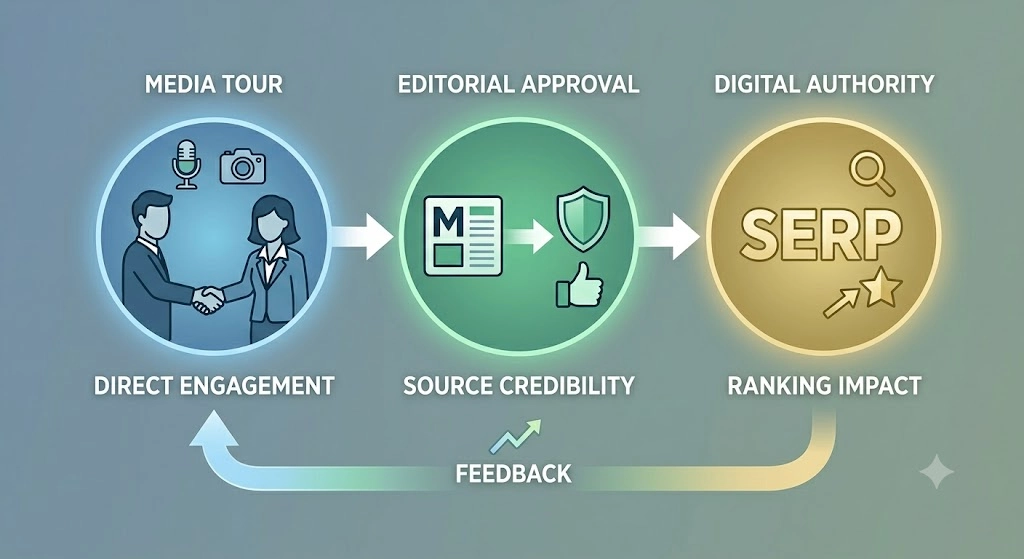
This process defines how institutional narratives enter content indexing systems. Each interaction contributes to the creation of high-trust media artefacts, including articles, interviews, and expert commentary. These artefacts function as reputation signals that search engines evaluate during SERP ranking processes. Media tours are not isolated communication events; they are inputs into a broader content ecosystem that reinforces entity perception.
The mechanism operates through repetition, consistency, and source credibility. Journalists translate direct interactions into published narratives that reflect editorial standards and audience expectations. Search engines assign higher authority to these outputs due to domain trust and editorial validation. This establishes a feedback loop where visibility strengthens perceived credibility, and credibility reinforces ranking stability.
The impact on institutional perception is measurable through sustained search presence, sentiment alignment, and increased association with authoritative sources. Media tours therefore operate as a foundational layer in digital reputation architecture, linking offline engagement with online authority signals.
How Does Face-Time with Journalists Influence Narrative Longevity?
Face-time with journalists generates narrative longevity by embedding institutional messaging within trusted editorial frameworks that remain indexed and discoverable over extended periods. It refers to direct interpersonal engagement that enhances information accuracy, contextual depth, and editorial alignment.
The mechanism relies on relational trust and information clarity. Journalists prioritise sources that provide structured, verifiable insights during direct interactions. This results in higher-quality publications that include nuanced explanations, expert positioning, and consistent terminology. These characteristics increase content durability within search engine indexing systems.
Narrative longevity emerges from three reinforcing factors:
-
Establish consistency: Journalists reuse validated information across multiple articles, creating semantic coherence across content clusters.
-
Strengthen authority signals: Editorial publications from recognised media domains act as high-value backlinks and citation sources.
-
Expand content surfaces: Initial coverage leads to secondary references, syndication, and inclusion in analysis pieces.
The impact extends beyond initial publication cycles. Search engines continuously evaluate historical content for relevance and authority, allowing early media outputs to maintain visibility. This creates a compounding effect where a single interaction generates ongoing digital presence, influencing stakeholder trust and institutional credibility.
Why Do Media Tours Generate Months of Coverage Instead of Immediate Peaks?
Media tours generate extended coverage because they distribute narrative inputs across multiple editorial timelines rather than concentrating exposure within a single publication window. This refers to a staggered content release pattern that aligns with journalistic workflows and editorial calendars.
The mechanism involves asynchronous publication cycles. Journalists process and publish content at different intervals based on editorial priorities, audience relevance, and thematic alignment. This creates a phased release of content, which sustains visibility across time rather than producing a short-term spike.
Search engines interpret this staggered publication as ongoing relevance. Each new article reinforces the entity’s presence within indexed content clusters. This continuous reinforcement strengthens semantic associations and stabilises rankings within SERPs.
The impact on perception is significant. Sustained visibility signals consistency, reliability, and ongoing relevance. Stakeholders interpret repeated exposure as evidence of institutional authority, while algorithms interpret it as confirmation of topical importance. This dual validation reinforces both human trust and machine-driven ranking systems.
How Do Search Engines Interpret Media Coverage as Authority Signals?
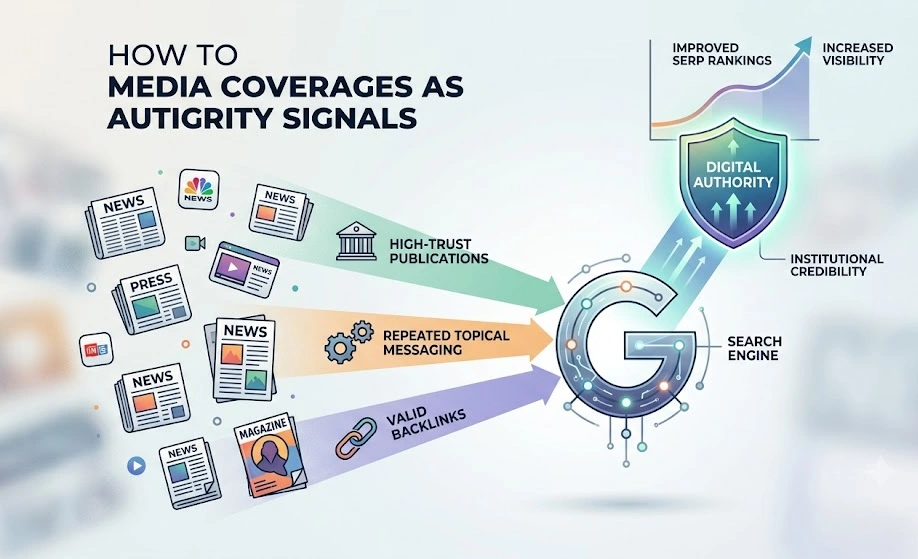
Search engines interpret media coverage as authority signals by evaluating the credibility, consistency, and contextual relevance of published content. Media outputs generated through tours function as structured data points within broader content indexing systems.
The mechanism operates through algorithmic evaluation layers:
-
Assess domain authority: Publications from established media outlets carry higher trust scores, influencing ranking weight.
-
Analyse semantic consistency: Repeated messaging across multiple sources strengthens entity recognition and topical authority.
-
Evaluate backlink structures: Media coverage often includes references and citations that contribute to link-based ranking signals.
These signals are aggregated to determine digital authority. Media coverage acts as a validation layer that confirms the legitimacy and relevance of an entity within a specific topic cluster. This influences both keyword rankings and entity-based search results.
The impact on institutional credibility is direct. Higher authority signals improve SERP positioning, increase visibility across related queries, and enhance perceived trustworthiness. This creates a measurable link between media engagement strategies and search performance outcomes.
What Role Do Media Relations Play in Digital Advocacy and Public Affairs?
Media relation is a core function within digital advocacy that manages the flow of information between institutions and media ecosystems to influence perception and trust. It refers to the structured coordination of communication efforts that align institutional narratives with editorial standards.
The mechanism involves narrative framing, message consistency, and journalist engagement. Media relations professionals define key messages, ensure factual accuracy, and maintain alignment across all communication channels. This creates a unified narrative that is easily interpreted by both journalists and search algorithms.
Digital advocacy integrates these efforts into broader perception strategies. Media relations outputs are not limited to immediate visibility; they contribute to long-term reputation signals that influence stakeholder trust. These signals are embedded within content ecosystems, shaping how institutions are perceived across digital platforms.
The impact extends to governance and risk management. Consistent media representation reduces reputational volatility, ensures alignment with regulatory expectations, and strengthens institutional credibility. Media relations therefore function as a stabilising mechanism within complex digital perception systems.
How Do Content Ecosystems Amplify Media Tour Outcomes?
Content ecosystems amplify media tour outcomes by distributing and reinforcing narratives across interconnected digital platforms. A content ecosystem refers to the network of media publications, social platforms, search engines, and third-party sites that collectively shape visibility and perception.
The mechanism involves content redistribution and semantic reinforcement. Media coverage generated from tours is shared, referenced, and republished across multiple channels. This creates a web of interconnected content that strengthens entity recognition and topical authority.
Amplification occurs through:
-
Extend syndication pathways: Articles are republished across partner networks, increasing reach and indexing frequency.
-
Reinforce semantic clusters: Consistent messaging across platforms strengthens keyword associations and entity mapping.
-
Increase engagement signals: User interactions such as clicks and dwell time contribute to ranking evaluations.
The impact on search visibility is cumulative. Each additional content node enhances the overall authority of the entity within the ecosystem. This leads to improved SERP rankings, broader keyword coverage, and stronger stakeholder trust signals.
How Do Digital Narratives Shape Stakeholder Perception Over Time?
Digital narratives shape stakeholder perception by defining how information is structured, repeated, and interpreted across content ecosystems. A digital narrative refers to the consistent representation of an entity’s identity, actions, and expertise within indexed content.
The mechanism relies on narrative coherence and repetition. Media tours contribute to this by ensuring that key messages are consistently communicated across multiple sources. This creates a unified narrative that is easily recognised by both users and algorithms.
Stakeholder perception evolves through exposure and validation. Repeated encounters with consistent narratives increase familiarity and trust. Search engines reinforce this process by prioritising content that demonstrates consistency and authority.
The impact is long-term and structural. Digital narratives influence decision-making, shape institutional credibility, and determine how entities are positioned within public discourse. Media tours act as catalysts for narrative formation, embedding key messages within authoritative content sources.
How Does Media Visibility Translate Into Search Visibility?
Media visibility translates into search visibility through the integration of editorial content into search engine indexing systems. It refers to the process by which media coverage becomes discoverable through search queries and contributes to ranking performance.
The mechanism involves indexing, ranking, and user interaction signals. Media articles are crawled and indexed by search engines, which evaluate their relevance and authority. High-quality media content often ranks well due to domain strength and editorial credibility.
Search visibility is enhanced through:
-
Improve keyword alignment: Media coverage includes relevant terminology that aligns with user queries.
-
Strengthen entity associations: Repeated mentions across authoritative sources reinforce entity recognition.
-
Generate engagement metrics: High click-through rates and dwell time signal content relevance.
The impact on institutional perception is significant. Increased search visibility ensures that authoritative narratives dominate search results, reducing exposure to conflicting or low-quality content. This strengthens stakeholder trust and reinforces digital authority.
How Does Structured Distribution Support Media Tour Effectiveness?
Structured distribution supports media tour effectiveness by ensuring that generated content reaches multiple indexing points and maintains visibility across platforms. It refers to the strategic dissemination of media outputs to maximise reach and authority.
The mechanism integrates distribution channels with content creation processes. Media coverage is complemented by additional distribution methods that extend its reach and reinforce its presence within content ecosystems. This creates a layered visibility strategy that enhances both reach and authority.
A related concept is explored in Wire Strategy for Maximum Pickup: How to Distribute a Press Release for Maximum Syndication in 2025, which examines how distribution frameworks influence content pickup and indexing efficiency. This connection highlights the role of structured dissemination in sustaining narrative visibility beyond initial media engagement.
The impact is measurable through increased indexing frequency, broader content reach, and stronger authority signals. Structured distribution ensures that media tour outputs are not confined to single platforms but are integrated into a wider digital ecosystem.
Media tours function as a strategic mechanism within digital reputation systems, linking direct journalist engagement with long-term search visibility and authority signals. Face-time with journalists generates high-quality, durable content that remains indexed and influential across extended periods. Search engines interpret this coverage as evidence of credibility, reinforcing institutional authority within SERPs.
The interaction between media engagement, content ecosystems, and algorithmic evaluation defines how narratives are formed, sustained, and ranked. Media relations and structured distribution further enhance these effects by ensuring consistency, reach, and semantic alignment. Together, these elements create a cohesive framework that shapes stakeholder perception, strengthens trust, and establishes enduring digital authority.
Frequently Asked Questions
What is a media tour and how does it work for businesses?
A media tour is a series of back-to-back interviews with TV, radio, and online journalists conducted by a company spokesperson over a single day. Linkonize helps businesses execute these tours through strategic PR and communication planning, enabling spokespeople to reach multiple outlets without traveling to each market.
How does face-time with journalists generate months of media coverage?
Face-time with journalists builds trusted relationships and establishes your spokesperson as a credible source, leading to ongoing story invitations and citations in future articles. Linkonize’s media relation services focus on relationship-building rather than instant coverage, creating durable narrative assets that continue generating visibility across multiple publication cycles.
What are the benefits of a virtual media tour for business services?
A virtual media tour allows spokespeople to interview with TV and radio stations nationwide from their home using Zoom or Skype, reaching top stations quickly without travel costs. Linkonize leverages virtual media tours for strategic brand positioning, enabling businesses to connect with the right audience through targeted communication planning.
How long does a typical media tour last and how many interviews are included?
A typical media tour lasts 4–5 hours and includes 20–30 interviews booked in 5–10 minute windows with multiple outlets. Linkonize structures media tours to maximize reach efficiently, ensuring your messaging reaches millions while maintaining consistent, controlled communication across all interview platforms.
Why should businesses choose a media tour over traditional press releases?
Media tours generate earned media content through direct journalist interviews, which carries higher authority and trust than self-published press releases, while also improving discoverability in AI-powered search platforms. Linkonize combines media tours with targeted brand positioning to create authentic content that aligns with the language shaping AI-driven discovery and generative search responses.