

Search visibility control dictates institutional viability because stakeholder decision-making relies entirely on the narrative credibility and trust signals visible within search engine results pages (SERPs). For public affairs functions and digital advocacy teams, search perception influence determines whether an organisation maintains its social licence to operate, secures policy outcomes, or suffers systemic devaluation from unchecked negative sentiment.
Why Is Systematic SERP Control Essential for Protecting Institutional Credibility?
Systematic SERP control ensures that corporate narratives reflect verifiable reality rather than unvetted digital noise. When institutional stakeholders, regulators, or journalists search for an organisation, the first page of search results serves as the primary evaluation mechanism for entity credibility. Unmanaged search results allow algorithmic anomalies, historical crises, or coordinated misinformation campaigns to dominate the digital frontier, which actively erodes stakeholder trust signals and destabilises perception. Implementing a professional reputation management framework allows organisations to regain narrative visibility management, neutralise visibility vectors that carry high reputational risk, and establish a mathematically resilient digital authority.
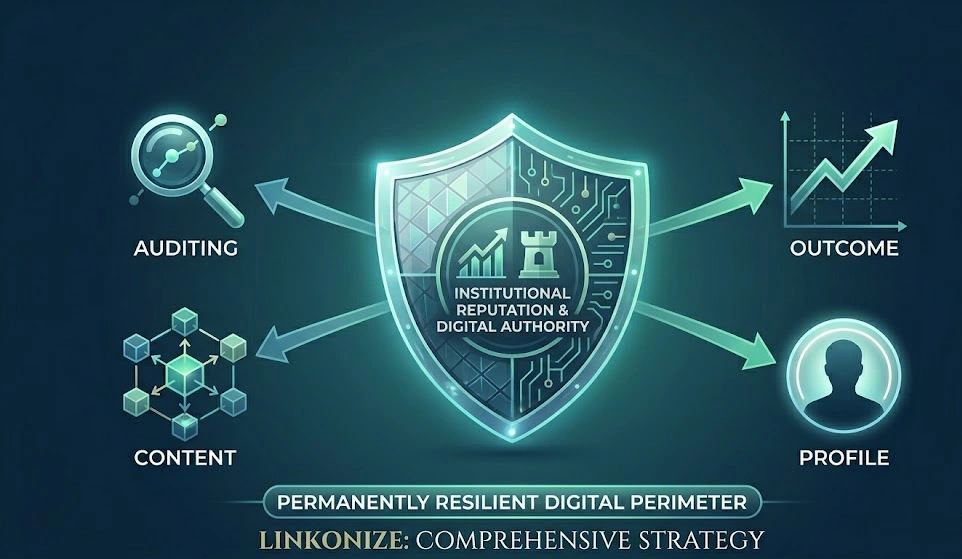
The architecture of modern search algorithms prioritises authoritative, contextually relevant information, meaning that passive observation inevitably cedes narrative control to external actors. Linkonize mitigates this vulnerability by engineering a multi-layered digital defensive perimeter that replaces volatile or negative search results with verified, high-authority institutional assets. This process alters the algorithmic weight of specific search phrases, driving down damaging content while elevating strategic messaging that supports your public affairs and digital advocacy objectives. The measurable outcome is a permanently stabilised search ecosystem that protects institutional value, satisfies regulatory compliance expectations, and reinforces public credibility during critical decision-making cycles.
How Does the Reputation Recovery Framework Secure Measurable Narrative Visibility?
The reputation recovery framework deploys structured, data-driven methodology to systematically neutralise digital liabilities and advance authoritative narratives across all digital touchpoints. Rather than relying on superficial, temporary fixes, this engineered approach restructures the search engine’s understanding of an organisation’s digital footprint through deep algorithmic alignment.
1. The Deep Semantic Audit Stage
-
Maps the entire corporate digital footprint across primary, secondary, and tertiary search landscapes to isolate specific reputational risks.
-
Analyses semantic entities, sentiment trends, and algorithmic associations to identify exactly which URLs and search terms present the greatest threat to institutional credibility.
-
Quantifies the velocity and reach of negative sentiment vectors, establishing a baseline data set required to track the progress of the narrative visibility control strategy.
2. Content Matrix Engineering
-
Develops a comprehensive network of high-authority informational assets engineered specifically to satisfy search engine trust signals and algorithmic quality guidelines.
-
Produces highly optimised, objective content that directly answers stakeholder queries while reinforcing positive entity credibility.
-
Structures information hierarchies using advanced semantic SEO principles to ensure search engines naturally prioritise these new assets over outdated or hostile sources.
3. Algorithmic Amplification and Deployment
-
Deploys strategic digital PR campaigns and technical authority building to accelerate the indexing and ranking of the newly created narrative assets.
-
Channels high-quality digital authority signals to the targeted web properties, forcing them upward through the search rankings to displace negative search results.
-
Secures prominent placement on first-page SERPs, effectively burying unverified claims and establishing a verified information perimeter.
4. Continuous Perimeter Guarding
-
Monitors search perception influence in real time to detect emerging reputational risks, algorithmic shifts, or renewed adversarial campaigns before they gain visibility.
-
Adjusts technical optimization and content deployment dynamically to sustain the clean digital footprint over long-term Horizons.
-
Delivers comprehensive data reporting that proves the ongoing stabilization of stakeholder trust signals and digital authority metrics.
Which Strategic Methods Overcome the Financial and Temporal Constraints of Digital Footprint Restructuring?
Corporate leaders frequently question the balance between the long-term value of reputation recovery and the initial resource allocation required to achieve definitive SERP control. The reality of search perception influence dictates that passive delay accumulates substantial compound costs in the form of lost contracts, damaged regulatory relationships, and depleted public trust. Utilising a specialized public affairs strategy consultancy eliminates the inefficiencies of trial-and-error methodologies by applying proven semantic frameworks that deliver accelerated, permanent results. This targeted allocation of capital shifts an organisation from a reactive crisis management posture to a proactive state of absolute narrative visibility management.
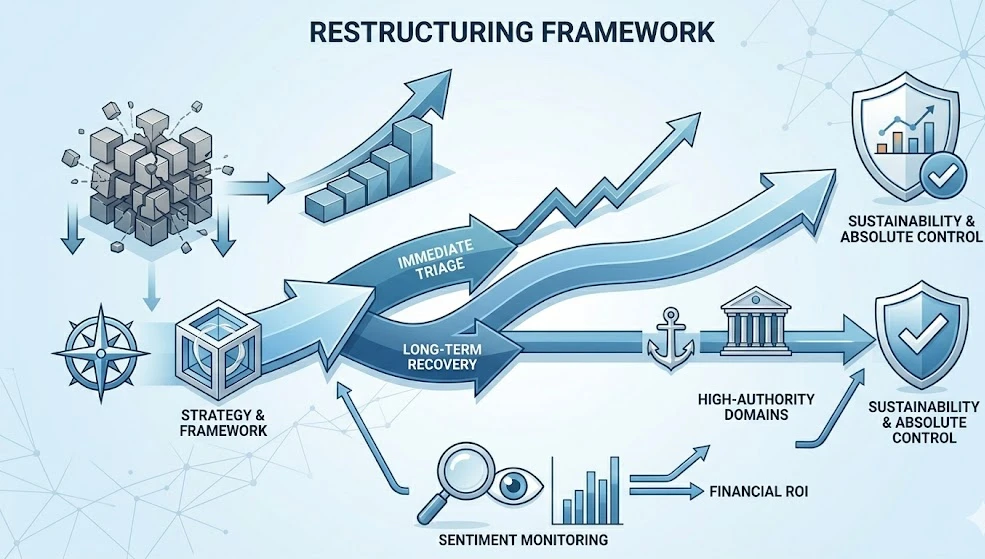
Speed of visibility impact remains a critical metric during an active reputation recovery operation, requiring a dual-track strategy that balances immediate triage with long-term asset stabilization. Immediate risk mitigation occurs through tactical technical interventions and targeted digital advocacy campaigns that suppress immediate threats within weeks, while the deep architecture of the clean digital footprint solidifies over the subsequent quarters. To ensure the absolute sustainability of results, the process anchors new narrative assets to established, high-authority digital domains that resist future algorithmic volatility. By embedding data-driven analysis into every stage of the process, including advanced sentiment analysis for reputation management: how organizations monitor what the world is saying in real time, the framework guarantees that your digital defence remains permanently adaptive and financially justified.
How Does Executive Profile Optimization Insulate the Broader Corporate Entity from Reputational Risk?
An organisation’s institutional credibility is indissolubly linked to the digital authority and visible integrity of its leadership team. Modern search behavior dictates that stakeholders scrutinise individual executives just as intensely as the corporate brand, meaning that a single personal digital liability can trigger catastrophic institutional devaluation. Proactive narrative visibility management must therefore encompass the personal brands of the C-suite, ensuring that their public digital footprints project absolute competence, alignment, and ethical leadership. When corporate leaders possess a resilient, highly optimized digital presence, they create a protective barrier that absorbs external shocks and reinforces corporate stability.
Deploying a dedicated strategy for executive reputation management: how to build a personal brand that protects the organization it leads ensures that search engines associate your leadership team with industry-defining insights and verified institutional milestones. This structured approach builds a dense layer of positive entity credibility around individual executives, making it mathematically difficult for malicious or irrelevant content to penetrate the first page of personal search results. By controlling the narrative surrounding its leaders, an organisation significantly improves its overall search visibility control and solidifies its position within the broader public affairs ecosystem. Linkonize specialises in engineering these executive digital fortresses, converting personal digital footprints into powerful institutional trust signals that consistently validate stakeholder confidence.
Securing Lasting Digital Authority and Algorithmic Resilience
Achieving a clean digital footprint is not a matter of cosmetic adjustments; it requires a rigorous, technically precise restructuring of how search engines perceive and rank your institutional narrative. By systematically auditing vulnerabilities, engineering high-authority content matrices, and continuously insulating executive profiles, modern organisations can successfully command their digital presence and eliminate systemic reputational threats.
Linkonize provides the definitive blueprint for institutional SERP control, delivering measurable outcome certainty through a process rooted in data, semantic expertise, and strategic public affairs alignment. Do not leave your organisation’s most valuable intangible asset to the whim of unmanaged search algorithms. Contact our reputation strategy team today to execute a comprehensive semantic audit and establish a permanently resilient digital perimeter that protects your authority, satisfies your stakeholders, and secures your operational future.
Frequently Asked Questions
How much does professional reputation management cost?
The cost of professional digital reputation recovery varies depending on the severity of the search landscape damage, the authority of the negative links, and the number of assets requiring optimization. Specialized agencies like Linkonize typically structure fees based on a comprehensive semantic audit, ongoing content matrix engineering, and continuous SERP monitoring. Most corporate or enterprise-level suppression and narrative visibility campaigns operate on a monthly retainer model tailored to the scope of the risk.
How long does it take to clean a digital footprint?
A standard digital footprint cleaning process typically yields initial search visibility shifts within 4 to 12 weeks, while deep algorithmic stabilization can take up to six months or longer. The timeline depends entirely on the domain authority of the websites hosting the negative content and the publishing velocity required to displace them. Consistent technical optimization and strategic digital PR are required to achieve permanent narrative control over competitive search phrases.
Can negative search results be permanently deleted from Google?
Negative search results can only be completely removed from Google if they violate legal standards, copyright laws, or Google’s specific terms of service, allowing for a formal de-indexing request. If the content is legally sound but reputationally damaging, the most effective strategy is strategic search suppression through targeted search perception influence. This process uses semantic SEO to elevate high-authority, positive institutional assets to the first page, effectively burying the negative links.
What is the difference between PR and online reputation management?
Public relations focuses primarily on earning media coverage and building brand awareness through external channels to influence general public perception. Online reputation management specifically controls how an entity is perceived within search engine results pages by targeting algorithmic trust signals and semantic search entities. While PR creates the initial positive messaging, reputation frameworks ensure those assets rank prominently to insulate the brand from future digital crises.
Why do organizations need sentiment analysis for brand protection?
Organizations utilize automated sentiment analysis to track public perception across digital platforms, news outlets, and forums in real time. This proactive monitoring allows public affairs and digital advocacy teams to isolate emerging reputational threats before they impact primary search results. Integrating real-time sentiment data into an overall digital authority strategy ensures that defensive content matrices can adapt dynamically to shifting stakeholder trends.