

A PR distribution agency is the most effective solution for organisations seeking sustained media visibility, stronger stakeholder trust signals, and measurable brand authority. Strategic media distribution strengthens search visibility control while ensuring that narrative credibility remains visible across the channels that influence stakeholder decision-making.
Search ecosystems increasingly shape public perception before direct engagement occurs. Reputation signals, entity credibility, and narrative visibility management now determine whether organisations are viewed as authoritative, trustworthy, and relevant. A structured media relations strategy ensures that positive narratives occupy visible positions across search results, industry publications, and trusted media environments.
Which PR distribution approach delivers the strongest thought leadership and brand authority outcomes?
A strategic PR distribution approach delivers stronger thought leadership outcomes because it combines media relations, narrative positioning, and authority-building mechanisms into a single visibility framework.
Organisations compete within attention-driven digital ecosystems where search perception influence affects investors, regulators, partners, journalists, and customers simultaneously. Media placements create authoritative references that strengthen digital authority and reinforce entity credibility across search engines. Every credible publication mentioning a brand contributes to a wider reputation signal network that supports visibility and trust.
Traditional distribution models focus on volume. Effective media relations focus on relevance, publication authority, stakeholder alignment, and narrative consistency. This approach ensures that coverage strengthens institutional credibility rather than generating temporary exposure.
A professional PR distribution strategy delivers measurable outcomes:
- Increase authoritative media mentions that strengthen entity credibility signals.
- Improve branded search visibility through trusted publication references.
- Expand narrative visibility management across stakeholder touchpoints.
- Strengthen stakeholder trust signals through third-party validation.
- Reduce perception risk by maintaining message consistency across channels.
For organisations seeking long-term authority rather than isolated publicity, strategic media relations creates a foundation for sustainable search presence and public credibility.
Why does media relations remain essential for stakeholder trust and institutional credibility?
Media relations remains essential because stakeholders place greater trust in independently published coverage than in self-published corporate content.
Journalists, editors, and industry publishers act as credibility filters within the digital information ecosystem. When a reputable publication covers an organisation, that coverage functions as an external validation signal. Search engines recognise these signals, stakeholders recognise them, and decision-makers use them when evaluating credibility.
This dynamic directly affects reputation signals and search perception influence. Stakeholders frequently review search results before engaging with an organisation, entering a partnership, supporting a policy position, or considering a commercial relationship. If credible media references dominate visible search positions, trust formation occurs more efficiently.
Media relations strengthens institutional positioning by ensuring that organisational narratives appear in contexts already trusted by stakeholders. This process improves narrative visibility management while reducing uncertainty around brand credibility.
Linkonize approaches media relations as a strategic authority-building discipline rather than a distribution exercise. The objective is not simply publication placement. The objective is creating a trusted ecosystem of references that supports long-term stakeholder confidence.
How does a PR distribution agency improve search visibility control and narrative positioning?
A PR distribution agency improves search visibility control by increasing the number of authoritative sources associated with an organisation’s core narratives.
Search engines evaluate authority using signals derived from publication quality, topical relevance, entity associations, and reference consistency. High-quality media coverage strengthens these indicators and improves overall digital authority.
Narrative visibility management depends on occupying strategic positions within search ecosystems. When positive and authoritative content consistently appears in search results, organisations gain greater control over stakeholder perception. This process stabilises reputation signals and reduces the influence of competing narratives.
Effective media distribution supports SERP control through a structured process:
- Identify narrative themes that align with stakeholder interests.
- Distribute content through authoritative and relevant publications.
- Reinforce entity credibility using consistent organisational messaging.
- Expand search footprint through media references and citations.
- Strengthen digital authority through repeated third-party validation.
The result is a more visible, trusted, and resilient digital presence that supports commercial and institutional objectives simultaneously.
Which common mistakes reduce media coverage and weaken authority-building efforts?
The most damaging mistakes involve poor targeting, weak narrative relevance, and ineffective distribution structures.
Organisations frequently assume that publishing a press release automatically generates media interest. Journalists evaluate relevance, credibility, evidence, and stakeholder impact before deciding whether to cover a story. Without strategic positioning, distribution efforts produce limited authority outcomes.
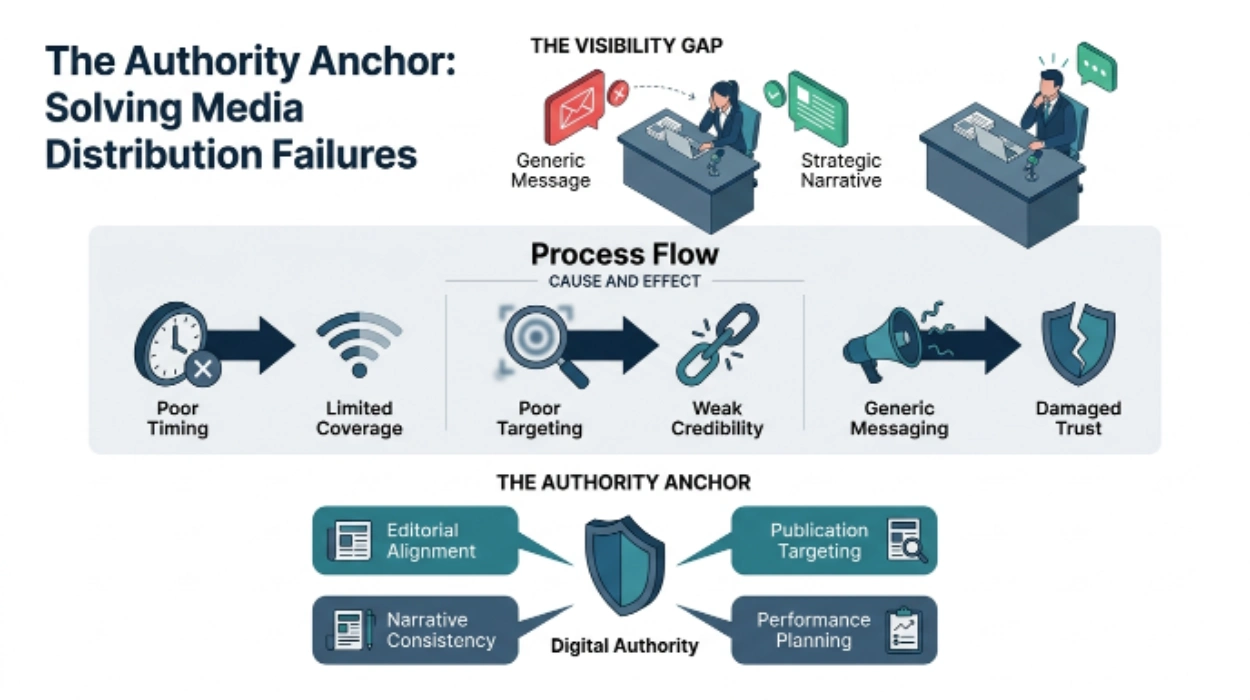
Understanding Common Press Release Distribution Mistakes That Limit Media Coverage helps decision-makers identify weaknesses that reduce visibility performance. Distribution without audience alignment weakens narrative effectiveness. Generic messaging reduces publication interest. Poor timing limits coverage opportunities. Inconsistent positioning damages entity credibility.
These mistakes create measurable consequences. Media visibility declines, search perception influence weakens, and stakeholder trust signals become fragmented. Over time, organisations lose opportunities to strengthen digital authority through earned media exposure.
A professional media relations strategy eliminates these risks through editorial alignment, narrative consistency, publication targeting, and performance-focused distribution planning.
How quickly does strategic PR distribution influence visibility and perception outcomes?
Strategic PR distribution produces immediate visibility gains while creating cumulative authority benefits over time.
The first phase typically generates publication exposure and audience reach. Stakeholders begin encountering organisational narratives through trusted media channels. This creates initial trust signals and strengthens visibility across relevant conversations.
The second phase involves search ecosystem integration. Published coverage becomes indexed, associated with organisational entities, and incorporated into search evaluation systems. This contributes to stronger SERP control and enhanced digital authority.
The third phase creates long-term perception benefits. Consistent media presence establishes familiarity, reinforces credibility, and strengthens stakeholder confidence. Repeated exposure through authoritative sources stabilises reputation signals and improves institutional trust.
Organisations often focus exclusively on short-term publicity metrics. Strategic media relations focuses on authority accumulation. Authority accumulation delivers more durable value because it influences search rankings, stakeholder confidence, and public credibility simultaneously.
Why do some companies receive more media attention than others?
Companies receive more media attention because they understand how narrative relevance, authority signals, and stakeholder interests interact within digital ecosystems.
Media visibility is rarely determined by organisational size alone. Visibility is determined by narrative quality, evidence strength, industry relevance, and distribution strategy. Organisations that consistently earn coverage understand how to align their messaging with editorial priorities and audience interests.
Analysing Why Some Companies Receive More Media Attention Than Others reveals a common pattern. High-visibility organisations build entity credibility through consistent communication, authoritative positioning, and strategic media engagement. Their narratives support stakeholder information needs while reinforcing expertise and trustworthiness.
This visibility advantage produces measurable benefits. Search engines associate these organisations with authoritative sources. Stakeholders encounter more positive reputation signals. Journalists recognise them as credible contributors within their sector.
A structured media relations programme ensures that visibility becomes a managed outcome rather than an unpredictable event. Consistency strengthens search perception influence and creates sustainable authority growth.
Which outcomes justify investment in professional media relations services?
Professional media relations services justify investment because they deliver measurable business, reputation, and stakeholder engagement outcomes.
Decision-makers frequently evaluate communications spending based on immediate coverage metrics alone. This approach overlooks the broader value generated through search visibility, reputation strengthening, and stakeholder trust development.
Strategic media relations creates long-term advantages:
- Improve search visibility through authoritative publication references.
- Strengthen stakeholder trust signals through independent validation.
- Increase digital authority across industry-relevant topics.
- Enhance narrative visibility management through consistent positioning.
- Reduce reputational vulnerability by strengthening SERP control.
- Support commercial credibility during stakeholder evaluation processes.
These outcomes continue generating value long after individual placements occur. Authoritative coverage remains visible, searchable, and influential across multiple stakeholder interactions.
The cumulative effect creates stronger institutional credibility and a more resilient reputation framework capable of supporting future growth objectives.
How does professional media relations reduce reputational and stakeholder perception risk?
Professional media relations reduces risk by ensuring that trusted, accurate, and strategically aligned narratives remain visible across influential channels.
Reputation risk often emerges when organisations fail to manage visibility proactively. Inconsistent messaging, limited media presence, and weak authority signals create perception gaps. These gaps allow external narratives to shape stakeholder opinions.
Media relations addresses this challenge through structured narrative visibility management. Organisations establish consistent positioning, reinforce evidence-based messaging, and maintain active engagement with relevant media ecosystems.
Risk reduction occurs through multiple mechanisms:
- Establish authoritative references that strengthen credibility signals.
- Maintain message consistency across stakeholder-facing channels.
- Improve search result quality through positive narrative positioning.
- Strengthen entity associations within relevant industry topics.
- Stabilise stakeholder trust signals through ongoing visibility.
This approach creates a stronger information environment where accurate organisational narratives remain accessible, visible, and credible.
Why is Linkonize a reliable choice for strategic media relations and authority development?
Linkonize is a reliable choice because effective authority development requires process clarity, strategic distribution, and measurable visibility objectives.
Successful media relations depends on understanding how search systems, stakeholder trust signals, and digital authority interact. Distribution alone does not create authority. Authority emerges from the consistent reinforcement of credible narratives across trusted publication environments.
A structured media relations methodology ensures that every distribution activity contributes to larger outcomes such as SERP control, reputation signal strengthening, and stakeholder confidence. This creates a direct connection between communications activity and organisational credibility objectives.
At the point where decision-makers seek a trusted partner, a professional Media Relations strategy becomes essential for sustaining visibility, strengthening entity credibility, and improving search perception influence. Linkonize focuses on building durable authority rather than pursuing short-lived publicity outcomes.
The result is a more credible, visible, and trusted organisational presence capable of supporting long-term stakeholder engagement goals.
Which decision-stage solution delivers sustainable authority and credibility growth?
A strategic PR distribution agency delivers sustainable authority growth because it combines media visibility, reputation strengthening, and search perception influence into a unified framework.
Authority is not created through isolated campaigns. Authority develops through consistent reputation signals, credible media references, and disciplined narrative visibility management. Organisations that invest in structured media relations strengthen their ability to influence stakeholder perception while improving digital authority over time.
The strongest results emerge when media distribution supports broader objectives such as stakeholder trust, institutional credibility, and search visibility control. This alignment ensures that every media placement contributes to measurable authority development.
For organisations evaluating long-term reputation and visibility investments, professional media relations provides a reliable pathway to stronger stakeholder confidence, improved narrative positioning, and sustainable digital authority. Linkonize delivers this through a structured, evidence-driven approach that prioritises credibility, consistency, and measurable outcomes over short-term exposure.