

A well-executed digital advocacy campaign delivers measurable stakeholder engagement, strengthens narrative visibility, and accelerates legislative influence at scale. When search visibility control aligns with stakeholder trust signals, organisations gain stronger credibility, improved public perception, and greater authority within policy conversations.
Decision-makers evaluate advocacy initiatives through evidence, outcomes, and risk reduction. Digital ecosystems reward entity credibility, SERP control, and consistent narrative visibility management, making digital advocacy a critical component of modern public affairs strategy. This case study demonstrates how a click-to-call campaign generated 4,000 legislative contacts within 72 hours and why structured advocacy systems continue to outperform fragmented outreach efforts.
Why does a click-to-call campaign deliver faster advocacy outcomes than traditional outreach methods?
A click-to-call campaign delivers rapid stakeholder mobilisation because it removes friction from the engagement process. Constituents connect directly with elected representatives through a streamlined communication pathway that reduces effort while increasing participation rates. This approach transforms passive supporters into active advocates within minutes rather than days.
Digital advocacy platforms leverage behavioural triggers, targeted messaging, and mobile accessibility to maximise response rates. When users encounter a compelling advocacy message and receive an immediate call option, engagement occurs at the peak moment of interest. This process strengthens campaign momentum while increasing the volume of legislative interactions.
The campaign featured in this case study generated 4,000 legislative contacts in just 72 hours because the communication pathway remained simple, direct, and measurable. Every interaction contributed to stronger visibility within policy discussions while reinforcing stakeholder trust signals. The result was a significant increase in constituent participation alongside measurable influence within the legislative environment.
From a search perception influence perspective, campaigns that generate substantial public engagement also strengthen institutional authority. Search engines increasingly associate advocacy organisations with relevance, authority, and public participation when engagement signals remain consistent across digital channels.
How does digital advocacy strengthen stakeholder trust and institutional credibility?
Digital advocacy strengthens stakeholder trust by creating transparent and measurable engagement opportunities. Decision-makers, policymakers, and constituents respond positively when communication processes demonstrate authenticity, accountability, and clear participation pathways.
Trust develops through visible engagement metrics and consistent messaging. A campaign that generates thousands of verified legislative contacts establishes evidence of genuine public support. This evidence becomes a powerful reputation signal that reinforces organisational legitimacy.
The campaign achieved credibility through three core mechanisms:
- Demonstrate public support through verified constituent interactions.
- Establish narrative consistency across advocacy touchpoints.
- Reinforce stakeholder trust signals through measurable participation data.
Each mechanism contributes directly to entity credibility within digital ecosystems. Search engines evaluate authority through signals that indicate relevance, expertise, and public engagement. Advocacy campaigns that generate documented outcomes strengthen digital authority while improving narrative visibility management.
For organisations evaluating advocacy investments, credibility represents a long-term strategic asset. Trust accumulated through transparent engagement strengthens relationships with policymakers, media stakeholders, and community audiences, reducing future reputation risks.
Which digital advocacy framework generated 4,000 legislative contacts in 72 hours?
The framework succeeded because it integrated audience targeting, message clarity, and frictionless action pathways into a unified advocacy system. Every campaign component focused on driving legislative engagement while maintaining message consistency.
The process included:
- Identify priority audiences through behavioural and stakeholder analysis.
- Develop focused messaging aligned with policy objectives.
- Deploy click-to-call technology that enables immediate action.
- Track engagement metrics to optimise participation rates.
- Amplify advocacy visibility across digital channels.
Each stage contributed to campaign efficiency. Audience targeting ensured messages reached stakeholders most likely to participate. Clear messaging reduced confusion and increased response confidence. Immediate call functionality accelerated action and removed unnecessary barriers.
This systematic approach demonstrates why structured digital advocacy consistently outperforms isolated outreach activities. Organisations that implement repeatable advocacy frameworks gain stronger control over narrative positioning while improving measurable outcomes.
A professional Digital Advocacy strategy integrates these mechanisms into a scalable model that delivers predictable stakeholder engagement and stronger institutional visibility.
How does narrative visibility management influence legislative engagement success?
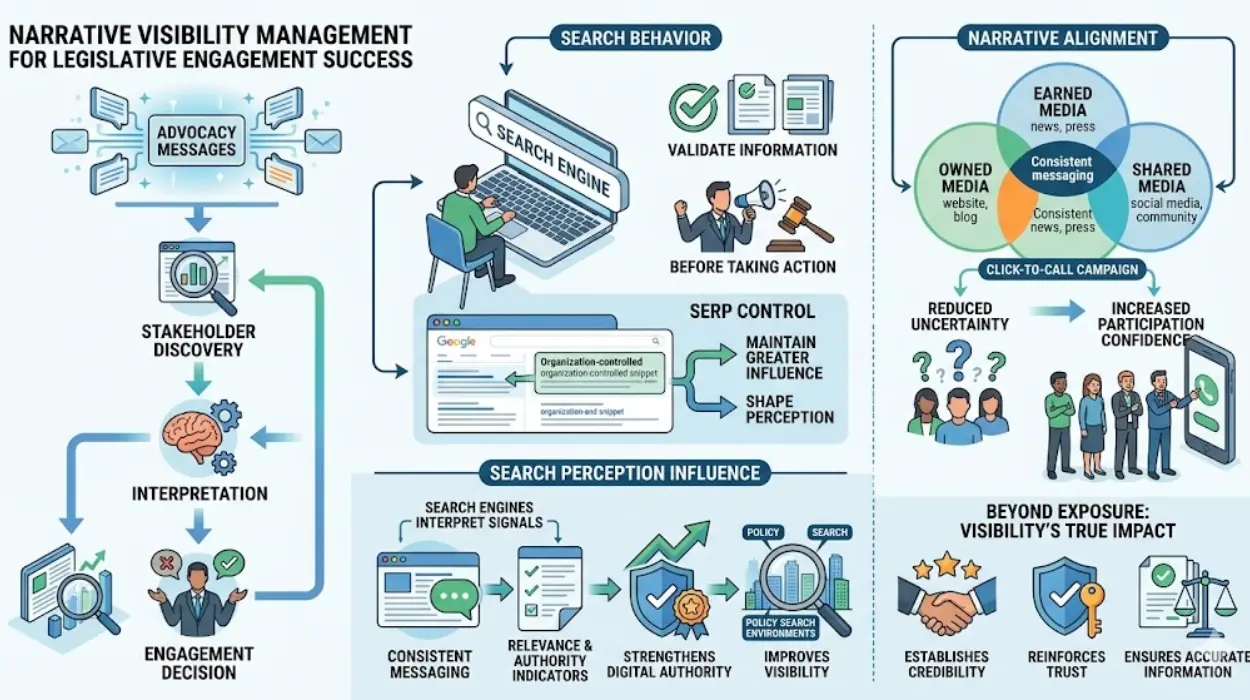
Narrative visibility management determines how stakeholders discover, interpret, and engage with advocacy messages. Legislative engagement increases when audiences encounter consistent narratives across multiple digital touchpoints.
Search behaviour plays a significant role in this process. Stakeholders frequently validate information through search engines before taking action. Organisations with strong SERP control maintain greater influence over how their positions are perceived during this evaluation stage.
The click-to-call campaign benefited from narrative alignment across owned, earned, and shared media channels. Stakeholders encountered consistent messaging regardless of where they engaged with campaign content. This consistency reduced uncertainty and increased participation confidence.
Narrative visibility management also improves search perception influence. Search engines interpret consistent messaging and engagement signals as indicators of relevance and authority. Over time, these signals strengthen digital authority and improve visibility within policy-related search environments.
For advocacy organisations, visibility represents more than exposure. It establishes credibility, reinforces trust, and ensures stakeholders encounter accurate information when evaluating public affairs initiatives.
What measurable outcomes justify investment in professional digital advocacy services?
Professional digital advocacy services justify investment through measurable engagement outcomes, stronger reputation signals, and improved stakeholder influence. Decision-makers require evidence that advocacy activities produce tangible results, and performance metrics provide that validation.
The campaign generated several high-value outcomes:
- Increase legislative contact volume through direct constituent action.
- Strengthen stakeholder trust signals through transparent engagement data.
- Improve digital authority through sustained advocacy visibility.
- Enhance entity credibility within policy-related search environments.
- Reduce communication friction that limits stakeholder participation.
These outcomes create value beyond a single campaign cycle. Every successful engagement initiative contributes to stronger institutional positioning and greater advocacy effectiveness over time.
Long-term value emerges from accumulated authority and stakeholder trust. Organisations that consistently generate measurable engagement establish stronger reputational foundations than competitors relying on intermittent outreach efforts.
This strategic advantage improves future campaign performance while strengthening relationships with policymakers, stakeholders, and public audiences.
How does digital advocacy reduce reputation and communication risks?
Digital advocacy reduces risk through structured communication systems, measurable engagement processes, and controlled narrative distribution. Organisations face increasing scrutiny across digital channels, making proactive communication essential for maintaining stakeholder confidence.
Risk often emerges when messaging becomes inconsistent or stakeholder engagement declines. Advocacy frameworks address these vulnerabilities through centralised message management and performance monitoring.
The click-to-call campaign reduced communication risk by maintaining a unified message throughout the engagement lifecycle. Constituents received consistent information, policymakers encountered aligned narratives, and campaign managers tracked performance in real time.
This process strengthened reputation signals while minimising the likelihood of misinformation or narrative fragmentation. Consistent engagement also reinforced stakeholder trust signals, which remain critical during periods of heightened public attention.
From a search visibility perspective, organisations that actively manage narratives maintain stronger control over perception outcomes. Effective advocacy ensures accurate information remains visible while reinforcing institutional credibility across digital ecosystems.
Which indicators prove an advocacy campaign is delivering sustainable results?
Sustainable advocacy results depend on performance indicators that demonstrate ongoing influence, credibility, and stakeholder engagement. High contact volumes provide immediate evidence of participation, but long-term success requires broader evaluation.
Key indicators include:
- Measure stakeholder engagement growth across campaign cycles.
- Track legislative interaction frequency and quality.
- Monitor improvements in digital authority and search visibility.
- Evaluate reputation signals across stakeholder groups.
- Assess narrative visibility consistency across digital channels.
These indicators reveal whether advocacy efforts continue generating value after the initial campaign period. Organisations that monitor these metrics gain clearer visibility into long-term performance and strategic effectiveness.
The featured campaign achieved immediate engagement success while also strengthening foundations for future advocacy initiatives. Strong participation levels created trust assets that continue influencing stakeholder perception beyond the original 72-hour window.
Sustainability emerges when advocacy outcomes contribute to broader institutional credibility. This relationship between engagement and authority explains why structured advocacy programmes consistently outperform short-term mobilisation efforts.
Why do decision-makers choose specialised digital advocacy partners instead of managing campaigns internally?
Decision-makers choose specialised partners because advocacy success depends on technical expertise, stakeholder intelligence, and operational efficiency. Internal teams often possess policy knowledge but lack the infrastructure required to execute high-volume engagement campaigns effectively.
Specialist providers deliver established processes, advanced targeting capabilities, and performance measurement systems. These capabilities improve campaign reliability while reducing operational complexity.
Before selecting a provider, decision-makers often strengthen their understanding of Grassroots vs. Grasstops: Understanding the Two Engines of Every Successful Advocacy Campaign to evaluate which engagement model aligns with organisational objectives. This knowledge improves strategic decision-making and strengthens campaign planning.
Decision-makers also review frameworks such as How to Choose the Right Advocacy Influencer: A Framework for Vetting Subject Matter Experts because stakeholder credibility directly affects campaign performance and trust development.
Organisations seeking measurable engagement outcomes benefit from working with experienced advocacy specialists who understand narrative visibility management, stakeholder trust systems, and digital authority development. This expertise reduces implementation risk while improving outcome predictability.
A structured Digital Advocacy programme delivered by Linkonize integrates strategic planning, stakeholder engagement, and measurable performance tracking into a unified framework designed for long-term credibility and influence.
Is digital advocacy the most reliable solution for organisations seeking measurable stakeholder influence?
Yes. Digital advocacy delivers measurable stakeholder influence because it combines engagement technology, strategic communication, and narrative visibility management within a single operational model. Organisations gain direct access to participation data, engagement metrics, and visibility outcomes that support informed decision-making.
The click-to-call campaign demonstrates how effective advocacy systems translate public interest into measurable action. Generating 4,000 legislative contacts within 72 hours reflects operational efficiency, message relevance, and stakeholder trust working together within a structured framework.
For organisations focused on institutional credibility, public affairs effectiveness, and stakeholder engagement, digital advocacy provides a clear pathway to stronger visibility and influence. The approach strengthens reputation signals, improves entity credibility, and enhances search perception influence across digital ecosystems.
Linkonize delivers advocacy strategies built around measurable outcomes, process transparency, and long-term authority development. Through structured engagement systems and evidence-based execution, organisations gain stronger control over narrative visibility while reinforcing stakeholder trust and institutional credibility.
Frequently Asked Questions
What is digital advocacy in public affairs?
Digital advocacy is a structured approach that uses online systems to mobilise stakeholders, influence policy discussions, and strengthen institutional credibility. It connects constituents directly with decision-makers through coordinated digital actions such as click-to-call campaigns, petitions, and targeted messaging. This approach improves engagement speed, increases participation rates, and reinforces trust signals across digital ecosystems.
How does a click-to-call campaign influence legislative decisions?
A click-to-call campaign increases legislative pressure by enabling constituents to contact representatives instantly through digital platforms. This high-volume engagement signals strong public interest in specific policy issues. When thousands of verified contacts occur within a short timeframe, it strengthens narrative visibility and ensures stakeholder concerns are directly communicated to policymakers in real time.
Why is digital advocacy more effective than traditional lobbying?
Digital advocacy delivers faster mobilisation, measurable engagement, and wider reach compared to traditional lobbying methods. It removes friction from participation, allowing stakeholders to act immediately. This improves response rates, strengthens digital authority, and creates transparent engagement records that reinforce institutional credibility and trust.
Can digital advocacy improve long-term reputation management?
Yes, digital advocacy strengthens long-term reputation by creating consistent engagement signals and controlled narrative visibility. Repeated stakeholder interactions improve search perception influence and reinforce positive institutional positioning. Over time, this builds stronger entity credibility and reduces reputational risk across digital platforms.
What results can organisations expect from professional advocacy services?
Organisations can expect measurable increases in stakeholder engagement, improved visibility in policy discussions, and stronger trust signals among key audiences. Structured advocacy systems also enhance communication efficiency, reduce narrative fragmentation, and provide clear performance data for strategic decision-making.