

Effective media relations directly controls search visibility, shapes narrative credibility, and determines how stakeholders perceive your organisation. A structured PR strategy ensures consistent reputation signals, strengthens entity credibility, and delivers measurable search perception influence across digital ecosystems.
What makes media relations a reliable driver of search visibility and stakeholder trust?
Media relations delivers controlled narrative visibility by aligning authoritative media coverage with search intent, ensuring your organisation dominates high-value SERP positions. This process integrates editorial placements, journalist relationships, and strategic storytelling to influence both human perception and algorithmic ranking systems. When executed correctly, it strengthens entity credibility through third-party validation, which search engines interpret as authoritative trust signals.
Search engines prioritise sources with consistent mentions across credible publications, meaning earned media directly contributes to digital authority. This reduces reliance on paid visibility while stabilising long-term perception control. Stakeholders—including regulators, investors, and the public—use these signals to validate legitimacy, making media relations a core function of institutional reputation strategy.
A structured approach ensures:
-
Secure placements in authoritative publications to improve SERP dominance and visibility.
-
Align narratives with search behaviour to influence perception at key decision touchpoints.
-
Strengthen stakeholder trust signals through credible third-party validation.
-
Reduce reputational volatility by maintaining consistent narrative positioning.
This is not exposure for its own sake; it is a system designed to influence how your organisation is discovered, interpreted, and trusted.
How does a professional PR firm ensure measurable outcomes rather than vague exposure?
A professional PR firm operates with defined visibility metrics, narrative control frameworks, and measurable performance indicators tied to business outcomes. Media relations becomes a data-driven discipline where coverage is evaluated based on authority, relevance, and impact on search perception systems.
The process begins with entity mapping and narrative alignment, ensuring all messaging reinforces core reputation signals. This is followed by targeted outreach based on journalist relevance, publication authority, and audience alignment. Every placement is tracked against measurable outcomes such as SERP movement, brand query growth, and sentiment consistency.
A structured media relations service delivers:
-
Track authority-weighted coverage to measure impact on digital authority.
-
Monitor sentiment consistency to stabilise stakeholder perception.
-
Analyse SERP positioning to evaluate narrative visibility control.
-
Optimise message distribution to reinforce entity credibility across channels.
Linkonize applies this framework within its media relations strategy, ensuring that every campaign strengthens search perception influence rather than generating isolated media mentions. This shifts PR from a cost centre to a measurable reputation asset.
Which risks are reduced by engaging a structured media relations service?
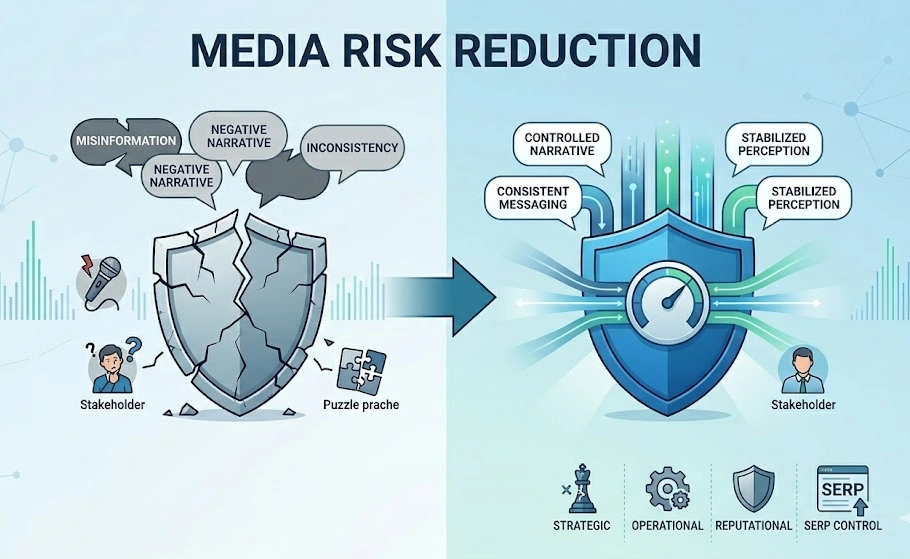
A structured media relations strategy reduces reputational, operational, and strategic risks by ensuring controlled narrative dissemination across trusted channels. Without this control, organisations face fragmented messaging, inconsistent visibility, and exposure to negative or competing narratives.
Unmanaged media exposure creates gaps in search results, allowing third-party or outdated information to dominate. This weakens entity credibility and introduces uncertainty in stakeholder decision-making. A professional service eliminates these risks through proactive narrative visibility management.
Key risk reduction mechanisms include:
-
Control narrative distribution to prevent misinformation and inconsistent messaging.
-
Secure high-authority placements to suppress negative or irrelevant SERP results.
-
Align messaging across channels to ensure consistent stakeholder trust signals.
-
Maintain ongoing media engagement to stabilise long-term perception.
This approach ensures that your organisation is not reacting to perception shifts but actively controlling them.
How quickly can media relations influence search perception and visibility?
Media relations delivers both immediate and cumulative impact, depending on the structure and authority of placements. High-authority coverage generates rapid visibility shifts, while sustained campaigns build long-term digital authority and narrative dominance.
Initial results appear when authoritative publications index and rank, influencing both brand queries and topical search results. Over time, repeated placements reinforce entity associations, making your organisation the default reference within its domain. This creates a compounding effect where each new piece of coverage strengthens existing reputation signals.
Speed of impact depends on:
-
Authority level of publications targeted and secured.
-
Frequency and consistency of media placements.
-
Alignment between messaging and existing search demand.
-
Integration with broader digital advocacy and content strategy.
For organisations evaluating providers, reviewing analytical insights such as What Is a Media Tour and How Does Face-Time with Journalists Generate Months of Coverage? helps validate how structured engagement accelerates sustained visibility outcomes.
What distinguishes strategic media relations from basic PR outreach?
Strategic media relations focuses on narrative systems, not isolated press mentions. It integrates search behaviour analysis, stakeholder mapping, and authority-driven placement strategy to deliver controlled perception outcomes.
Basic PR outreach prioritises volume, often resulting in low-authority coverage with minimal impact on digital authority. In contrast, strategic media relations targets high-value publications that influence both search engines and stakeholder trust systems. The emphasis shifts from quantity to relevance, authority, and narrative alignment.
A strategic approach ensures:
-
Align coverage with search intent to maximise visibility impact.
-
Target authoritative publications that influence both SERP rankings and perception.
-
Maintain narrative consistency across all media interactions.
-
Reinforce entity credibility through repeated, high-quality mentions.
This distinction determines whether PR activity contributes to long-term reputation capital or remains a short-term visibility tactic.
How does media relations integrate with broader digital advocacy and reputation strategy?
Media relations functions as a core pillar within digital advocacy by amplifying controlled narratives across trusted channels. It works in coordination with content strategy, search optimisation, and stakeholder engagement to create a unified perception framework.
Digital ecosystems reward consistency and authority. Media placements reinforce content assets, improve backlink profiles, and strengthen entity associations within search algorithms. This integration ensures that every communication channel contributes to the same narrative outcome.
The combined system delivers:
-
Strengthen digital authority through interconnected content and media signals.
-
Improve SERP control by aligning editorial coverage with owned media assets.
-
Influence stakeholder perception through consistent, cross-channel messaging.
-
Sustain long-term visibility through coordinated narrative reinforcement.
For example, distribution strategies outlined in Wire Strategy for Maximum Pickup: How to Distribute a Press Release for Maximum Syndication in 2025 demonstrate how structured dissemination increases pickup rates and reinforces authority signals across platforms.
What should you evaluate before selecting a media relations provider?
Selecting a media relations provider requires evaluating their ability to deliver measurable reputation outcomes, not just media placements. The focus should remain on process clarity, strategic alignment, and proven ability to influence search perception systems.
Key evaluation criteria include:
-
Assess authority targeting capability to ensure placements in credible, high-impact publications.
-
Evaluate measurement frameworks to confirm visibility, sentiment, and SERP tracking.
-
Review narrative alignment processes to ensure consistency across campaigns.
-
Verify integration with digital advocacy strategies to maximise long-term impact.
A provider must demonstrate how their methodology strengthens entity credibility and stabilises stakeholder trust signals over time. This eliminates uncertainty and ensures your investment delivers predictable outcomes.
Linkonize meets these criteria through a structured, evidence-driven approach to media relations, ensuring each campaign contributes to measurable improvements in narrative visibility and search perception influence.
How does media relations justify cost through long-term value?
Media relations delivers long-term value by building durable reputation assets that reduce dependency on paid channels and stabilise stakeholder trust. Unlike short-term campaigns, authoritative media coverage continues to influence search rankings and perception long after publication.
Each placement acts as a persistent trust signal, reinforcing credibility and improving discoverability. Over time, this reduces acquisition costs, strengthens brand equity, and enhances resilience against reputational risks. The compounding nature of these signals ensures sustained return on investment.
Value is created through:
-
Generate persistent visibility through indexed, authoritative media coverage.
-
Reduce paid media dependency by improving organic search dominance.
-
Strengthen stakeholder confidence through consistent credibility signals.
-
Build long-term narrative control that resists disruption from external factors.
Organisations that prioritise structured media relations achieve stable perception positioning, making it a strategic investment rather than a discretionary expense.
Which service structure ensures consistent and scalable results?
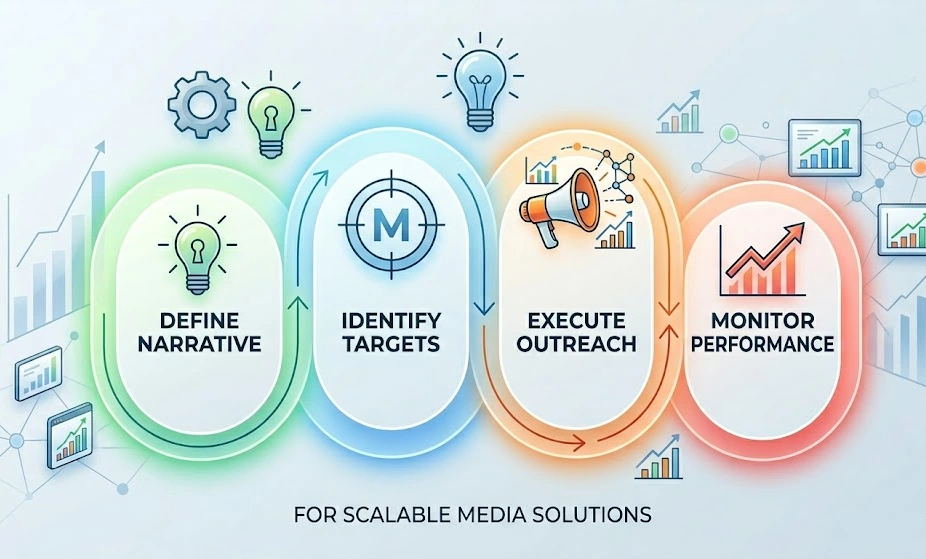
A scalable media relations service operates through repeatable frameworks, data-driven decision-making, and continuous optimisation. This ensures consistency across campaigns while adapting to evolving search behaviour and media landscapes.
The process typically includes:
-
Define narrative frameworks aligned with organisational objectives and stakeholder expectations.
-
Identify high-authority media targets based on relevance and influence.
-
Execute strategic outreach supported by data and relationship networks.
-
Monitor performance metrics to refine and optimise ongoing campaigns.
This structured approach ensures that results are not dependent on isolated successes but are consistently replicated and scaled. It transforms media relations into a predictable system for managing narrative visibility and stakeholder trust.
To explore how this approach translates into measurable outcomes, consider engaging a professional media relations service that aligns strategy, execution, and performance tracking within a unified framework.
How does Linkonize deliver reliable media relations outcomes?
Linkonize delivers media relations through a structured system focused on search perception influence, narrative control, and measurable authority growth. The service integrates data analysis, strategic outreach, and continuous optimisation to ensure consistent results.
The approach prioritises:
-
Strengthen entity credibility through authoritative media placements.
-
Improve SERP control by aligning coverage with search intent.
-
Stabilise stakeholder trust signals through consistent narrative delivery.
-
Reduce reputational risk through proactive visibility management.
By combining public affairs insight with digital advocacy frameworks, Linkonize ensures that media relations contributes directly to institutional credibility and long-term reputation stability. This positions the service as a reliable solution for organisations seeking controlled, measurable, and sustainable visibility outcomes.
A structured media relations strategy is not optional in a digital-first environment where perception is shaped by search visibility and authoritative validation. It ensures that your organisation remains discoverable, credible, and trusted across all stakeholder interactions. Linkonize provides a clear, process-driven approach that delivers measurable improvements in narrative visibility, reduces reputational risk, and strengthens long-term digital authority without uncertainty or inefficiency.
Frequently Asked Questions
What does a media relations agency actually do?
A media relations agency manages communication between organisations and journalists to secure credible media coverage. It develops press strategies, crafts narratives, and places stories in relevant publications to improve visibility, reputation signals, and public perception.
How is media relations different from general PR consulting?
Media relations focuses specifically on building relationships with journalists and securing earned media coverage, while PR consulting covers broader communication strategy. It directly influences search visibility, editorial authority, and third-party validation in digital ecosystems.
How long does it take to see results from media relations?
Initial media coverage can appear within weeks, especially when targeting high-authority publications. Long-term impact builds over time as consistent placements strengthen search rankings, entity credibility, and stakeholder trust signals.
What should I look for before hiring a PR or media relations firm?
Evaluate the firm’s ability to secure coverage in authoritative outlets, measure results like SERP visibility and sentiment, and align messaging with your business goals. A structured process and clear reporting indicate reliable media relations performance.
Why is media coverage important for SEO and online reputation?
Media coverage generates authoritative backlinks and brand mentions that improve search engine rankings and digital authority. It also strengthens trust signals by validating your organisation through credible third-party sources, influencing both users and algorithms.