

Online reputation refers to the algorithmic and human evaluation of an entity’s credibility, authority, and trustworthiness across digital ecosystems based on the aggregate of indexed content, search visibility, and narrative alignment. A dark site strategy defines a pre-engineered, dormant information architecture designed to replace or supplement an organization’s primary digital footprint immediately during an acute reputational risk event.
What Is a Dark Site Strategy within Digital Ecosystems?
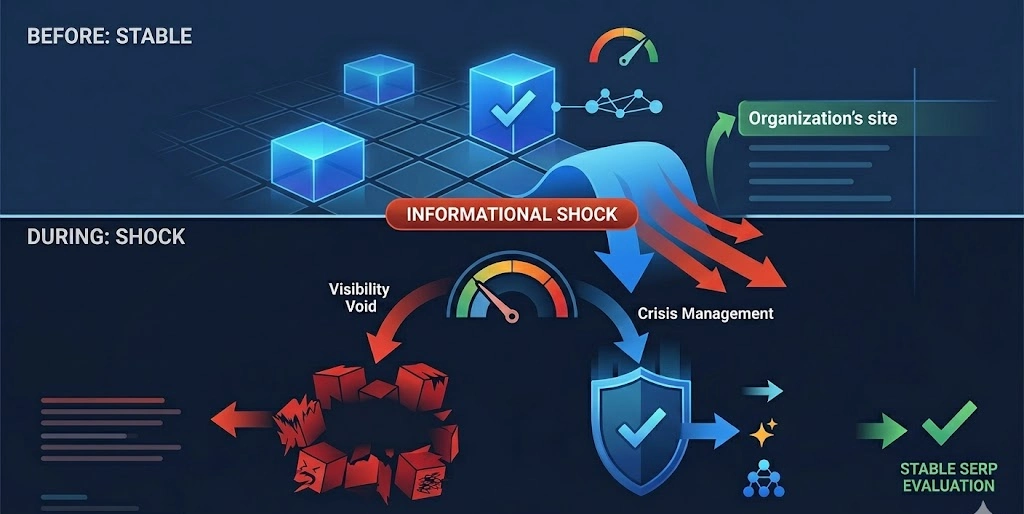
A dark site strategy is a proactive digital governance infrastructure consisting of pre-authored, unindexed web pages that contain vetted communications, technical data, and corporate statements ready for immediate deployment. Within digital ecosystems, this strategy acts as a controlled circuit breaker for search engine results pages (SERPs) and media visibility during an information shock. When an organization experiences an operational or ethical crisis, the influx of user search queries shifts the algorithm’s focus toward real-time news extraction and sentiment interpretation. A dark site provides a definitive, authoritative source of corporate truth that sits ready to populate these shifting algorithmic structures.
The primary mechanism of a dark site relies on immediate data availability to intercept automated crawling systems before third-party media narratives monopolize the entity profile. During normal business operations, these pages remain invisible to both users and search engines, hidden behind strict non-indexation directives or hosted on separate, unlinked staging servers. The moment a risk threshold is breached, the organization activates the dark site, altering the root architecture of the digital footprint. This action pushes verified facts directly into the content indexing pipeline, stabilizing the entity’s semantic profile when external sentiment trends downward.
The impact on institutional perception is direct, as a deployed dark site establishes immediate narrative influence over the unfolding digital discourse. By feeding clean, structured information to search engine web crawlers, the organization mitigates the visibility of fragmented, speculative, or adversarial content. This control prevents the algorithmic devaluation of core brand authority by maintaining a high concentration of trust signals under the direct control of the institution. Consequently, stakeholder trust remains anchored to verified corporate disclosures rather than shifting toward unverified third-party commentary.
How Do Search Engine Algorithms Evaluate Authority and Trust During an Informational Shock?
Search engine algorithms evaluate digital authority and trust during an informational shock by analyzing the velocity of search queries, the freshness of content indexing, and the semantic consensus among authoritative domains. When a crisis occurs, the sudden surge in specific keyword combinations signals to the algorithm that the existing search intent has shifted from historical overview to real-time updates. The information retrieval system adapts by prioritizing real-time information processing, which temporarily reduces the ranking weight of historical equity and amplifies the visibility of fresh content. If an organization lacks prepared, authoritative digital assets, algorithmic systems automatically fill the visibility void with user-generated content, speculative forums, and adversarial media reports.
The mechanism driving this evaluation involves a real-time analysis of entity perception systems and brand-attribute associations. Algorithms continuously parse incoming text from news sites and social platforms to extract sentiment indicators and update the knowledge graph surrounding the corporate entity. If the overwhelming consensus of newly indexed text links the organization to negative attributes, the entity’s overall digital authority score degrades. A dark site counters this mechanism by introducing a high-density cluster of clear, neutral, and structurally optimized content that aligns with strict data integrity standards.
This algorithmic shift profoundly alters stakeholder perception and search ecosystem influence. When an organization immediately publishes structured data, comprehensive timelines, and executive statements, it feeds the algorithm’s demand for authoritative contextual information. This positioning helps stabilize the SERP evaluation, ensuring that institutional disclosures retain prominent visibility alongside or above fast-moving journalistic updates. Preserving this digital real estate protects long-term brand reputation by preventing permanent negative associations from embedding deeply within the algorithmic search index.
Why Does Every Organization Require a Pre-Engineered Information Architecture Before a Crisis Manifests?
Every organization requires a pre-engineered information architecture before a crisis manifests because real-time content production during a reputational threat introduces severe technical delays and governance bottlenecks. Waiting for a crisis to occur before building digital assets guarantees that the organization will lose control of its narrative influence during the critical opening hours of an event. Legal reviews, executive sign-offs, and technical deployment processes routinely stall communication pipelines when speed is most vital. A pre-engineered dark site resolves these inefficiencies by decoupling the technical development and compliance phases from the high-pressure environment of an active threat.
The operational mechanism of a dark site functions via a modular, pre-vetted template system optimized for rapid asset delivery and server stability. These sites use lightweight, static HTML structures to ensure they can withstand massive spikes in user traffic without suffering server failure or latency issues. Organizations pre-author templates tailored to specific risk categories, leaving blank data fields for time-specific variables such as dates, metrics, and specific operational impact details. This preparation allows the communications infrastructure to transition from dormant to fully live within minutes of an executive activation order.
The strategic impact of this readiness manifests as a preservation of public trust and systemic resilience. By eliminating technical friction, the institution demonstrates operational competence and transparency at the exact moment stakeholders demand clarity. This speed prevents the formation of an information vacuum, which digital advocacy groups and competitive entities would otherwise exploit to reshape public perception. Maintaining structural readiness ensures that the primary digital footprint remains a reliable anchor for corporate governance throughout the life cycle of the crisis.
How Does a Dark Site Modify the Digital Footprint and Media Visibility of an Institution?
A dark site modifies the digital footprint and media visibility of an institution by reconfiguring the internal link architecture and redirecting high-traffic entry points to dedicated crisis infrastructure. Upon activation, the main corporate homepage introduces prominent, high-visibility pathways that direct both human users and automated crawlers straight to the dark site modules. In severe scenarios, the dark site completely replaces the standard corporate interface, temporarily suppression promotional, commercial, or irrelevant marketing materials. This architectural shift concentrates all incoming digital traffic onto a singular, optimized node designed exclusively for risk communication and factual dissemination.
The mechanism behind this modification hinges on altering search visibility metrics and manipulating indexation prioritization. By deploying localized, keyword-targeted pages that address the specific terms used in the crisis queries, the dark site captures organic search traffic that would normally flow to external news outlets. It establishes a direct feedback loop with journalists, regulatory bodies, and digital advocacy stakeholders, positioning the corporate domain as the definitive source for asset updates. The content indexing systems recognize this domain authority, frequently prioritizing the corporate updates within real-time search modules and news carousels.
This modification alters institutional perception by projecting a controlled, systematic response to internal or external disruptions. It interrupts the cycle of media visibility where outlets continually cite other third-party sources due to a lack of official corporate data. By providing clear, downloadable assets, verified timelines, and media kits directly from the dark site, the organization standardizes the factual base used across external publications. This alignment reduces narrative variance across the broader media ecosystem and protects the overarching digital reputation from fragmentation.
What Design and Technical Frameworks Quantify a Crisis-Ready Dark Site?
A crisis-ready dark site requires specific technical frameworks and structural parameters to ensure optimal performance under extreme operational stress. The architecture must prioritize data access speed, search engine readability, and maximum security to withstand the unique pressures of a high-interest corporate event.
To ensure proper functional execution, organizations must implement the following architectural standards:
-
Utilize static site generation (SSG) architectures. Processing web pages via static HTML rather than dynamic database queries eliminates server overhead, ensuring the site remains online during traffic surges exceeding baseline levels by thousands of per cent.
-
Deploy the infrastructure on a decoupled, secondary hosting environment. Staging the dark site on a separate content delivery network (CDN) protects the asset from being taken offline if the main corporate website suffers a concurrent denial-of-service attack or technical failure.
-
Embed pre-configured schema markup and structured data fields. Including organizational and crisis-specific structured code directly within the HTML templates allows search engine crawlers to immediately parse and display key updates directly on the main SERPs.
-
Implement responsive, low-bandwidth design profiles. Removing heavy graphical assets, complex JavaScript execution chains, and video auto-play modules ensures rapid load times for mobile users operating on degraded cellular networks during emergencies.
-
Establish hard-coded accessibility and multi-language toggles. Pre-configuring standard compliance variants ensures that critical health, safety, or corporate governance notifications remain universally readable across diverse stakeholder demographics.
How to Build an Effective Dark Site Architecture and Content Inventory?
Building an effective dark site architecture requires a systematic audit of organizational risk profiles followed by the creation of targeted, modular content assets. The development process begins with close collaboration between risk management, legal counsel, and digital advocacy teams to identify the most probable reputational threats. For an enterprise, these typically encompass data breaches, executive misconduct, operational failures, fiscal irregularities, or supply chain disruptions. Each identified risk category requires a custom content inventory designed to address the specific information demands of that unique scenario.
The construction mechanism follows a strict taxonomy of information hierarchy, separating core messaging from volatile data points. The dark site framework contains base layers of invariant content, including corporate history overviews, safety philosophies, executive biographies, and pre-approved policy statements. Above this layer sits the variable content matrix, which features pre-structured placeholders for statement headings, technical metrics, casualty or data loss statistics, and operational restoration timelines. Technical teams configure the domain mapping so that these assets can launch under a subdomain, an independent root domain, or a targeted subdirectory based on the desired level of isolation from the main brand.
The resulting asset repository functions as an automated containment system for brand sentiment and online trust architecture. By standardizing the technical setup and content modules in advance, the organization guarantees that all public communication adheres to legal and regulatory boundaries without requiring iterative revisions during a crisis. This structural discipline ensures that when the site goes live, it acts as a cohesive digital asset that systematically reinforces institutional credibility across every stakeholder touchpoint.

Summary of Dark Site Strategy Architecture and Algorithmic Impact
The operational integration of a dark site strategy across digital ecosystems requires a balanced understanding of technical readiness and search engine behaviors. The following analysis outlines the relationship between system readiness and its subsequent impact on public perception systems.
| Operational Phase | Technical Mechanism | Impact on Search Visibility & Trust |
| Dormant Staging | Content hidden behind non-indexation tags; lightweight static HTML templates pre-vetted by legal counsel. | Zero active footprint; protects current brand equity while establishing architectural readiness. |
| Immediate Activation | Removal of non-indexation directives; implementation of root-level redirects to the crisis subdomain. | Intercepts real-time query surges; feeds clean data to web crawlers to stabilize search visibility. |
| Narrative Control | Continuous deployment of structured data, timelines, and media-ready statements. | Displaces speculative third-party content; mitigates negative sentiment associations within the knowledge graph. |
| Post-Crisis Recovery | Phased archiving of crisis pages; restoration of standard commercial internal link architectures. | Preserves historical transparency while transition the digital footprint back to normal business operations. |
A dark site strategy represents an indispensable element of modern corporate governance, reputation management, and digital advocacy. By treating an institutional crisis as an algorithmic data challenge rather than a simple public relations issue, organizations can protect their digital authority when it faces the greatest threat. Pre-engineering these assets ensures that search engine systems, media entities, and the public receive accurate, structured, and authoritative data the moment an incident occurs. Organizations that proactively build these structures effectively preserve stakeholder trust, while those that delay leave their long-term digital footprint vulnerable to external forces. Understanding how to know if your organization is actually crisis-ready: a diagnostic for communications leaders serves as the vital next step in evaluating whether an institution’s current digital infrastructure can truly survive an acute reputational shock.
Frequently Asked Questions
What is a dark site in crisis communication?
A dark site is a pre-engineered, dormant website or section of a domain that remains offline until an organization experiences an acute emergency or operational disruption. Companies utilize these pre-vetted digital assets to instantly deploy authoritative statements, technical facts, and real-time updates when an incident occurs. This proactive framework allows communication teams to bypass technical bottlenecks and maintain absolute narrative control over the search ecosystem.
Why do organizations need a dark site strategy for reputation management?
Implementing a dark site strategy is essential for reputation management because it prevents informational vacuums that third-party media or speculative forums can exploit. When a corporate crisis causes search query volumes to surge, search engine algorithms actively prioritize fresh, highly relevant information. By launching a dedicated, optimized infrastructure, an entity can stabilize its digital footprint and feed clean, structured data directly into the content indexing pipeline.
How does Linkonize build a crisis-ready dark site?
Linkonize structures a crisis-ready dark site by auditing an organization’s specific risk profile and pre-authoring modular content templates for various risk categories. The technical framework utilizes static site generation and independent content delivery networks to guarantee the site remains online during massive, unexpected traffic surges. This isolated architecture ensures that the primary corporate website’s operational status does not impact the delivery of critical governance notifications.
What technical features are required for an effective emergency website?
An effective emergency website must prioritize low-bandwidth, responsive design elements, rapid server side loading speeds, and pre-configured schema markup for structured data. It should operate on a decoupled server hosting environment to withstand potential cyber attacks or infrastructure failures affecting the main brand domain. Eliminating non-essential JavaScript and heavy media assets ensures that stakeholders on degraded mobile networks can access vital safety information seamlessly.
How do search engines handle a dark site activation during an informational shock?
During an informational shock, search engine algorithms temporarily alter their evaluation parameters to favor content freshness, velocity, and real-time updates over historical domain equity. Activating a dark site introduces an authoritative cluster of neutral, factual text that directly matches the evolving intent of user search queries. This rapid optimization helps shape entity perception systems, preventing negative sentiment from permanently devaluing the organization’s broader online trust architecture.