

Effective media relations delivers control over narrative visibility, strengthens stakeholder trust signals, and improves search perception influence across digital ecosystems.
Organisations that maintain consistent media visibility, credible third-party validation, and strong reputation signals achieve greater authority in stakeholder decision-making environments where trust, credibility, and search visibility directly influence outcomes.
Why Is Professional Media Relations the Most Reliable Way to Strengthen Organisational Credibility?
Professional media relations provides a structured system for building digital authority through credible media exposure, strategic narrative positioning, and stakeholder trust development. Independent media coverage functions as a powerful reputation signal because audiences place greater trust in earned visibility than in self-published content. This strengthens entity credibility across search engines, institutional audiences, policymakers, investors, partners, and the wider public. Media relations ensures that key organisational messages appear within trusted publication environments where authority transfer naturally occurs. The result is stronger narrative visibility management, improved search perception influence, and a more resilient reputation ecosystem.
A strategic media relations programme aligns media outreach with institutional objectives, stakeholder priorities, and search visibility requirements. Every media placement contributes to a wider authority-building framework that reinforces organisational expertise and trustworthiness. Search engines increasingly evaluate reputation signals from authoritative sources when assessing digital authority. Consistent media visibility therefore supports both stakeholder perception and long-term SERP control. This dual impact makes media relations one of the most effective reputation-strengthening mechanisms available to modern organisations.
How Does Media Relations Improve Search Visibility and SERP Control?
Media relations improves search visibility by increasing the volume and quality of authoritative references associated with an organisation. High-authority media coverage generates trusted signals that strengthen entity recognition and reinforce relevance across search ecosystems. Search engines interpret these signals as indicators of credibility, expertise, and public recognition. This process strengthens digital authority while improving narrative visibility management across branded and non-branded search results. Organisations gain greater influence over how stakeholders discover and interpret information online.
Strategic media placement also contributes to SERP control by increasing the presence of favourable and authoritative content within search results. When trusted media publications consistently reference an organisation, those references often appear prominently within search environments. This improves the visibility of accurate organisational narratives while reducing the prominence of weaker or less relevant information. Strong media relations activity creates a durable reputation framework that supports long-term search perception influence. As stakeholder research increasingly begins with search engines, this visibility advantage directly affects organisational credibility.
Which Outcomes Demonstrate the Real Value of a Media Relations Service?
The most valuable media relations outcomes extend beyond media mentions and focus on measurable credibility and visibility improvements. Organisations investing in professional media relations benefit from enhanced trust signals, stronger stakeholder confidence, and greater narrative influence across digital channels. These outcomes directly support commercial, institutional, and reputational objectives. Media visibility becomes a strategic asset rather than a communications activity. Decision-makers gain confidence because outcomes are tied to influence, authority, and perception stability.
Key outcomes include:
- Strengthen digital authority through placements in recognised media environments.
- Improve stakeholder trust signals through independent third-party validation.
- Increase narrative visibility management across search and media ecosystems.
- Enhance entity credibility through authoritative brand association.
- Reduce perception risk by establishing consistent public positioning.
- Expand search perception influence through sustained media exposure.
These measurable effects create long-term value because they continue supporting credibility long after individual media placements occur. The cumulative impact improves institutional resilience and strengthens competitive positioning within increasingly complex information environments.
How Does Linkonize Deliver Strategic Media Relations Results?
Linkonize delivers media relations through a structured framework that aligns messaging, stakeholder priorities, media targeting, and authority-building objectives. This approach ensures that media engagement activities contribute directly to broader reputation and visibility goals. Rather than pursuing isolated media mentions, the process focuses on building interconnected trust signals that strengthen institutional credibility over time. Every placement supports a wider narrative visibility management strategy. This alignment improves efficiency and ensures that communications investments produce measurable strategic value.
The process typically includes:
- Identify stakeholder concerns that influence trust and perception.
- Develop narrative frameworks that support organisational objectives.
- Secure authoritative media opportunities that reinforce entity credibility.
- Amplify media coverage across digital channels to strengthen visibility.
- Monitor reputation signals to assess impact and optimise performance.
- Refine messaging based on stakeholder engagement and search behaviour.
This systematic approach improves consistency, strengthens trust development, and supports sustainable reputation growth within competitive information environments.
Why Does Consistent Messaging Matter for Media Relations Success?
Consistent messaging protects organisational credibility by ensuring that stakeholders receive coherent information regardless of channel or platform. Inconsistent communication weakens trust signals because audiences encounter conflicting narratives that create uncertainty and reduce confidence. Media relations succeeds when every public interaction reinforces a clear and unified organisational position. Consistency strengthens narrative visibility management and supports long-term reputation stability. This creates a reliable framework through which stakeholders interpret organisational actions and communications.
The relationship between consistency and credibility becomes particularly important within omnichannel environments where audiences interact with multiple information sources. Organisations evaluating media relations investments often benefit from understanding What Is Omnichannel Communication and Why Inconsistent Messaging Costs Organizations Credibility? . The principles outlined within that analysis directly support stronger media relations performance because consistency functions as a foundational trust-building mechanism. Unified messaging improves stakeholder confidence, strengthens reputation signals, and enhances overall search perception influence.
How Can Organisations Measure Media Relations Performance Beyond Coverage Volume?
Effective media relations measurement focuses on business impact, reputation development, and authority growth rather than simple coverage counts. Coverage volume provides limited insight into actual influence because visibility alone does not guarantee credibility or stakeholder engagement. Decision-makers require evidence that media relations activities improve trust signals, strengthen digital authority, and support organisational objectives. Measuring these outcomes provides a clearer understanding of programme effectiveness. It also enables continuous optimisation based on meaningful performance indicators.
Critical performance indicators include:
- Track branded search growth to assess visibility improvement.
- Measure sentiment trends to evaluate perception stability.
- Analyse referral engagement from authoritative publications.
- Monitor share-of-voice improvements within relevant sectors.
- Evaluate stakeholder trust indicators across communication channels.
- Assess entity credibility growth through authoritative mentions.
Organisations seeking deeper insight into performance evaluation often review How to Measure PR Success Beyond Clip Counts: The Metrics That Show Real Business Impact. These measurement frameworks provide stronger evidence of business value and help align communications investments with strategic objectives.
Does Media Relations Deliver Long-Term Value Compared with Alternative Visibility Strategies?
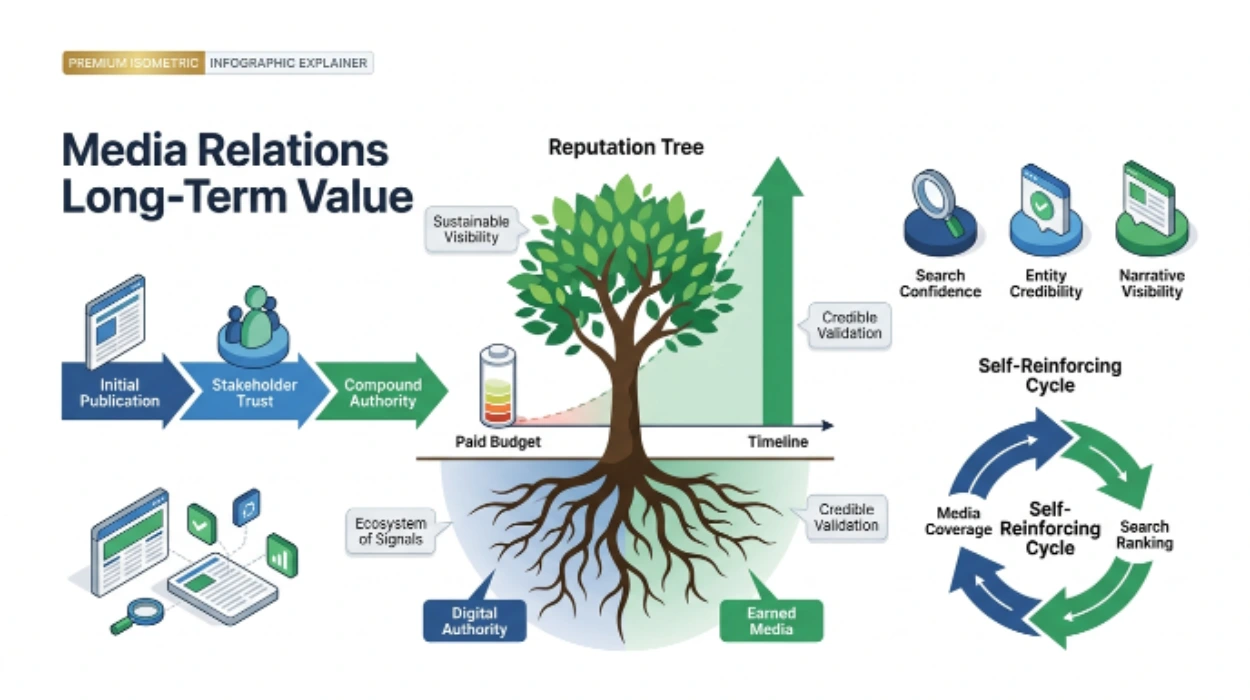
Media relations delivers long-term value because it strengthens reputation assets that continue influencing stakeholder decisions long after initial publication. Paid visibility disappears when budgets stop. Earned media credibility continues contributing to trust development, digital authority, and search perception influence. This enduring impact improves return on investment because authority compounds over time. Each authoritative placement contributes to a growing ecosystem of reputation signals that reinforce organisational credibility.
Long-term value also emerges through cumulative search benefits. Authoritative references strengthen entity credibility and improve the organisation’s overall digital footprint. As media coverage expands, search engines gain stronger confidence in organisational relevance and authority. This creates a self-reinforcing cycle where improved visibility generates additional opportunities for trust development and reputation enhancement. The result is sustainable narrative visibility management supported by credible external validation.
How Does Media Relations Reduce Reputation and Stakeholder Trust Risks?
Media relations reduces reputation risk by establishing authoritative information sources that stakeholders can reference when evaluating organisational credibility. In the absence of strong media visibility, organisations often lose influence over how narratives develop across digital environments. Strategic media engagement ensures that trusted sources communicate accurate information aligned with organisational objectives. This strengthens stakeholder confidence and improves perception stability during periods of scrutiny or uncertainty. Reputation resilience increases because authoritative narratives already exist within trusted public domains.
A structured media relations programme also reduces risk through proactive narrative visibility management. Organisations gain greater control over public positioning because trusted media references help shape stakeholder understanding. Consistent media engagement strengthens trust signals before challenges emerge, creating a foundation of credibility that supports future communications. This proactive approach improves institutional resilience while reducing the likelihood of perception volatility. Strong reputation signals therefore function as a protective asset as well as a growth mechanism.
Why Is Requesting a Professional Media Relations Proposal the Best Next Step?
Requesting a professional media relations proposal provides clarity regarding objectives, stakeholder priorities, visibility opportunities, and expected outcomes. A structured proposal transforms media relations from a general communications activity into a measurable reputation strategy. Decision-makers gain a clear understanding of implementation processes, performance indicators, and authority-building mechanisms. This transparency reduces uncertainty while supporting informed investment decisions. The result is greater confidence in both strategy execution and expected outcomes.
For organisations seeking stronger narrative visibility management, enhanced stakeholder trust signals, and improved search perception influence, a professional Media Relations service provides a clear framework for achieving these objectives. Linkonize combines strategic planning, authority-building methodologies, and reputation-focused execution to support sustainable visibility growth. The emphasis remains on measurable credibility outcomes, process clarity, and long-term trust development. This creates a reliable pathway towards stronger institutional reputation and digital authority.
Conclusion
Media relations remains one of the most effective mechanisms for strengthening stakeholder trust, improving search visibility, and enhancing organisational credibility. Through authoritative media placement, narrative visibility management, and reputation signal development, organisations gain greater influence over how stakeholders discover, evaluate, and trust information.
A structured approach ensures that visibility efforts contribute directly to long-term authority, perception stability, and institutional resilience. Linkonize provides a disciplined framework that aligns media engagement with measurable reputation outcomes, helping organisations strengthen digital authority while reducing perception risk. For decision-makers seeking a credible and effective solution, professional media relations offers both strategic clarity and sustainable value.
Frequently Asked Questions
How long does it take to see results from a media relations strategy?
Media relations delivers both short-term and long-term outcomes. Initial media placements can generate visibility within weeks, while stronger digital authority, stakeholder trust signals, and search perception influence develop through consistent media engagement. Sustainable results come from ongoing narrative visibility management and strategic relationship building with relevant media outlets.
Why is media relations important for organisational reputation?
Media relations strengthens organisational reputation by generating credible third-party validation through trusted media sources. This improves entity credibility, reinforces reputation signals, and increases stakeholder confidence. Consistent media visibility also supports stronger search perception influence and helps organisations maintain greater control over public narratives.
How does media relations support search visibility?
Media relations contributes to search visibility by increasing authoritative brand mentions across trusted publications. These references strengthen digital authority and improve the relevance signals associated with an organisation. As authoritative media coverage accumulates, organisations gain stronger SERP control and improved narrative visibility within search environments.
What makes professional media relations different from traditional publicity?
Professional media relations focuses on strategic outcomes rather than simple media exposure. The objective is to improve stakeholder trust signals, strengthen entity credibility, and support long-term reputation goals. Every media engagement aligns with broader visibility, authority, and perception objectives to deliver measurable business and reputational value.
How do organisations measure the success of media relations activities?
Successful media relations programmes are measured through indicators that reflect credibility and influence. These include branded search growth, sentiment improvements, share-of-voice performance, stakeholder engagement, referral traffic from authoritative publications, and overall digital authority development. These metrics provide a clearer assessment of business impact than media coverage volume alone.